
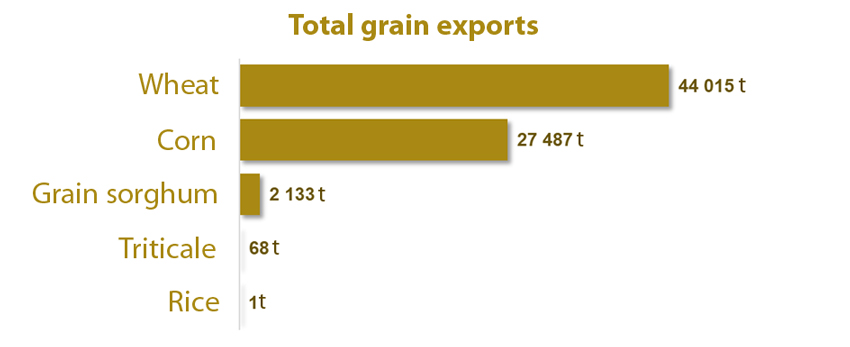
The export structure is highly concentrated: the two crops – wheat and maize – together account for 97% by weight and value. This is a natural ratio for the Moldovan grain market, where both crops dominate the structure of sown areas and grain yields.
In third place is grain sorghum with a share of 3%. The other crops – triticale (a product of crossing wheat and rye) and rice – occupy less than one percent each.
Source: Customs Service of RM
The average export price for Moldovan grain crops in January ranged between 3694-3789 lei/ton. Including wheat was shipped to foreign markets at an average price of 3,789 lei/t, corn – at 3,770 lei/t.
It is noteworthy that in the overall structure of January exports, the physical and value shares of grain group goods practically coincided: wheat – 60%, corn – 37%, sorghum – 3%.
According to market operators, this indicates that “average selling prices for the three main crops are balanced and in the same range”.
It is noteworthy and uncharacteristic only that Moldovan sorghum was sold for export at the same price as wheat. Although traditionally this crop is sold cheaper than corn and, even more so, wheat.
Who buys?
The geographical structure of Moldovan grain exports is quite indicative. The undoubted leader in wheat purchases from Moldova is Italy – 18.1 thousand tons (41% by weight) worth 69.7 million lei (42% by value).
The second place is confidently held by Greece – 13,5 thousand tons (31% and 33% respectively). Greece offered the highest price among major buyers – over 4 thousand lei/t. Together these two destinations absorbed 72% of the total volume of exported wheat. The third most important buyer country was Romania (18% and 17% respectively).
The leader in purchases of Moldovan corn in January was Greece – 5,800 tons (21%) worth 21,5 million lei, at an average price of 3 700 lei/t. The second place is occupied by Turkey – 5.3 thousand tons (19%) at the price of 3,677 lei/t. Italy completes the top three – 4.1 thousand tons (15%).
These three markets account for 55% of the volume, which indicates the key role of the Mediterranean direction for Moldovan corn.