
Detention of an Iranian dry cargo ship. X
Meanwhile, the Strait of Hormuz, through which Middle Eastern oil is normally shipped, remains closed, the BBC reported.
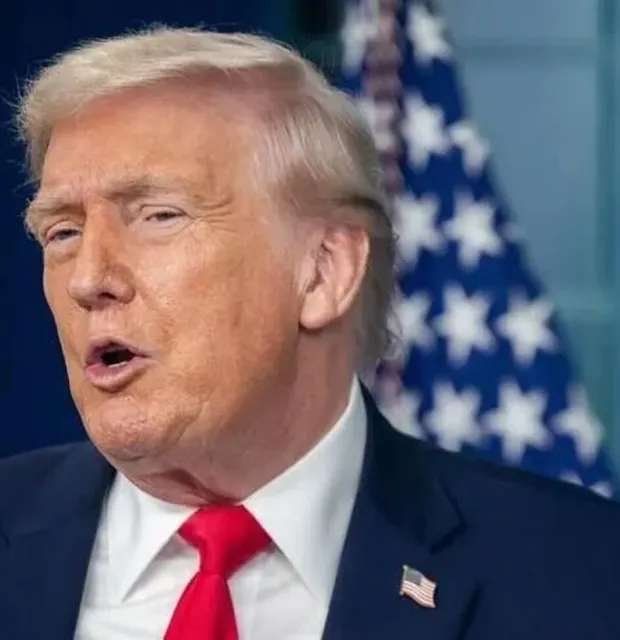
“Today, an Iranian-flagged cargo ship, the Touska, nearly 900 feet [about 275 meters] long and weighing comparable to an aircraft carrier, tried to break our naval blockade, but they failed. The U.S. Navy missile destroyer Spruance intercepted the Touska in the Gulf of Oman and issued them a clear warning to stop. The Iranian crew refused to comply, so our ship stopped them by punching a hole in the engine room,” Trump wrote on his Truth Social network.
“The vessel is currently in the custody of the US Marine Corps. The Touska is under sanctions by the U.S. Treasury Department due to its previous history of illegal activity. We have full control of the vessel and are verifying what is on board,” the American president added.
Iranian authorities called the seizure of the ship an “act of piracy” and a “truce violation” and vowed to respond.
The fate of the talks is unclear
Against the backdrop of a new escalation in the region, the fate of the new stage of talks between the US and Iran, which was to be held in Pakistan this week, remains unclear.
Trump said on his social media network Truth Social that his representatives were heading to Islamabad.
“We are proposing a very fair and reasonable deal and I hope they accept it, and if not, the US will cut off every single power plant and every single bridge in Iran without exception,” Trump wrote while doing so. – NO MORE BABYSITTING! They will fall very quickly and easily, and if they don’t make a deal, I will be honored to do what other presidents over the last 47 years have had to do to Iran.”
Trump has threatened to destroy Iranian critical infrastructure in the past before the two sides announced a two-week truce and began peace talks.
A White House spokesman told the BBC that the US delegation to the Islamabad talks will again be led by Vice President J.D. Vance, while Trump’s special envoys Steve Whitkoff and Jared Kushner, who participated with Vance in the first round a week ago, will also take part in the consultations.
There have been unofficial reports that the Iranian delegation could arrive in Islamabad on Tuesday. Last time it was led by Iranian Parliament Speaker Mohammad-Bagher Ghalibaf.
Iranian state media on Sunday, however, wrote that Iranian representatives do not plan to participate in talks with the United States as long as the U.S. blockade of the country’s ports in the Strait of Hormuz continues.
What the sides are saying about the blockade
Iran blocked ship traffic through the Strait of Hormuz again the previous day, with the country’s navy saying it will remain closed until the US lifts its blockade of Iranian ships and ports.
The Tasnim news agency, affiliated with the Islamic Revolutionary Guard Corps (IRGC), reported that “due to Iran’s continued naval blockade, the Iranian armed forces prevented two more oil tankers from passing through the Strait of Hormuz today, Sunday.”
Tasnim reported that the two tankers, “which were flying the flags of Botswana and Angola,” had intended to pass through the Strait of Hormuz but were “forced to change course and retreat due to the timely actions of Iran’s armed forces.”
Iran’s chief negotiator and parliament speaker Mohammad Bagher Ghalibaf also said the Strait of Hormuz would remain blocked as long as the U.S. naval blockade remains in place. However, he also noted that there are “only” one or two contentious issues left between the sides – without specifying exactly what they are about or explaining how important they are.
In his statement on Sunday, Trump accused Iran of violating the terms of the truce. He said Tehran “decided yesterday to open fire in the Strait of Hormuz” and targeted a French ship and a cargo ship from Britain.
The US says it continues to block the movement of Iranian vessels through the Strait of Hormuz. The Pentagon said it has forced 23 ships to turn around near it since the blockade began.
The Iranian Navy, meanwhile, said the U.S. blockade of Iranian ports is a “violation of the terms of the truce.”
In connection with the blockade, the Iranian Revolutionary Guard Corps Navy warned that “no vessel should leave its anchorages in the Persian Gulf or the Gulf of Oman.”
“Approaching the Strait of Hormuz will be regarded as cooperation with the enemy, and the ship that violates [the order] will be targeted,” the IRGC said in a statement.
The IRGC also said that “Donald Trump’s statements regarding the Strait of Hormuz have no validity.”
What was happening in the Strait of Hormuz over the weekend
According to MarineTraffic, a ship-tracking website, no ships are currently passing through the strait. At the same time, many appear to be anchored in the Persian Gulf region – particularly off the coasts of Oman and the UAE.
A number of ships passed through this crucial shipping corridor on Saturday, but their movement slowed dramatically when Tehran announced the closure of the waterway.
A tanker and a container ship were attacked off the coast of Oman, the UK Maritime Trade Organization (UKMTO) said. These were the first recorded attacks on ships in the region in more than 10 days.
The tanker, which was in the Strait of Hormuz, reported being fired upon by two IRGC gunboats shortly after it was blocked, reportedly 20 nautical miles (about 37 kilometers) northeast of Oman.
“The tanker’s captain reports that it was approached by two IRGC gunboats which did not make radio contact and then opened fire on the tanker. The tanker and crew are reportedly safe. Authorities are investigating,” the UKMTO notice said.
The UKMTO later said the container ship, 25 nautical miles northeast of Oman, was hit by an “unknown projectile” and an object fell into the sea near a cruise ship off the coast of Oman.
India’s Ministry of External Affairs also reports that two Indian-flagged vessels were involved in a “shooting incident” in the strait.
Chronology of negotiations between the U.S. and Iran
February 28: The US and Israel launch strikes on Iran, diplomatic talks with Tehran held in Geneva break down.
March 6: Donald Trump said there would be no agreement “unless Iran unconditionally surrenders.”
March 21: Trump set a deadline, threatening to strike Iran’s energy infrastructure unless it agreed to open the Strait of Hormuz.
March 23: Trump postponed his deadline, citing “productive negotiations” – followed by a series of further postponements.
April 7: Trump warned of the death of “an entire civilization” if the Strait is not opened before the next deadline.
April 8: Acting as a mediator, Pakistan announced a two-week truce between the U.S. and Iran for further talks.
April 11: Senior U.S. and Iranian officials, including Vice President Jay Dee Vance and Iranian Foreign Minister Abbas Araghchi, met in Pakistan. After 21 hours of talks, Washington and Tehran failed to reach agreement on key contentious issues.
April 12: Trump announced a blockade of Iranian ports.
April 17: Iranian Foreign Minister Abbas Araghchi said the strait would remain open until the end of the truce. Trump said the U.S. blockade would continue.
April 18: Iran’s Islamic Revolutionary Guard Corps said it had again blockaded the strait. Trump said there are “very good negotiations” underway, but the U.S. will not give in to “blackmail” over the Strait of Hormuz.