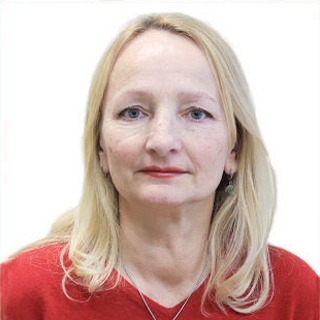

Christine Lagarde
On Thursday, the European Parliament approved its negotiating mandate, bringing the adoption of the law—scheduled for late 2026—one step closer after several months of stalled discussions.
The initiative initially drew criticism
Members of the European Parliament argued that a digital euro could undermine the right to privacy and, in the long run, diminish the role of banknotes and coins as a means of payment.
“Parliament approved the mandate for these negotiations by an overwhelming majority, and we hope they will be concluded by December,” Euronews quoted Lagarde as saying.
The ECB president explained that the digital euro is intended to bring central bank money—which is currently available mainly in the form of cash—into the digital age amid intensifying competition between jurisdictions. But like banknotes and coins, it will have the status of legal tender.
“This means that nowhere in Europe will anyone be able to say, ‘Sorry, I don’t accept your banknotes,’” Lagarde noted.
She also announced that the ECB will present a new strategy regarding banknotes by the end of the year.
“We will have a package of proposals for a new design and a new ‘face’ for our banknotes. Cash isn’t going anywhere; it will be updated,” the ECB president added.
The digital euro will strengthen Europe’s autonomy
Essentially, Lagarde emphasized, the digital euro should strengthen Europe’s strategic autonomy in the area of payments and transaction processing.
Most bank card transactions in Europe go through payment networks owned by foreign companies, which is prompting European policymakers to develop their own solution. This is particularly important against the backdrop of geopolitical tensions, as the bloc’s dependence on providers based primarily in the U.S. is becoming increasingly apparent.
“The best scenario I can imagine is a European solution. We don’t have one right now. So when you make a payment, in most cases—in 60% of transactions—you’re using payment infrastructure controlled by foreign capital,” Lagarde noted, citing ECB data on card payments.
“We rely mainly on American—and sometimes Chinese—networks to process payments. We need a European solution because we want to be sovereign in our own backyard,” she said.


