
After months of discussions and consultations, the Government presented the concept of local government reform.
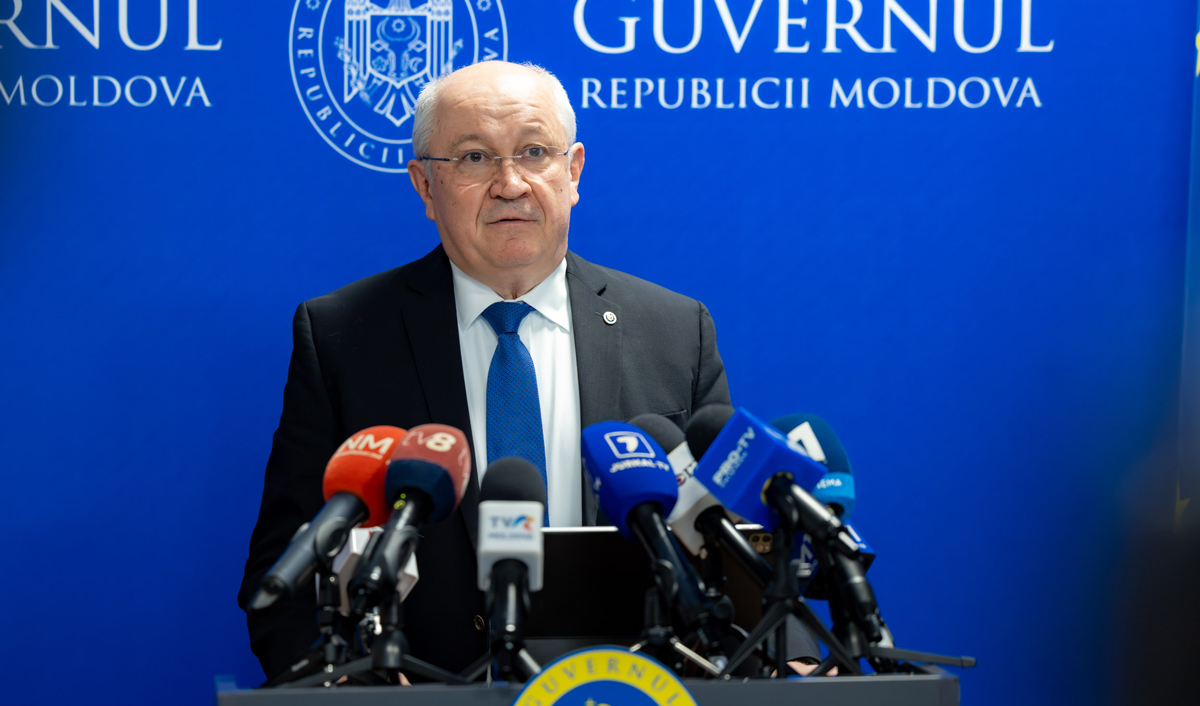
As the government’s Secretary General Alexei Buzu emphasized during the briefing today, the proposed reform is not the most popular one, but “we cannot leave its implementation to future generations”.
Its urgency is explained by the fact that over 87% of the mayoralties in Moldova today have less than 3,000 inhabitants. Such excessive fragmentation is not conducive to modernization. Through the reform, the authorities intend to solve the problem of inequality in their development.
The urgency of the reform
Thus, 34% of households in Moldova do not have water supply and sewerage services, of which 80% of small villages remain without water supply and 77% without sewerage. In contrast to large settlements, small villages’ own revenues account on average for only about 11% of the local budget, while 50-60% of their funds come from the state budget. At the same time, their administrative costs are high.
Small mayoralties have limited access to services. The reform will solve this problem as well, as population service centers will be opened in the buildings of former administrations.
Today, 80.5% of small mayoralties are understaffed. The new city administrations will be able to accommodate a team of 10-20 specialists.
Another problem is insufficient digitalization of services. Only 9.1% of small mayoralties provide most services in digital format. The reform will stimulate this process as well, and thanks to the “single window” system, where documents can be obtained centrally, the loss of time and money, bureaucracy and corruption will be reduced.
What thegovernment is proposing
To level the existing inequalities, the government is proposing a number of measures. The total value of the unification stimulus package for 2026-2030 is 6,491 billion lei. In particular, it is promised to allocate 3 times more funds for infrastructure investments in the merging localities.
At the same time, the village and its identity will be preserved, the government promises. Local residents will maintain direct communication with the representative of the mayor. For this purpose, a corresponding function will be introduced in the localities.
The minimum threshold of inhabitants of a settlement will be 3,000 inhabitants. The Government also expressed its views on the fate of the districts. It is planned to keep 10 out of 32 districts.
They will manage major projects, such as the construction of regional roads, hospitals, and waste disposal systems, which today a district cannot provide alone.
At the same time, Taraklia district, where Bulgarians make up 65.6% of the population, will be transformed into a second-level municipality. This will allow it to preserve its local identity and at the same time ensure more efficient and stronger governance.