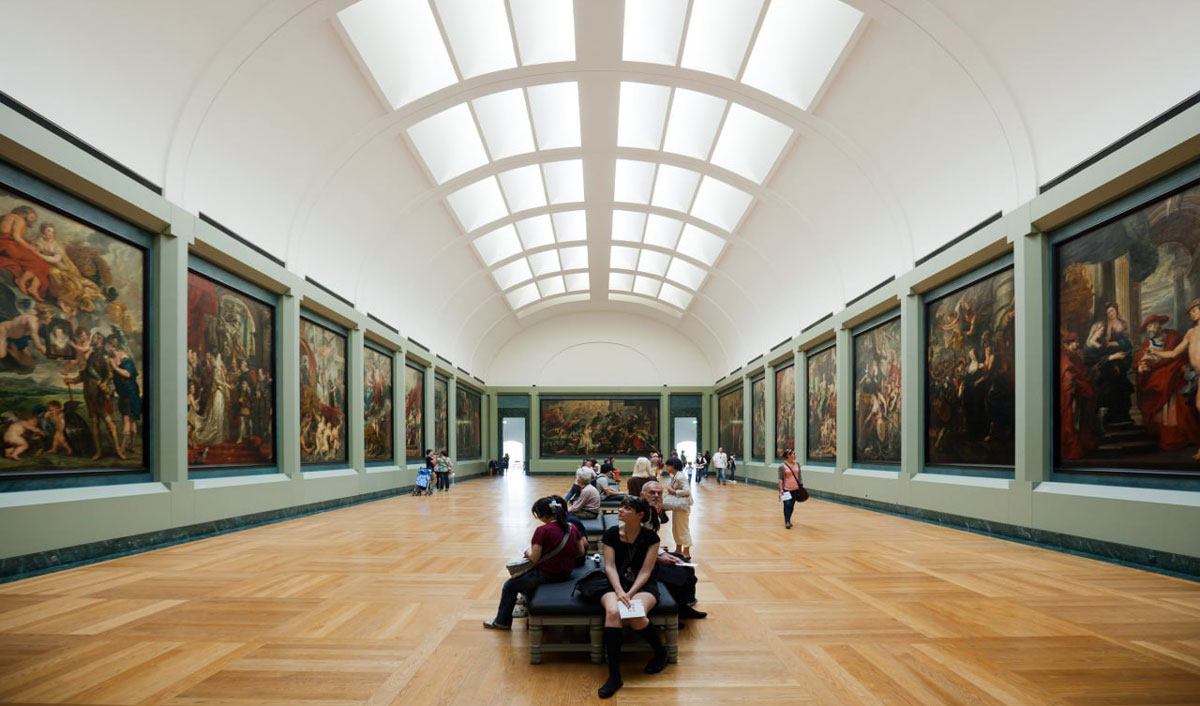

Foto ©Matt Biddulph/Wikipedia
The series was commissioned by Maria de’ Medici in the 1620s and represents a single artistic cycle dedicated to the key stages of her life. Today it is regarded as one of the most significant ensembles of the European Baroque.
According to the assessment of the museum’s specialists, the condition of the works requires complex intervention. During the period of exposure, the varnishes have undergone oxidation, resulting in a loss of transparency and a change in color balance, writes ArtMajeur. In a number of cases, the paint layer has been damaged and the consequences of previous restorations carried out in the mid-20th century.
The preparatory phase of the project took about ten years. Since 2016, scientific research has been carried out using instrumental diagnostic methods, including radiography, infrared imaging and ultraviolet analysis. As a result, a detailed database on the condition of each piece was formed, and structural and compositional changes were identified.
The restoration work is scheduled to begin in October 2026 and is estimated to last approximately four years. The work will be carried out directly in the exhibition space – the Medici Gallery will be temporarily converted into a specialized workshop with the necessary technical infrastructure to work with large-format paintings.
Key tasks of the project include strengthening the base of the paintings, stabilizing the paint layer and removing oxidized coatings in order to restore the original color range. In addition, the project will involve scientific research aimed at studying the master’s technique and the peculiarities of his workshop.
Funding of €4 million has been secured with the support of the Society of Friends of the Louvre. The Medici Gallery will be closed to the public for the duration of the project.