
CALM calls for clarity and consensus on local governance reform
The event took place in the context of the local government reform process and the many expressions of concern by mayors about the stages and concept of this reform.
“The process must be clear, step-by-step, based on consensus and not on the division of society. The reform must respect the identity of the administrative-territorial units, be accompanied by mandatory consultation with the population and offer flexible solutions adapted to local diversity. We want a reform model that benefits the people and strengthens local democracy,” emphasized CALM President Tatiana Badan.
CALM Executive Director Viorel Furdui confirmed the support of the Local Government Association for a transparent, gradual and participatory reform, focusing on the reform of neighborhoods and strengthening cities as poles of economic growth, in order to consolidate local democracy and bring direct benefits to citizens.
Viorel Furdui presented the reform model developed by CALM with the support of the Council of Europe and endorsed by local elected officials.
Opinion of the academic community
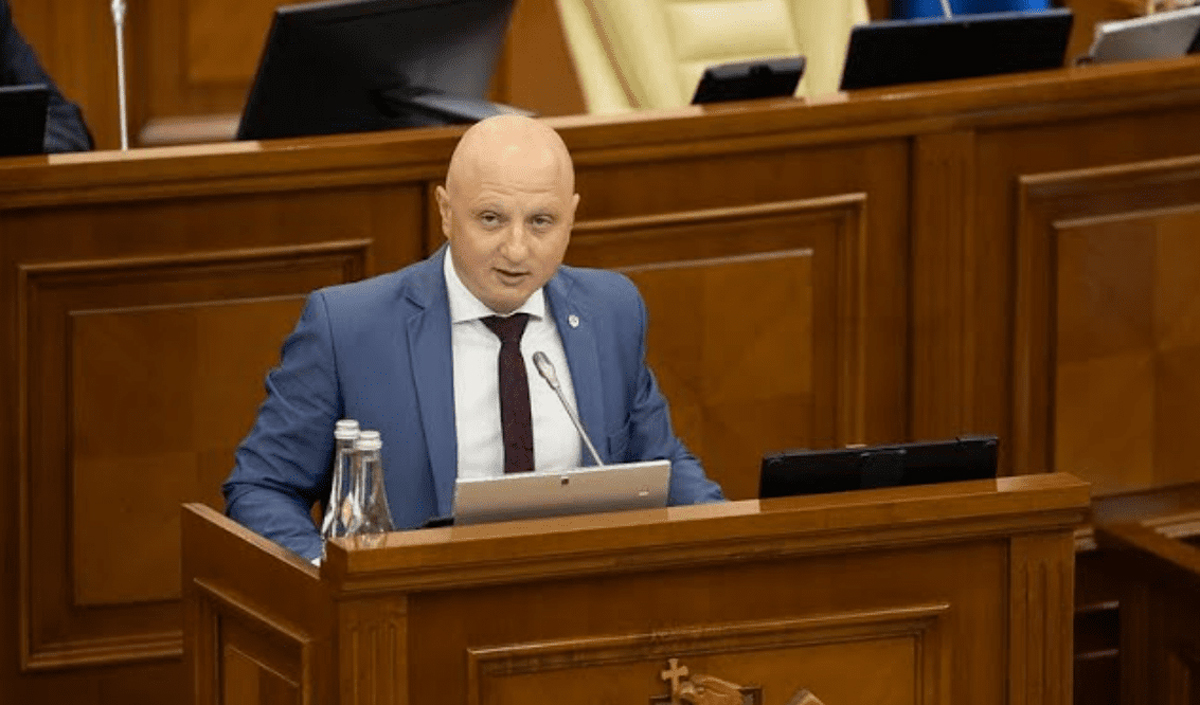
During the extended meeting of the CALM Board of Directors, Sergiu Palihovici, Director of the School of Public Administration at the State University of Moldova, presented the model of a comprehensive functional administrative reform. He emphasized that the reform should be transparent, informative and participatory, involving authorities, experts and civil society.
“What I am presenting to you today is not necessarily my point of view, but rather a choice between what we should probably do ideally and what we can afford. We also need to think about what we’re going to do with neighborhoods,” Palihovich said.
One person is a fundamental difference
Victor Gori, mayor of Botnăresti village and vice-president of CALM, addressed the issue raised by the initiators of the reform regarding the number of people that should constitute an administrative-territorial unit.
“Let’s realize that 1,500 are people, but 1,499 are no longer people and no longer have the same rights,” Victor Gori said.
The local elected official noted that mayoralties, even if they represent small localities, have the potential to develop them, citing as an example the fact that about 700 out of 898 mayoralties have accessed funds through national and international projects.
Consolidation should be an ongoing process
The mayor of the municipality of Gangura, Ialoveni, CALM vice-president Marcel Bobeika said that voluntary unification should be a continuous process, including after 2027.
“It is necessary to amend the provisions of Government Decree No. 126, according to which voluntary unification can only be implemented in the period 2023-2026. In addition, the Strategy should clearly stipulate how the second administrative system will be reformed. At the same time, it is necessary to clarify what statistics we are operating with, as the results of the last census are not the most reliable,” said Marcel Bobeika.
The government failed to reach a consensus
According to the mayor of Balti municipality, CALM vice-president Aleksandar Petkov, the government failed to achieve the necessary consensus for such an important reform for the country.
“The consultations, presented publicly as a broad dialog with local authorities, have in reality turned into a formality. Representatives of the State Chancellery participate without presenting any strategy, without a clear vision of the future administrative architecture, without the slightest scientific justification, limiting themselves to general statements about ‘creating strong city administrations’.”
According to Petkov, in order to achieve the results expected by citizens and the local government, a step-by-step reform is needed, preceded by mandatory consultations with the population, accompanied by a transparent strategy and a clear vision of the final results.
“In the absence of these elements, there is a risk that the very implementation of the reform in this way will affect both local autonomy and the very process of modernization and European integration of Moldova,” the mayor of the country’s northern capital drew attention.
We pray that no one dies at the weekend
Valeriu Scutelnic, mayor of the village of Byrnova, Ocnita, president of the association of mayors from this district, explained that there are several gaps in the legislation on voluntary unification, which makes the process so complicated.
“What if three municipalities want to merge, but have only 2,700 residents, not 3,000 as stipulated by law? Where to get another 300 citizens?”
He also pointed out that during the election campaign, no one raised the issue of eliminating several municipalities.
“Now government representatives come to the territory and tell us that if we don’t unite, we will be left without funding. Only the population, through a referendum, has the right to decide whether to unite with someone or not,” the local elected official opined.
In addition, Valery Skutelnik noted that the Restart reform has many shortcomings.
“Now we pray that no one dies on holidays, because only on Monday we will be able to go to the district center to get a death certificate.”
Clarity is needed
The mayor of the commune of Benesti, Telenesti, Alina Pascaru, also said that the reform should take place, but clarity is needed on what will happen next.
“We are constantly told on TV that the current town administrations are inefficient. We don’t know how effective they will be if several localities are left without a city administration.”
According to a local elected official, at least communities with a thousand residents should have a town government.
“Later in the term, we will look at how well we did with this reform and move forward if necessary.”
Alina Pascaru clarified that she is not interested in the position, as her age and studies provide her with many opportunities to work in other fields. “However, I want to stay in the country and contribute to the development of my community.”
Deputies are many, mayoralties are few
Ion Byzu, mayor of Kirpesti village, Cantemir, vice president of CALM, expressed the opinion that we will have too many deputies and too many districts rather than too many mayoralties.
“A social worker told me that he will resign if the city is left without a mayor’s office. These professionals feel vulnerable without mayors and don’t want to risk working without APL support.”
The mayor explained that his city has merged services.
“We merged the fire and rescue service with the villages in the south of Cantemir district to provide water supply, we merged it with the district center. We chose something that adds value to us, others don’t know better what we need,” the mayor said.
Where will the money come from?
The mayor of Drochia, CALM vice-president Nina Cereteu, said that voluntary unification should be seen as part of a comprehensive concept.
“We need a comprehensive reform, including the central administration. Why does the reform start specifically with the local government? Is this the biggest problem in the country? As a city mayor, I don’t see the need to merge small municipalities today. If you merge two municipalities with no revenue, where will the money come from?”
The CALM vice president clarified that the government is temporarily supporting amalgamation with incentives.
“What will happen to these municipalities in the future? Where will they get their own source of income from? We have no real decentralization that would help municipalities to develop, whether they will be merged or not,” said Nina Cereteu.
We should start with closing the district councils
The mayor of Singerei, Arkady Kovalev, emphasized that the concept of government will be formed as a result of consultations based on proposals from local elected officials.
“Even during the local elections in 2023, many residents of villages near our city told me they wanted to become part of it. Let’s not forget that more than a million people have gone abroad and the color of society is gone.”
A local elected official said that Syngeray is open to voluntary unification and we should ask the government for financial decentralization to strengthen the 500 and 2,000-person town administrations.
“We must be united and start by closing the district councils,” he noted.
Daniel Tsonu, mayor of Zimbreni commune, Ialoveni, explained that during consultations on the reform concept with local elected officials in Ialoveni, 23 out of 25 mayors favored voluntary unification over regulatory unification.
“We are afraid that they will set a threshold of 3,000 residents, we have made calculations and we are left with about 10% of mayors.” Daniel Tsonu emphasized that the consultations are bogus and called on mayors to be more active in defending the rights and interests of the communities they represent.
Resolution
At the end of the event, with a majority of votes in favor and one abstention, a vote was taken on the CALM Declaration on Local Government Reform: between necessity and responsibility. The document will be sent to state leadership.
The CALM Declaration calls for an end to the rush to a phased approach to reform; an end to political, administrative, financial or economic pressure on mayors; a renewed dialogue based on partnership, with real and binding consultations; a joint development of a clear vision for reforms; ensuring fiscal decentralization and adequate resources for local public administration.