
Foto Midjourney
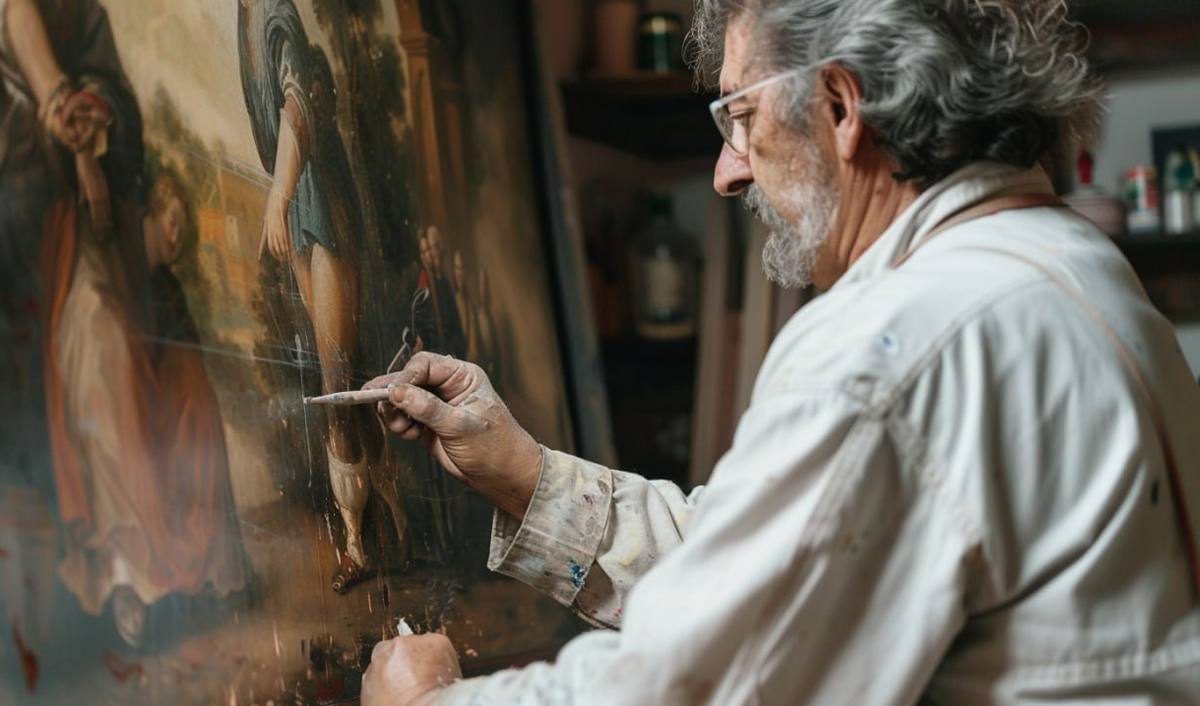
One of the most discussed developments has become a technology that allows you to “restore” a painting in just a few hours, writes euronews. The essence of the method is to create a digital version of the work with the help of AI, after which the result is transferred to a thin polymer film. This film is overlaid on the original as a protective mask, replenishing the lost parts of the image. Importantly, this intervention is fully reversible – the mask can be removed without harming the original. This approach not only speeds up the process, but also complies with modern ethical requirements for restoration.
No less significant changes are taking place in the field of materials. Scientists are actively developing environmentally friendly alternatives to traditional chemicals. For example, special hydrogels based on polyvinyl alcohol make it possible to gently clean the surface of paintings from dirt and old coatings. Thanks to their porous structure, they act in a more controlled and safe manner, reducing the risk of damage to the paint layer.
Additionally, the properties of cellulose derivatives are being investigated, which can be used to strengthen paper, textiles and even ceramics. These substances have adhesive and protective characteristics, while remaining non-toxic and derived from renewable raw materials. Nanocellulose is considered particularly promising as it can fill cracks and create durable, breathable coatings.
For interdisciplinary practices such as art restoration and conservation, such scientific innovations could be key as restorers face new challenges related to climate change and rapid technological developments.