Aramco, the world’s top oil company, said Tuesday that the conflict with Iran continues to disrupt shipping in the Strait of Hormuz, which could have “catastrophic consequences” for global oil markets.

In February, the annual inflation rate surpassed last month’s figures, amounting to 5.1%, which is higher than in January. In January, annual inflation in Moldova decreased to 4.8% (from 6.8% in December 2025), which was the lowest level over the last 1.5 years.

The U.S. dollar reversed course on Monday, retreating from a three-month high after President Donald Trump suggested the conflict with Iran was nearing an end.
No EU country has tapped its strategic oil reserves because of the escalation in the Middle East, European Commission spokeswoman Ana Kaiza Itkonen told a briefing on Monday.

The EU and Canada have started negotiations on the so-called Digital Trade Agreement (DTA) amid Europe’s conflict with the US over digital regulation.

According to Politico, last week EU ambassadors actually “buried” the idea of accelerated accession, stressing that membership should be based solely on merit and full fulfillment of the criteria. Earlier, the publication also wrote that Ukraine’s hopes for quick accession to the EU had been dashed.

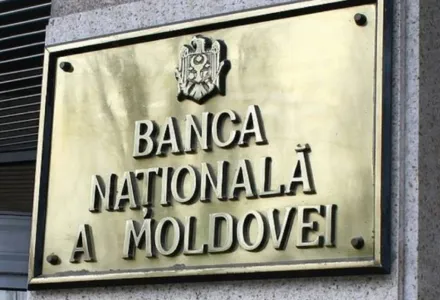
The National Bank of Moldova (NBM) intends to integrate AI technologies more fully into its activities and has been actively discussing their role at various regional conferences for several years.
The goal is to reduce the deficit on the world market by adding “hundreds of millions of barrels” of Russian oil caught in sanctions. The U.S. stresses that this is not an easing of sanctions pressure on Russia, but a measure to stabilize prices. Washington is also considering further lifting of sanctions on other Russian oil to increase supply.

According to the latest data from the Ministry of Finance, the domestic public debt has been growing steadily since the beginning of the year. In January, it increased by 1.9 billion lei and in February by another 1.7 billion lei, amounting to 55.7 billion lei.

According to the latest data from the National Bank of Moldova (NBM), as of February 27, 2026, official foreign exchange reserves continued their downward trend, decreasing by 61.01 million euros to 5,019.69 million euros. Despite the decrease, the volume of reserves remained high, supporting the financial stability of the country.
EU countries are finalizing the implementation of a minimum corporate tax rate of 15% for the largest multinational companies (global minimum tax (Pillar Two) and are beginning to consider a flat tax “on wealth”.

Transfers through the European system SEPA, which Moldova joined in March last year, currently account for over 80% of all transferred funds from and to Europe. The National Bank of Moldova (NBM) reports this as its main achievement on the way to the EU, publishing relevant data.
The Central Bank of Sweden has issued recommendations for citizens in case of war and other crises. In particular, it recommended keeping at home 1 thousand Swedish kronor (about $110) for each adult.

China imposes temporary restrictions on exports of diesel fuel and gasoline to meet domestic needs amid regional instability. Countries in the region are trying to find alternative sources, in particular, increasing interest in Kazakh oil.

Capital mobilization is the only lever that can boost productivity, increase revenues, strengthen Europe’s strategic autonomy and increase its resilience.

Only due to the depreciation of the U.S. currency, in which the country’s external public debt is calculated, the amount of external borrowings increased significantly, amounting to $4.862 billion in January.
In Moldova, the minimum affordable package of services (Internet + minutes) costs less than $10, making the country the fourth most affordable mobile plan in the region. In terms of price/quality ratio (data value index, cost of 1 Mbps), the country ranks ninth, ahead of Denmark and many Western European countries.

Microchips, biotechnology, robotics and artificial intelligence will be excluded from the list of “strategic sectors” to be (partially) purchased from European manufacturers. Only heavy industrial goods such as mild steel and cement, aluminum and plastics used in the construction and automotive industries remain. These goods will have an advantage in the awarding of government contracts.

Against the background of expensive energy resources, Energy Minister Dorin Jungietu on a business trip to Baku was primarily interested in the construction of large wind farms in Moldova (total capacity of 170 MW) and the integration of energy storage systems (BESS).

European financial markets are under strain as the U.S. and Israeli war against Iran renews fears that an energy shock could exacerbate inflation. The region is almost entirely dependent on oil and gas imports. The price of Brent crude has risen nearly 10% since Friday, while natural gas prices in Europe have jumped 50%.