There are currently 20 clusters operating in the Republic of Moldova, most of which were established with support from UNDP Moldova. Of these, 19 are small clusters, and one is a large cluster.

The Republic of Moldova has fallen to 136th place out of 145 countries in the Global Firepower 2026 military power ranking.

Socket experts found that initially, when they first appeared in the Chrome Web Store, many of these extensions did not contain malicious code. Five of the 16 were purchased from their original developers and infected with malware through automatically distributed updates. This means that the modules identified are extensible—attackers can add malicious code as needed. The authors of the browser security study believe that hackers began doing this in 2024.

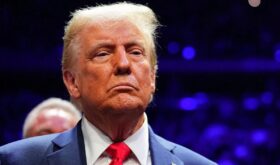
U.S. President Donald Trump called on Canadian companies that do business with the U.S. market to relocate their operations to the United States in order to avoid new tariffs.
The Republic of Moldova’s GDP accounts for 0.1% of the gross domestic product of the 27 member states of the European Community.
In Moldova, the Law on Mediation will take effect on September 12, 2026. This procedure will make it possible to resolve certain civil, labor, and family disputes out of court.

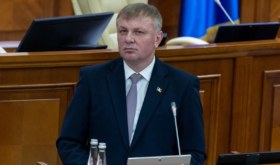
Constantin Cuiumju, a member of the Committee on Economy, Budget, and Finance of the Parliament of the Republic of Moldova, pointed out the significant difference between the economic decisions made in Bucharest and the measures planned by the Moldovan authorities for 2027.
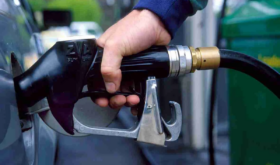
The Romanian Ministry of Finance has extended the temporary reduction in the excise tax on standard diesel fuel from 20% to 25% for the period from September 1 to September 15, 2026.
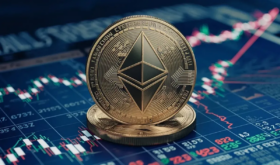
Ethereum ends August outperforming Bitcoin: over the month, ETH gained about 40% and approached a monthly imbalance around $2,600—a zone where the price previously broke through sharply and left a gap to which it typically returns. Analysts are divided in their assessments of future price movements—some expect the upward trend to continue toward $2,800, while others foresee a correction down to $2,250–1,930.
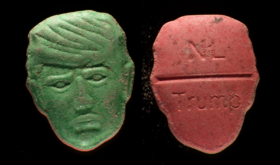
A leading institute specializing in mental health and substance abuse in the Netherlands has issued a “red alert” regarding ecstasy pills shaped like Donald Trump’s head that have appeared on the market. Scientists warn that these pills could be deadly.
The Moldovan leadership’s hopes that, after leaving the CIS, the republic will be able to retain the benefits of cooperation within that organization are unrealistic.
Moldova and Kazakhstan remain the two largest export markets for Ukrainian cheese: from January through July 2026, they accounted for 34.8% and 25.8% of Ukrainian exports, respectively.

Circle, the issuer of USDC, will become the new sponsor of the just a few months after the British financial regulator warned about “questionable sponsorship agreements with unauthorized financial firms,” including crypto companies.

The National Agency for Food Safety (ANSA) has reminded suppliers and retailers that food labels must be in the official language of the Republic of Moldova—that is, in Romanian.
U.S. President Donald Trump announced the signing of “the largest oil deal in history” with Venezuela, which grants the United States control over more than 60 billion barrels of the country’s proven oil reserves.
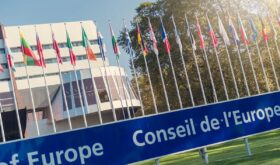
Following the summer recess, the EU Council’s Working Group on Enlargement (COELA) will consider the approval of the screening results for negotiation clusters 2 and 3 for Ukraine and Moldova on Tuesday, September 1.
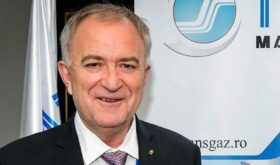
Maia Sandu awarded Ion Sterian, CEO of the Romanian company Transgaz, the “Order of Liberty.”
ABS 2000, a Moldovan waste management and recycling company, announced the opening of a glass recycling plant in the city of Buzău in southeastern Romania. The investment totaled approximately 7.4 million euros ($8.6 million).

The Ukrainian publication finance.ua conducted a comparative analysis of average and minimum wages in Ukraine and other countries in our region.
Ukraine and Romania are interested in deepening their practical cooperation with Moldova, particularly with regard to the security and stability of the Black Sea region.