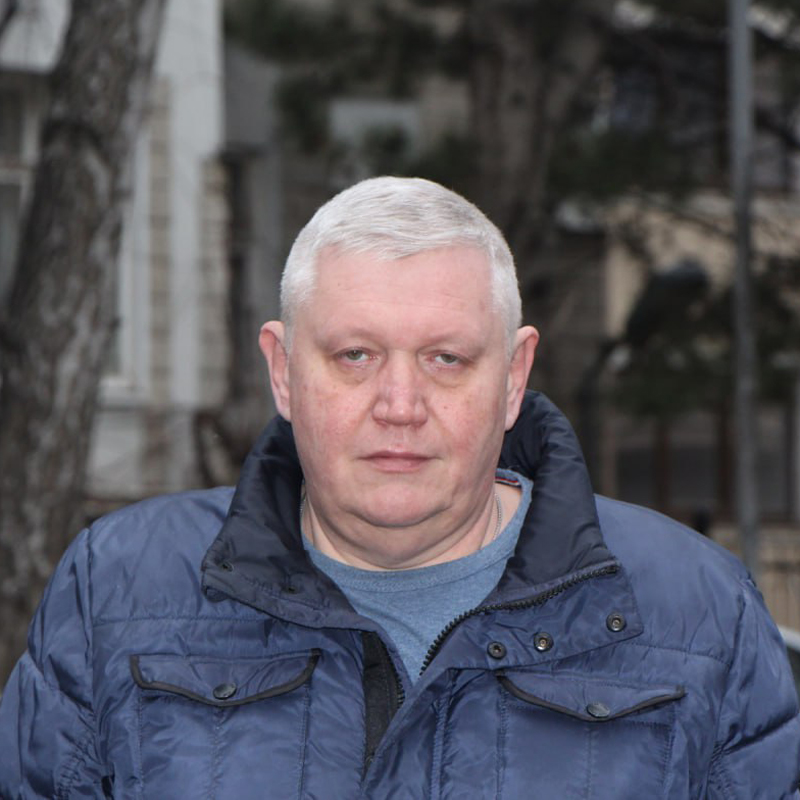

Nadia Ursu
The founder of the startup Theraplush Lab says the idea for the business came after accumulating a personal experience that completely changed her perspective on medicine.
Premature birth and periods when she could not be near her baby made her look for solutions combining classical medicine, neuroscience, sensory spaces and emotional comfort.
Today, the company develops products for premature babies, children with autism or patients in recovery, and some of them have already been implemented in social projects in Abu Dhabi (capital of the United Arab Emirates).
“It all started from personal experience. Especially the periods when I couldn’t be with my child made me look for solutions for her, for myself and for the other children I was treating. I’ve been in medicine for 15 years and have mostly dealt with children, at very critical times, with pain and crises. With time, you realize that many people are looking for the same solutions and that sometimes they can be surprisingly simple,” said Nadia Ursu in an interview for start-up.ro portal during the Startup Moldova Summit 2026 event.
From medicine to neuroarchitecture and sensor products
Nadia Ursu’s career is not limited to classical medicine. The founder of Theraplush Lab earned several international master’s degrees to better understand how children react to medical facilities and hospital stays.
A key moment was when she earned a master’s degree in neuroarchitecture in Alicante, Spain, where she began combining architecture, neuroscience and medicine to create sensory spaces designed for children.
Her experience working in hospitals in Spain, Italy and France helped her to notice that the problems faced in Western hospitals are almost identical to those in the Republic of Moldova or Romania. The difference lies in the way the solutions are implemented, Nadia explained.
“I realize that there is always an emotional component at the core. A child who feels well is much more willing to cooperate during treatment. A premature baby who hears his mother’s heartbeat, even if he’s been separated from her, has lower cortisol levels. When you create space for healing, healing happens. But in our case, we’re not just talking about psychology or well-being, we’re talking about scientific evidence and clinical validation.”
One of the products developed by Theraplush Lab is a multi-sensory baby bed that combines special textile materials with different textures and the ability to play the mother’s voice or heartbeat.
According to Nadia, the concept was so unusual that the certification process took years because the product could not be categorized as either a toy or traditional medical furniture.
Moldovan startup, projects in Abu Dhabi
Theraplush Lab is based in Moldova, but has already entered the Romanian market and is now entering the United Arab Emirates market. Nadia Ursu added that the startup has recently become a supplier to the government of Abu Dhabi, where it develops products designed for social projects and children with autism.
For a hardware and medical startup established in Moldova, entering the UAE market is a rare step in the local ecosystem.
Nadia mentioned that one of her goals is to demonstrate that medical products developed and manufactured in Moldova can be used in large-scale international projects.
“The hardest part starts after the technical issues are solved”
Although the company develops tested and certified medical devices, the founder of Theraplush Lab says that the real difficulties started after solving technical and medical issues.
For two to three years, she worked almost exclusively on certification and clinical trials, without actively seeking investment because she wasn’t sure if the products could be officially classified as medical devices.
Now that it has received certifications, the company is trying to enter the international market and faces the classic challenges of hardware and medical device startups: access to capital and a slow pace of funding.
“I thought that if you have a certified, proven product that you know helps people, it becomes easy. In fact, that’s where I ran into the real problem: It’s not that simple. It takes time, even when the product is ready and you know it’s scalable.”
The funding discussion quickly turns to the differences between startups founded by women and startups led by men.
Nadia Ursu noted that many products developed by women originate from real problems directly observable in everyday life, but access to resources remains limited.
“We women feel the real problem, especially when it comes to children. We know what the problem is and how it can be solved. But the figures show that women receive very little funding. The resources are there, that’s what we see and realize in recent years, but something is being lost along the way and I think we need to work harder to be heard,” said the founder of Theraplush Lab.
“We have people who don’t just talk, they do.”
Nadia considers cooperation between Romania and the Republic of Moldova one of the most important areas for the development of local startups, especially in areas such as health, education and research.
She noted that there are already people in the Moldovan ecosystem who are creating products and getting results, but they need more connections with markets and organizations in Romania.
“We have talents, we have people who don’t just talk but do things and get results. We need more interaction between us and finding common problems to solve together.”


