This imbalance hinders economic growth, constrains domestic demand and increases social tensions.
Construction is always and in all countries a kind of indicator of the state of the country’s economy as a whole.
Therefore, in the current situation it is extremely important to take quick and effective measures that will not only help to overcome the crisis, but also give a boost to Moldova’s economic development.
For this purpose it is extremely important to consolidate the efforts of central and local authorities, as well as to use the opportunities of business to jointly solve the accumulated problems in the industry and transition to a balanced state policy in the field of construction and real estate market.
I have already repeatedly proposed specific measures that I believe are necessary for this purpose. But the topic is so urgent that I have to once again emphasize to the central and local authorities the need for comprehensive and prompt intervention.
Using state land as a driver of development
One important step has already been the government’s intention to identify public land resources suitable for housing development. And also to utilize them more effectively – through sale to development companies or public-private partnerships.
Undoubtedly, this is a correct and necessary step.
But subject to two mandatory conditions.
First: it must be done as quickly as possible. The crisis in construction has already dragged on for a long time. Therefore, the sooner we give the industry an “oxygen cushion”, the sooner it will start to recover and contribute to the country’s economic growth.
Second: It is important to extend this practice not only to Chisinau and its neighboring settlements, but also to cities throughout Moldova. Especially in regions where there is still a demand for affordable housing and where there are high opportunities for infrastructure development.
This will make it possible to solve several interrelated problems at once:
– To reduce the deficit of land plots in the central zones, which will contribute to a more equitable access to land and investments;
– expand the supply of housing through the integrated development of suburban and municipal areas;
– contribute to a more even economic development of Moldova’s territories;
– to create economic clusters in the regions on the basis of construction projects for the development of associated production and services.
Flexible urban development plans and infrastructure coordination
We must clearly understand that we are not simply talking about measures to revitalize the construction industry and the real estate market. The proposed approaches should be oriented towards a more comprehensive and balanced solution to the problems of urban and territorial development.
In this regard, one of the key and urgent tasks is the development of new urban planning plans for all Moldovan settlements. But especially for the capital and large municipalities.
Why is it necessary and what should these plans necessarily provide for?
- The reclassification of agricultural land for residential construction.
- Creation of large neighborhoods with the division of plots for different developers, but with uniform standards of infrastructure, social environment and transport accessibility.
- Mandatory accounting in such plans for the laying of engineering networks, roads, construction of social facilities and the creation of sustainable transportation. This will create attractive conditions for families and investors and reduce the burden on metropolitan areas.
Regulatory measures
Reducing administrative barriers is a critical factor in stimulating the market. In this context, clear and uniformly interpreted regulations and deadlines are important. What is needed for this?
Introduce a digital “one-stop-shop” system for coordinating all permitting procedures for construction – from town planning plans to environmental conclusions.
Establish absolutely clear statutory deadlines for reviewing applications:
up to 30 days – for small objects (up to 5,000 m²);
up to 60 days – for large facilities.
This will not only reduce the bureaucratic burden, but also increase transparency, speed up the start of projects and strengthen the confidence of investors and developers.
Apply modeling of tax measures by analogy with the practices of neighboring countries:
– Real estate resale tax of 2-3% in case of ownership for less than 3 years;
– exemptions or incentive rates for long-term ownership.
Such mechanisms will reduce the pressure of speculative demand and increase the share of real buyers.
Public-private partnerships
It is obvious that the state, even in close cooperation with local authorities, will not be able to quickly and effectively unwind the tangle of problems that created the crisis situation in construction.
Serious investments are needed. And most importantly, we need the interest of investors and entrepreneurs to see clear prospects and guarantees of stable activity for a foreseeable period of time.
In order to attract business to the implementation of new measures in construction, the state can offer various options for cooperation:
– long-term lease of land for construction;
– direct subsidies for infrastructure;
– creation of joint development funds, where public resources are combined with private investment.
This will strengthen the position of medium and small developers, attract new market participants, increase the dynamics of construction and ensure wider access to housing.
What we will get as a result
The main result of all these measures is that we will get a balanced and sustainable, long-term development-oriented comprehensive policy in the construction and real estate market.
There is no doubt that a set of measures based on the strategic use of land resources, modernization of urban planning regulations, acceleration of procedures and modern tax approaches can radically change the dynamics of the construction sector and real estate market in the country – in the interests of citizens and sustainable economic growth.
This comprehensive approach will allow us not only to stabilize prices and expand supply, but also to create an environment in which young families, entrepreneurs and investors will be confident in the future of the country and their opportunities to live, work and develop business here.
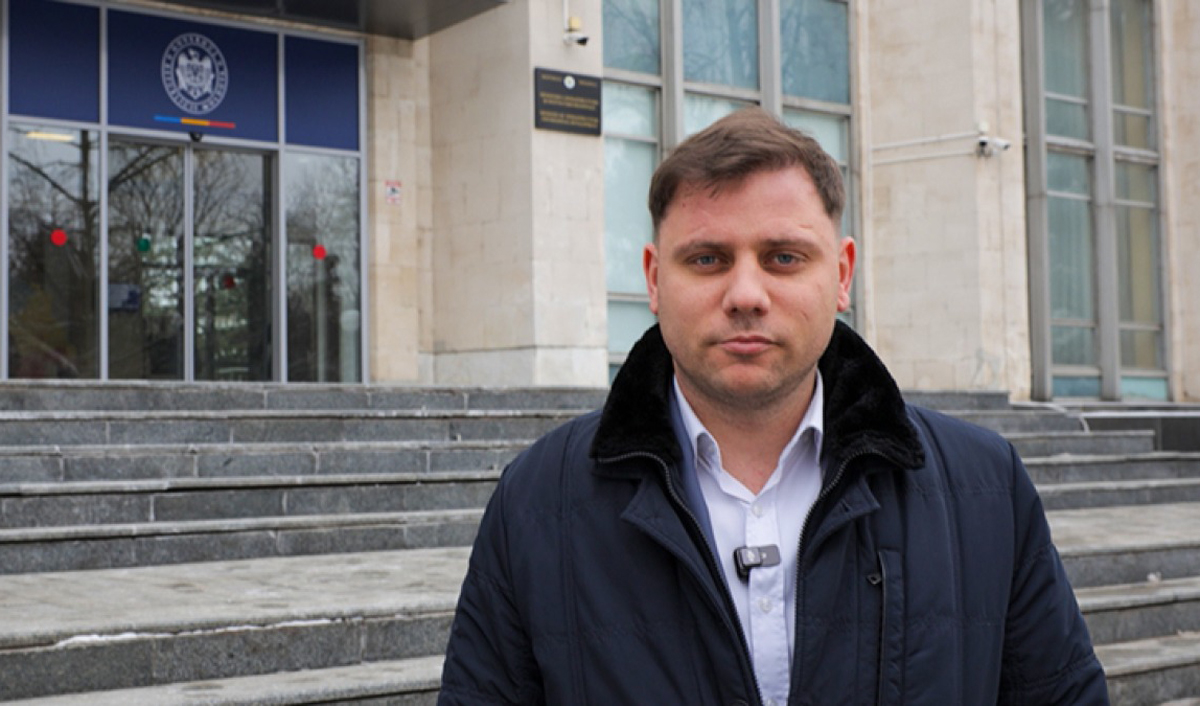
Mircea Baciu,
Moldovan entrepreneur