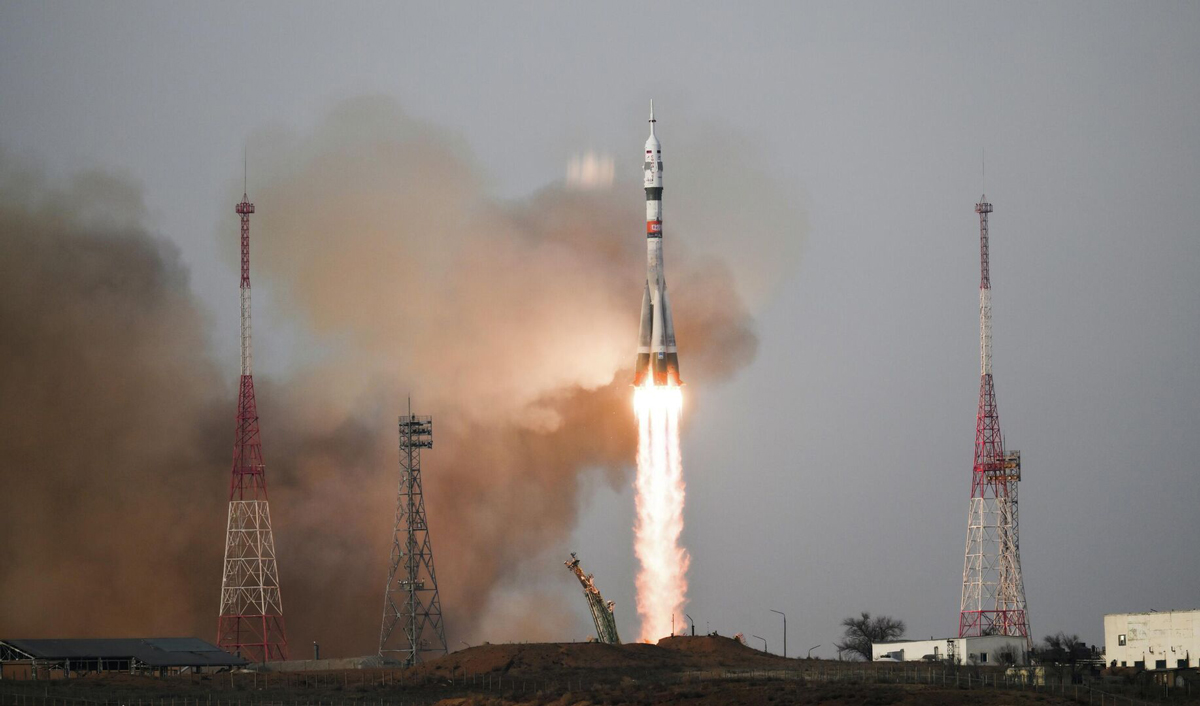
Nuclear-powered spacecraft will expand opportunities in space exploration // Photo: nasa.gov.
The Space Reactor-1 Freedom (SR-1F) spacecraft is scheduled to be sent to Mars by the end of 2028. Information about this released NASA.
A new era in space exploration
The nuclear-powered vehicle will allow efficient transportation of payloads in environments where solar panels cannot be used. Upon reaching Mars, SR-1F will release payloads in the form of Skyfall helicopters, which will continue to explore the Red Planet.
With this mission, the US National Aerospace Agency intends to open a new era in space exploration. It emphasized that the launch will set a precedent in the regulation and operation of nuclear systems in space, as well as lay the foundation for future propulsion systems for long-duration missions.
Unlimited capabilities
Nuclear propulsion has never before been used in space. Radioisotope thermoelectric generators have been used for long-distance missions to power spacecraft but not to propel them. “Nuclear engines are uniquely suited for efficient cargo transportation and enable long-range, high-power missions even beyond Jupiter,” NASA said in a press release.
The U.S. Department of Energy, which is involved in the project, believes the partnership with NASA spurs new opportunities for long-duration missions beyond the moon. Representatives of the department expressed confidence that in the future there are prerequisites for the realization of manned flights to Mars and the outer part of the solar system.