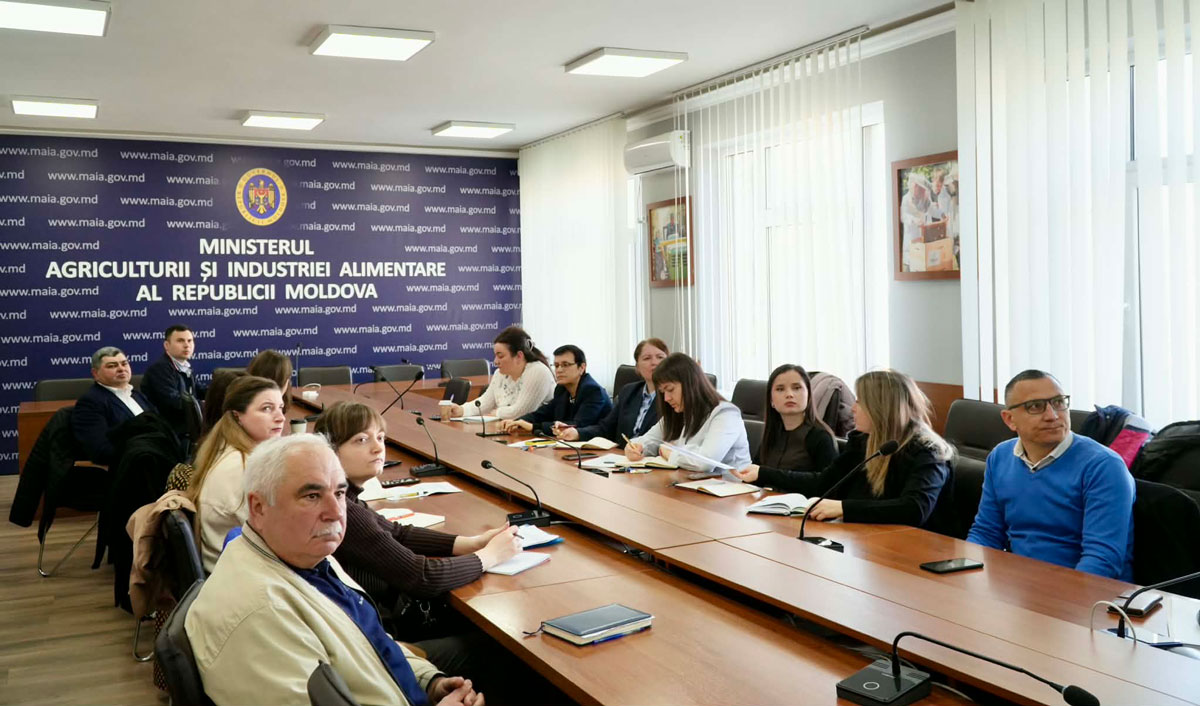

Employees and employers will be able to resolve individual disputes bypassing the court. Moldova is actively promoting the practice of settling labor disputes out of court, aimed at reducing the burden on the judicial system and speeding up the process. Conciliation commissions will be the main mechanism of pre-trial settlement.
Labor relations
In the fall, a new law on mediation and the status of mediator will come into force, which will give a start to the pre-trial settlement of disputes. The main innovation is that in some cases the parties to a conflict will first have to attend at least one conciliation meeting.
The emphasis is on negotiation. As becomes clear from the law, mediation will become mandatory for:
– labor disputes – for example, on issues of reinstatement at the workplace, wages, non-performance of labor duties by one of the parties;
– civil disputes with the amount of claim up to 50 average salaries in the economy (excluding interest, penalties and court costs) – for example, debt collection, compensation for losses, dissemination of false and defamatory information;
– family disputes (excluding divorce and domestic violence) – e.g. custody, residence and maintenance of children.
At the first meeting, the parties will decide together with the mediator whether they are ready to resolve the conflict peacefully and continue mediation, or whether they prefer to go straight to court. For labor disputes, participation in the first mediation session will be free of charge. In other cases, there is a fee of 550 lei.
The specialized resource rabota.md explains what this can mean for the labor market. For employers, it is a way to reduce legal risks, preserve their reputation and solve conflict situations faster. For employees, mediation also means an opportunity to reach a quick agreement with the help of a mediator without incurring any costs. There is also an additional incentive – if the parties fail to reach an out-of-court agreement, the state duty will be reduced by 25% when going to court.
The law also tightens the requirements for mediators themselves. Specialists who did not register their mediator activity before the law came into force and who received their certificate more than two years ago will be able to continue working only after undergoing additional training.
A Union of Mediators will also be established to control the quality of work, compliance with professional ethics, as well as to coordinate training and accreditation of training programs.
Courts remain overloaded, handling a large number of cases, including civil labor disputes. (up to 2,000 cases per judge per year) and staffing shortages, which has affected the timelines for hearing disputes, which last for years.
“Precedent” law
If you are facing an employment dispute, you should know: the courts are now obliged to take into account that any rule limiting the payment of compensation for unlawful dismissal is null and void following the Constitutional Court’s verdict of July 22, 2025.
This was one of the central developments in the regulation of compensation-related labor disputes. The Court declared unconstitutional the limitation of the amount of compensation for forced absenteeism in case of unlawful dismissal.
Previously, the Labor Code limited the payment of average wages to a certain period (usually up to 12 months). The CC ruled that such a provision violated the right to work and fair compensation. The consequences for the entire judicial system are unambiguous: from mid-2025, courts of general jurisdiction are obliged to apply this decision directly.
Now, if an employee wins a case for reinstatement, he or she can claim for payment of wages for the entire period of forced absenteeism without limitation, as well as full compensation for moral damages. The court in such cases remains the final instance for resolving labor conflicts in case negotiations fail.
European-style medical examination
Also in the fall, the rules for controlling the health of workers will come into force: the government has approved A decree which changes the approach to medical examinations and brings legislation into line with EU standards.
In addition to employment examinations, periodic examinations and examinations after a break in work for health or other reasons, new ones will be added.
In particular, “post-exposure” – immediately after contact with an occupational risk factor (for example, a toxic chemical substance or infection), as well as an examination after the termination of exposure to harmful factors (for example, when an employee resigns). In addition, there are additional examinations – if the employee has complaints or the doctor suspects that the employee’s health condition has deteriorated.
And the most interesting thing is that the examination must be conducted by a doctor in occupational medicine. Who these specialists are, and whether the medical examination will be extremely formalized, is not yet known. In addition, new harmful factors of work are added, for example, work at a computer. The employee will simply be examined for ability to work, without diagnoses in the supporting document.
Occupational hazards include a wide range of factors. These include, for example, working with chemicals, excessive noise, extreme temperatures, contact with viruses and bacteria, working at height or with electricity. It also includes physical exertion (e.g. heavy lifting), driving, night shifts, prolonged computer work and educational activities.
For example, under the new regulation, office workers who spend at least 20 hours a week at a computer will have to undergo a medical examination every three years.
Those who work at night (a minimum of 3 hours between 22:00 and 06:00 or a third of their working time per year), as well as drivers, couriers, security guards, will have to undergo a medical examination annually. Teachers – every two years.
Payment for medical examinations is the employer’s responsibility. At the same time, he can send employees to both public and private clinics. Medical examinations must take place during working hours, and wages cannot be reduced during this time.
If a candidate initially pays for the medical examination at the time of hiring, the employer must reimburse him/her within one month of hiring – but only if the candidate has been recognized as capable of working.
If a person is found to be incapable of work as a result of the employment examination, the state will reimburse the money. It will also pay for examinations for apprentices who receive training or instruction at work, as post-exposure examinations for everyone.
Liberalization of the labor market
Moldova continues to actively liberalize the labor market to cope with the labor shortage by facilitating the recruitment of labor from non-EU countries (India, Bangladesh) for the construction and agriculture sectors. The government seeks to stimulate economic growth by providing labor for development projects.
However, experts note that despite the low unemployment rate (3.8% at the end of 2025), overall activity in the labor market is falling, indicating an outflow of population. For EU citizens, access is already maximized and the employment rate in the country remains low (40.2% at the end of 2025).
The employment rate, according to the National Bureau of Statistics (NBM) in Moldova fell to 40.2% in the fourth quarter of 2025 from 43.40% in the third quarter. This decline reflects a reduction in the number of employed persons to 774,000, indicating a shrinking labor market.
Labor market partially in the shadow
The paradoxical nature of the labor market is reflected in the decline in employment and the persistence of a low official unemployment rate amid rising nominal wages. The unemployment rate fell to 2.90% in the fourth quarter of 2025 from 3.50% in the third quarter. The average official wage for the economy in the fourth quarter of 2025 amounted to MDL 16,355.
The NBS data show that despite the decline in unemployment, overall labor market activity has fallen, indicating that many people are leaving the labor force.
Marina Solovieva, Expert-Grup: “The employment rate is monstrously low, half of Moldova’s adult population is unemployed! Among the population of working age (20-64 years old), 55% are employed, 3% are unemployed, and 43% are inactive (not employed and not looking for work), which is twice as much as the EU average. People are inactive for many reasons. Many live in rural areas where there is simply no paid work. Women are often locked up at home with their children because there is nowhere to take them. Many people are not satisfied with the wages in the country, so they don’t work and wait for the season to go abroad to work, for example, on construction sites.
Activity, or the level of participation in the labor force is declining. Although the phenomenon of envelope wages is slowly on the decline, it is still there. According to NBS data, of the total number of workers – 5.7% had informal employment and at the same time received wages in envelopes, with the largest share of them in agriculture (58.0%), construction (12.6%) and trade (9.9%).
People are not very interested in participating in the pension system, as they do not see a significant link between their contributions and their future pension. In 2025, Moldova still has a high level of informal employment. The shadow labor market accommodates, according to various estimates, about 20% of the working population, including the officially employed, who continue to work without formalizing labor relations or receive salaries “in envelopes”.
Salaries are not European
The statistics also provides information about the sentiments of the survey respondents. Out of the total number of employed 7.5% stated that they would like to change their current job situation for various reasons. For most of them, the main reason is the unsatisfactory income/salary level.
As of January 1, 2026, the minimum wage in Moldova is set at 6,300 lei (15% increase by 2025), while the projected average monthly wage for the economy will be 17,400 lei. The decision aims at increasing the competitiveness of the labor market, with a minimum hourly rate of 37.28 lei.
But this is the average temperature of the hospital. The gap between wages and incomes is huge. It is often linked to the productivity of the sector and the added value created there. Although not always justified benefits and subsidies for business, wage schemes that underestimate the replenishment of social funds are also plentiful.
Marina Solovyova: “On the one hand, this prevents the state from fully forming the funds and working on raising wages and pensions to European levels. On the other hand, it reduces the interest of the employee to form a “safety cushion” for the future. It makes sense to reform the pension system in such a way as to strengthen the relationship between contributions and pensions. For example, introduce a funded part of the pension to be managed and invested by private pension funds. The world experience with such funds is, of course, ambiguous, but these problems are solved by adequate regulation. No one prevents us from increasing the overall labor productivity in the country by opening high value-added industries and revising the country’s tax incentives policy, as recommended by the IMF. This is the only way out so far.