
Vyacheslav Ionitsa
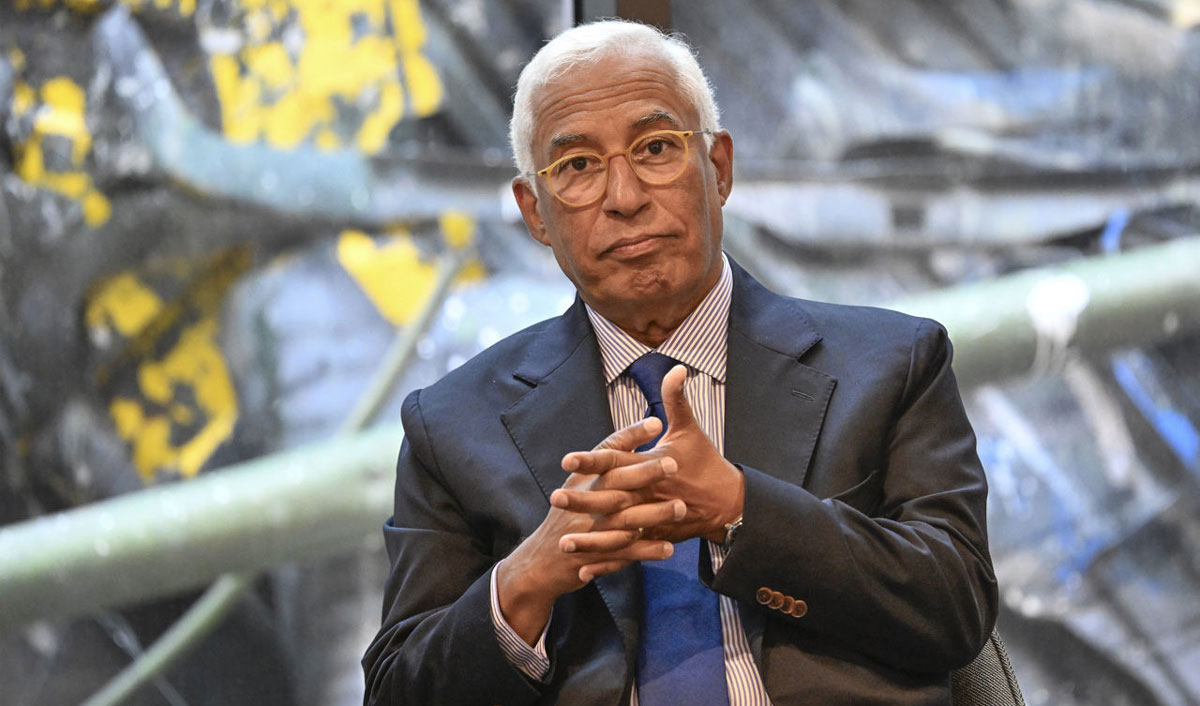
According to calculations, in the first three weeks of March alone, the increase in fuel prices brought an additional 49.9 million lei to the budget. This is a significant amount, and, very importantly, it is not the result of a healthy economic growth, but a direct consequence of the crisis on the oil market, wrote economist Veaceslav Ionitsa wrote in his blog.
Where is this money coming from?
The logic is simple. The more expensive a liter of gasoline or diesel fuel is, the more money the state receives due to taxes embedded in the final price. The state did not sell more, but collected more money for the same consumption.
Moldova’s economy consumes on average about 2.3 million liters of diesel and 0.8 million liters of gasoline per day. Even if in reality diesel consumption in spring is higher than the annual average, this factor was not taken into account in the presented estimates. In other words, these figures are immutable and real revenues may be even higher.
Before the current price increase, the state collected about 6.64 lei of taxes per liter of diesel fuel, and now it is already 8.23 lei, i.e. 1.6 lei/liter more. For gasoline, the tax burden increased from 10.96 lei/liter to 11.91 lei/liter, i.e. by 0.95 lei/liter more.
Here is the point of the whole story: diesel fuel went up in price, and Moldova consumes much more diesel fuel than gasoline. That is why most of the extra money in the budget comes from diesel fuel.
What do the weekly data show us?
In the period from March 2 to March 8, the budget received additional 7 million lei. Of these, 5.7 million lei were spent on diesel fuel and only 1.3 million on gasoline.
In the period of March 9-15, the additional weekly revenues increased to 16.2 million lei, of which 13.7 million lei came from diesel fuel and 2.5 million from gasoline. Thus, by mid-March, the budget had already received an additional 23.2 million lei.
In the period from March 16 to 22, the jump is even more significant: 26.7 million lei in one week, of which 22.3 million are from diesel fuel and 4.4 million from gasoline. Thus, the additional amount accumulated from March 2 to 22 reaches 49.9 million lei.
This clearly demonstrates that the pressure not only continues, but also intensifies.
Who is actually paying this bill?
The budget is being replenished, but the economy is paying the price. And the reckoning falls mainly on the sectors that are most dependent on diesel.
Farmers will be the first to suffer. The price increase occurs just in the spring period of work, when the consumption of diesel fuel increases depending on the season. This means increased costs for plowing, sowing, fertilizers and transportation. In other words, this is not just an energy supply problem, but a direct pressure on the cost of future crops.
The second category of those affected is transportation companies. Any leu added to diesel is transferred to logistics costs, and sooner or later these costs are reflected in the price of consumer goods. When diesel fuel becomes more expensive, it is not only the cost of road transportation that becomes more expensive; the price of goods on store shelves also increases.
Ultimately, all consumers are affected. Through gas stations – directly. Through transportation – indirectly. And inevitably, through inflation.
The first conclusion
The state should not treat these additional revenues as a mere budgetary bonus. They are not the result of economic development, investment or productivity gains. They are a consequence of the crisis. And the revenues generated by the crisis should be used to mitigate its effects, not to replenish the budget.
This is the healthy principle of intervention: the state does not “give gifts” but partially returns the extra money collected precisely from those who bear the burden of price increases.
Step-by-step recommendations for government intervention
Phase I: protecting farmers
The first and foremost correct measure is to refund the excise tax to farmers. This is the most justified intervention as agriculture is the most vulnerable sector during this period. Spring work cannot be postponed and diesel consumption cannot be replaced by something else.
This must be an urgent and prioritized measure. If the crisis is short-lived, this measure may be enough. It is good that the government has already announced such an intention. It has taken the right step in this matter and should go all the way.
Phase II: partial compensation to carriers
If price increases continue and we enter a long-term crisis, the next industry that needs support will be transportation companies. This is not because of economic romanticism, but because of simple arithmetic: the shock will not be limited to the transportation sector, it will spread throughout the economy.
In this case, the solution could be a partial refund of the excise tax or a temporary compensation mechanism exclusively for operators able to demonstrate professional fuel consumption. The measure should be temporary, clearly defined and linked to the duration of the crisis, rather than becoming a permanent privilege.
Phase III: temporary excise tax reduction for the entire market
If the situation drags on, as it did in 2022, the government should be prepared to discuss a temporary reduction in the excise tax on fuel for all consumers. This is the most ambitious measure and should therefore only be applied if the first two stages prove insufficient.
Such an intervention only makes sense in the case of a protracted crisis, when price increases risk escalating into a new wave of generalized inflation. In other words: you don’t start with a gun if you have a rifle. But if a big storm is coming, you shouldn’t go outside with only an umbrella.
Phase IV: automatic mechanism for future crises
Beyond short-term measures, the government should learn a lesson and create an automatic mechanism to temporarily adjust excise duties or targeted refunds when fuel prices exceed certain critical thresholds. Improvisation at every new crisis is not normal. A serious economy works by the rules, not on last-minute reactions.
Such a mechanism would provide predictability for farmers, carriers and the market as a whole. And predictability in the economy is sometimes worth half the aid given.
What could happen by the end of the month?
If the upward trend in prices continues, it is very likely that the state’s additional revenues will increase rapidly. If in the first week they amounted to 7 million lei, and in the third week they amounted to 26.7 million lei, it is not excluded that March will end with additional savings of almost 100 million lei.
These funds should not be lost in the general mass of the budget. They should be tracked separately and used wisely, in order to mitigate the economic shock.