
Vyacheslav Rybchuk
And ordinary citizens, as well as small and medium-sized businesses, frightened by rising energy prices, are exploring opportunities to invest in RES – for their own consumption.
With such rapid development of the market, market distortions are inevitable. Experts pay attention to them.
No sales
“More than half of renewable energy producers in Moldova risk bankruptcy,” says Sergiu Tofilat, an energy expert at WatchDog.MD, an NGO. – The reason is a systemic problem – they have no one to sell energy to: we have a surplus during the day and a deficit in the morning and evening. In recent weeks we have received many calls and messages from local producers, the situation is serious. Many of them have taken out loans and now have no money to repay them. We have a paradoxical situation: on the one hand we complain about energy shortages, and on the other hand we do not create conditions to save at least what we have. One of the solutions could be batteries, but for this we need to be sure that there will be someone to sell the energy to. However, the energy market is not functioning yet.
The state support mechanism provides for two conditions: the producer receives a fixed price for 15 years and the state buys all the energy produced at that price. For this purpose, medium-sized producers apply to ANRE, and large producers participate in auctions organized by the government. These producers do not go bankrupt, but at the moment they account for about 25% of the installed renewable energy capacity.
Green energy producers operating in the free market do not benefit from this support mechanism. This means that they are the first to be shut down when there is excess energy, which can lead to their bankruptcy. We are talking about owners of 570 MW of renewable sources out of a total of 1,023 MW of installed capacity.
These are mostly our fellow citizens who have invested their own money or taken out loans, installed solar panels or wind turbines, but receive no support from the state. They have no one to sell energy to: they produce it during the day, when it is not consumed and no one needs it. They can’t even export it – we need power lines.
If we don’t do something soon, these free-market producers will simply go bankrupt. But we need them to produce more energy locally and ensure our energy security.
The problem will get worse as new capacity comes online. Another 170MW of wind power is about to be installed, and the government has already organized a tender. This means that the daytime energy surplus will increase, says Sergiu Tofilat.
Medium-sized investors are leaving
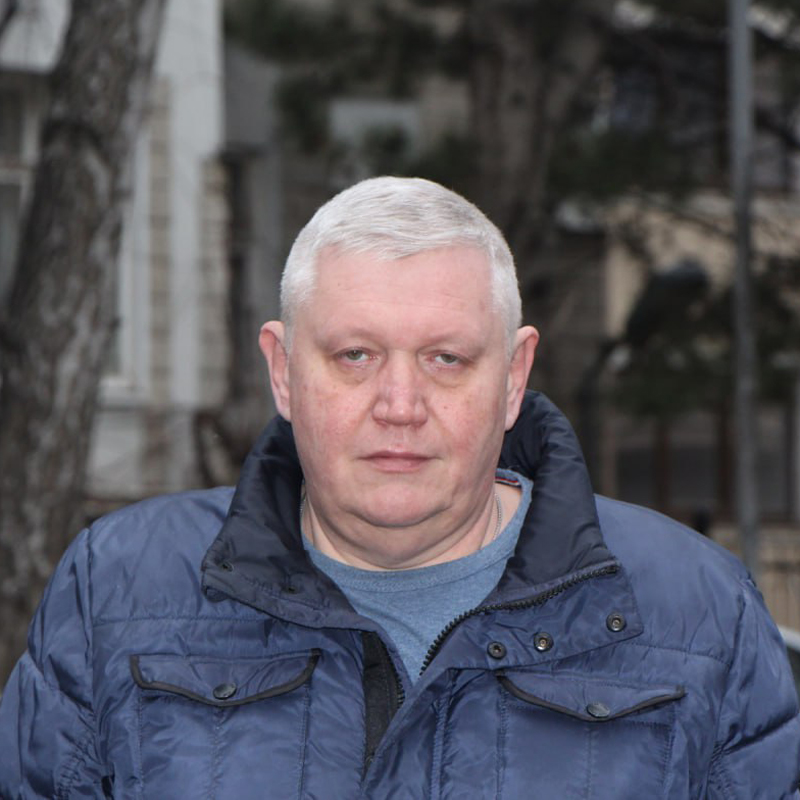
“Over the last four years, there has been an exodus from the renewable energy market of medium-sized investors. These are those who wanted to invest from 300 thousand to a million euros and quietly receive money for 15 years without doing anything,” states Vyacheslav Rybchuk, chief specialist of BTS PRO. (BTS PRO is an engineering company that creates solutions for specific orders in the field of traditional and renewable energy).
“Potential investors are frightened by the policy of the National Energy Regulatory Agency, which has already reduced tariffs for energy from renewable sources three times. It seems that this process will continue,” says Vyacheslav Rybchuk.
And, in principle, the specialist is right. If in 2020 fixed tariffs for photovoltaic installations with installed capacity of 10-50 kW were ~1.88 – 1.90 lei/kWh, in 2024-2025 they will be 1.67 lei/kWh. – already 1.67 lei/kWh. For wind, they also decreased, from 1.55 lei/kWh in 2020 to 1.44 lei/kWh in 2025.
This is good for consumers, but not favorable for producers. Therefore, the bulk of investors put money into renewable energy, which can be sold on the free market at floating prices. However, as it turns out, Moldova has big problems with this as well.
Prices cannot be multiplied by three
Another problem, according to Veaceslav Rybciuc, is the appetite of importers and sellers of renewable energy devices and components. This excessively increases the payback period for small and medium-sized investors.
“A few years ago I had a project that I proposed to one entrepreneur,” says the technical specialist. – It was about importing and selling some devices in Moldova. I suggested him not to start with prices, but to work like Turks – on the turnover. He agreed with me and… multiplied the prices for the equipment by three.
It is clear that the market in Moldova is small and there are few potential buyers. However, wild prices scare away many of those who would not mind investing. And there is little doubt that now, in the period of panic caused by the energy crisis, the importers (and there are practically no local producers on the market) will drive up prices for everything even more.
Conclusions
As already mentioned, the renewable energy market has only just begun to take shape. Installed capacity increased by 67% last year. In conditions of such rapid growth, taking into account the crisis, it requires careful monitoring and constant regulation. Only in this way will it be possible to achieve all the set goals: ensuring energy independence, reducing dependence on fossil fuels and integration with the EU market.
Specific plans envisage bringing the share of “green” electricity to 80-90% by 2050, achieving at least 27% of RES in final consumption by 2030, developing energy storage networks and large-scale modernization of infrastructure.