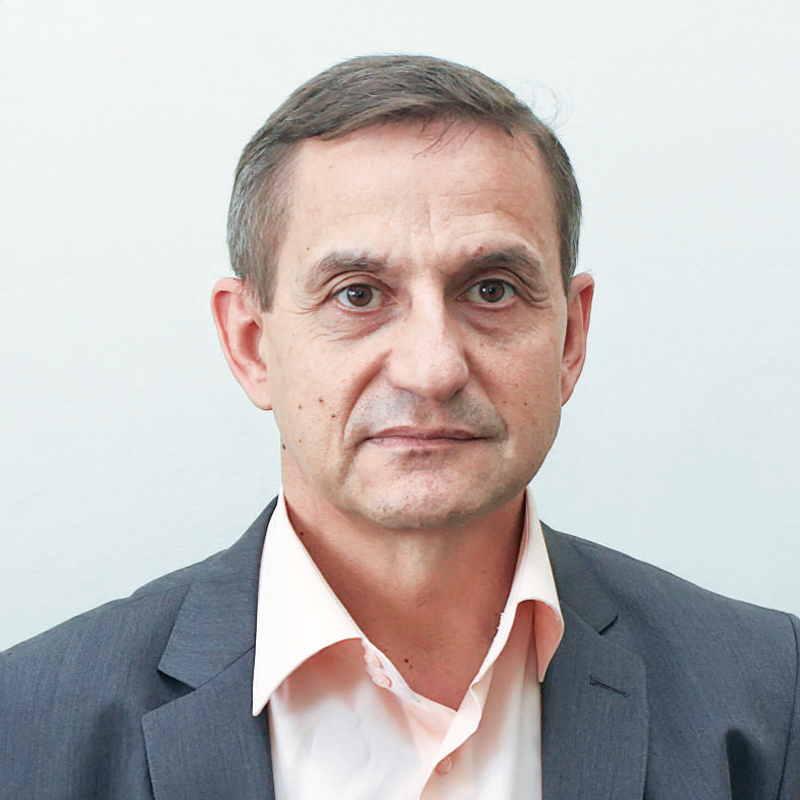

The appeal asks to promote constructive dialog and consideration of the issues at the international level, the press service of the NAG said.
“It is obvious that the conditions contributing to the tension between the Center and the Autonomy are based on the Moldovan authorities’ ignoring not only the letter and spirit of the Law “On the Special Legal Status of Gagauzia (Gagauz Yeri)” No. 344 of December 23, 1994, but also the obligations arising from the provisions of the International Covenant on Civil and Political Rights, the Convention for the Protection of Human Rights and Fundamental Freedoms, the Framework Convention for the Protection of National Minorities, the Lund Recommendations of the High Commissioner on National Minorities and other international documents.
It also details the reasons for the confrontation between Chisinau and Comrat, and directly links the current situation to the actions of the central authorities of Moldova to limit the powers and rights of the Gagauz autonomy.
“At present, Gagauzia is faced with active promotion by the authorities of the Republic of Moldova of a policy aimed at discrediting the Gagauz autonomy and weakening the political, economic and cultural rights of the Gagauz people. This policy is increasingly becoming openly discriminatory on the nationality of the autonomy’s residents, 84% of whom are Gagauz,” the document states.
The appeal was also sent to the OSCE High Commissioner on National Minorities, Christophe Campou, and the Secretary General of the Council of Europe, Alainau Börse.
Earlier, Logos Press reported that an emergency meeting of the People’s Assembly of Gagauzia is scheduled for March 17 in Comrat to discuss the current situation in the conflict with the authorities in Chisinau.
The text of the PAG’s appeal is below.
To the Secretary General
of the Organization for Security
Organization for Security and Co-operation in Europe (OSCE) Secretary General
Mr. Siniroğlu Feridun.
Dear Mr. Secretary General!
Showing my deep respect and esteem for you, as an elected person, deputy, Deputy Chairman of the People’s Assembly (Halk Toplusu) of Gagauzia (Gagauz Yeri) – the highest representative body of the Gagauz people – I would like to request assistance in resolving the growing tension between Comrat and Chisinau and in protecting the national rights of the Gagauz people.
Gagauz Yeri – Autonomous Territorial Unit Gagauzia, created on the basis of the Law “On the Special Legal Status of Gagauzia (Gagauz Yeri)” No. 344 of December 23, 1994. – is the main political and legal document that defines Gagauzia as an autonomous territorial unit within Moldova with the right to decide on issues of political, economic and cultural development. It is governed on the basis of the Constitution of the Republic of Moldova and the Statute of Gagauzia.
It is obvious that the conditions contributing to the tension between the Center and the Autonomy are based on the ignoring by the Moldovan authorities not only of the letter and spirit of the Law “On the Special Legal Status of Gagauzia (Gagauz Yeri)” No. 344 of December 23, 1994, but also of the obligations arising from the provisions of the International Covenant on Civil and Political Rights, the Convention for the Protection of Human Rights and Fundamental Freedoms, the Framework Convention for the Protection of National Minorities, the Lund Recommendations of the High Commissioner on National Minorities and other international documents.
At present, Gagauzia is faced with active promotion by the authorities of the Republic of Moldova of a policy aimed at discrediting the Gagauz autonomy and weakening the political, economic and cultural rights of the Gagauz people. This policy is becoming more and more openly discriminatory in terms of nationality of the autonomy’s inhabitants, 84% of whom are Gagauz.
One of the most illustrative examples is the blatantly anti-Gagauz, unconstitutional law in the field of taxation, adopted in 2023, which obliged Gagauzia to reimburse the value added tax to economic agents from the budget of the autonomy. An act that created a real threat to the existence of the Gagauz autonomy, significantly limiting its economic component and the possibilities to implement many important, life-sustaining social projects for vulnerable groups of the population. A measure that had an extremely negative impact on the living standards of the population and entailed significant economic and financial losses that are irreplaceable for Gagauzia until now.
The unilateral amendment of the legislation that makes the Central Electoral Commission of the autonomy dependent and controlled by the central authorities; complete blocking of the draft laws submitted by the People’s Assembly for consideration by the Parliament, regardless of their urgency, public utility and compliance with the Constitution; deprivation of the possibilities of tax administration and the right of participation of the autonomy in the nomination of the heads of regional government bodies, including the candidacy for the position of the head of the regional administration bodies, including the head of the Gagauz Autonomous Republic; the deprivation of the right of the autonomy to participate in the nomination of the head of the regional administration bodies, including the candidacy for the position of the head of the Central Electoral Commission of the autonomy
At present, the authorities, using judicial instances and the representation of the Government in Gagauzia (headed by a person who has been convicted and brought to criminal responsibility several times before!) as political tools to limit the rights of the Gagauz people, for far-fetched reasons block the elections of deputies to the People’s Assembly of Gagauzia, thus depriving the possibility of forming the representative power of the autonomy.
Particularly disturbing in this context is the labeling and far-fetched accusations of separatism of the Gagauz people, which are publicly voiced in statements by representatives of the central authorities, including the official representative of the Moldovan Government in Gagauzia. A fictitious narrative actively used by officials to promote the unconstitutional idea of liquidation of democratically formed institutions of power of the Autonomy and establishment of external administration in the Autonomy.
During the last few months, the authorities have organized trials against the Governor (Bashkan) of Gagauzia E. Gutsul and the ex-President of the People’s Assembly of Gagauzia D. Constantinov, with convictions that do not arouse public confidence in their legality and validity, as well as in the fairness of the punishment imposed. Gutsul E. was sentenced to 7 years of imprisonment and Konstantinov D. was sentenced to 12 years of imprisonment. – to 12 years of imprisonment.
At the same time, in order to justify the anti-Gagauz policy and to form in Moldovan society a negative opinion (attitude) about the Gagauz people and the Gagauz autonomy, false narratives about the alleged unwillingness of the authorities of the autonomy to open schools in the Gagauz language, the refusal of the Gagauz to study the state language (Romanian) and to speak their native language have been disseminated for a long time from the pro-government television and other mass media. At the same time, it should be noted that the absence in Gagauzia of personnel capable of teaching mathematics, physics and other subjects in the Gagauz and Romanian languages is solely the fault of the central authorities, which are responsible for organizing the training of relevant personnel and providing them to the autonomy’s school institutions.
At the same time, the official, obligatory for all educational institutions of the country history textbooks (“History of Romanians and General History”) actually do not contain information about the Gagauz autonomy and the Gagauz as one of the indigenous peoples of Moldova. The small amount of information on this issue in the textbook for high school students (12th grade) has an openly biased, provocative character and by its content is clearly aimed at creating in the young generation a negative attitude towards the Gagauz autonomy as a wrongly created and to be liquidated political project.
The above-mentioned and many other provocative narratives disseminated in the public space about the Gagauz autonomy and the Gagauz people create extremely favorable conditions for the generation of xenophobic attitudes on ethnic grounds and manifestations of strong nationalism in our multinational country.
The recent statement of the President of Moldova about the readiness to vote for unification with Romania, which was later supported by the Speaker of the Parliament and the Prime Minister of the Republic of Moldova, served as an additional tension in relations with the central government.
The people of Gagauzia, who, in accordance with the Law on the special legal status of Gagauzia, have the right to external self-determination, in the event of a change in the status of the Republic of Moldova as an independent state, are categorically against the liquidation of Moldovan statehood and its incorporation into Romania. The position of the Gagauz people, which has been repeatedly communicated to the country’s leadership and the international community, including the results of the national regional referendum held in 2014, is absolutely unambiguous: Gagauzia does not accept the liquidation of the Moldovan statehood.
Gagauzia has made significant efforts to establish constructive relations with the central authorities within the constitutional framework and the provisions of the Law on the Status of Gagauzia. However, these initiatives did not bring positive results.
Dear Mr. Secretary General, 32 years ago, during the period of particularly tense relations between the central authorities and the authorities of the unrecognized Gagauz Republic, the Organization for Security and Cooperation in Europe made a significant contribution to their settlement and resolution of the inter-ethnic conflict. As a result, the Gagauz gained their independence in the form of autonomy within the Republic of Moldova, and the country preserved its territorial integrity, peace, stability, tranquillity and centuries-old good relations and friendship among all peoples of the Republic of Moldova, values that are once again being seriously tested.
In the context of the above and taking into account the role and international authority of the OSCE in the protection of human rights and, in particular, the rights of national minorities, I hereby request to initiate the inclusion on the agenda of the next meeting of the OSCE Parliamentary Assembly of the consideration of the issue of the observance by the Republic of Moldova of the national rights of the Gagauz people and the Gagauz autonomy.
At the same time, we ask you to allocate time for a meeting with the leadership of the People’s Assembly of Gagauzia, where we will be able to provide a comprehensive report on the problems outlined in the appeal and discuss potential ways to solve them. We are sure that such a meeting will greatly contribute to a better understanding of the situation in the field of the rights of the Gagauz people and to the study of ways of constructive cooperation to resolve it.
Expressing confidence in the positive resolution of this appeal, I assure the People’s Assembly of Gagauzia of the readiness to continue constructive cooperation with the Organization for Security and Cooperation in Europe on all issues related to the consolidation of peace and protection of human rights and freedoms.
With respect
Deputy Chairman of the People’s Assembly of G agauzia G.G. Deichu.