Send us a message, and we will definitely consider your suggestions and comments.
Category: European Integration
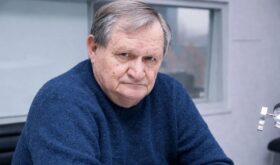
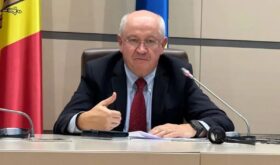
Moldova has been waiting for more than three years for the start of negotiations on joining the EU, but during these years it has only drifted away from the European standards in all fields, says former Deputy Prime Minister and former Economics Minister Alexandru Muravski.
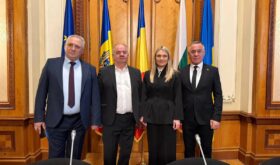
On March 18-19, the Romanian capital hosted the East Gate Strategic Forum, the founding act of the European Group for Territorial Cooperation (GECT – Grupării Europene de Cooperare Teritorială).
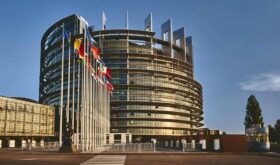
The European Environment Agency (EEA) and its European Environmental Information and Observation Network (Eionet) today approved the Republic of Moldova as a partner country, thus expanding the EEA network to 32 member countries and 7 partner countries across Europe.
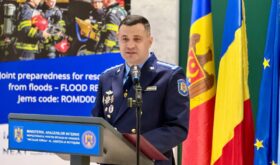
More than 400 participants took part (offline and online) in trainings dedicated to the implementation of projects financed under the Interreg VI-A NEXT Romania-Republic of Moldova 2021-2027 program, which took place in Chisinau.
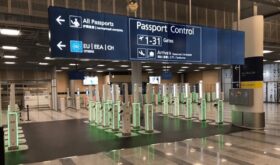
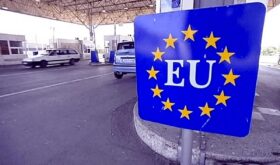
From April 10, 2026, the automated entry/exit system EES (Entry/Exit System) will be fully operational in the Schengen area, abolishing stamps in passports. Citizens of non-EU countries will now be asked for biometric data: face (photo) and fingerprints when crossing the border.
The funds from the European Union will be used for investments in energy, water supply and social services, including support for children and youth. This was stated by Prime Minister Alexandru Munteanu, commenting on the European Commission’s decision to allocate 189 million euros within the Reform and Growth Mechanism for Moldova.
The European Commission announced on March 17 the allocation of 189 million euros under the Reform and Growth Mechanism for Moldova, following the country’s successful completion of 24 reforms.
On March 17, Moldova moved to a new stage of the accession process to the European Union – the beginning of technical negotiations on the last three clusters within the acquis communautaire.
The European Union’s enlargement process should take place in waves, says MP Marcel Spatar, chairman of the parliamentary commission for European integration. He emphasized that, apart from Moldova and Ukraine, the Western Balkan countries are showing significant progress in the accession negotiations.
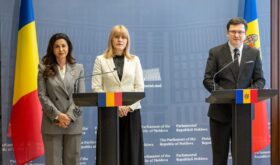
The top leadership of the Council of Europe, ministers and other high-ranking European officials, as well as UN representatives will come to Chisinau for the Conference on Social Rights – “European Social Charter”.
Romania intends to expand cooperation with Moldova in the security and defense sector, based on the strategic partnership between the two countries, as well as on common historical and cultural ties.
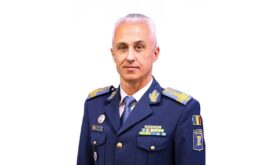
The Russian ambassador to Bucharest, in an interview with the Russian news agency TASS, speaking about a potential unification with Moldova, said that Romania would not be able to afford the costs of “uniru”.
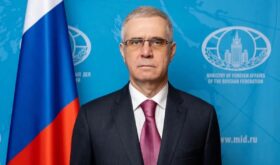
Lithuania will provide Moldova with 6 million euros of military assistance in 2026-2028. This was announced by Lithuanian President Gitanas Nauseda after a meeting with Moldovan President Maia Sandu, who is in Lithuania on an official visit.
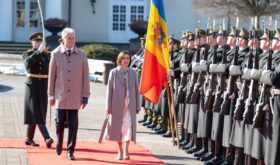
European Commission President Ursula von der Leyen has said that it is “extremely important” for the EU to bring the Western Balkan countries, Moldova and Ukraine closer to the EU because it is about common European security.
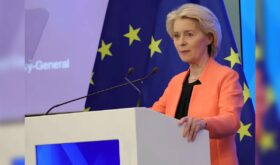
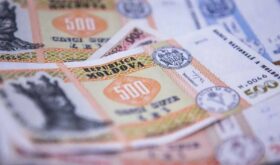
Since the EUR became the base currency of the National Bank of Moldova (NBM) for determining the exchange rate of the MDL and conducting currency interventions (January 2, 2025), the country’s national currency has depreciated by 5.58%.
According to Politico, last week EU ambassadors actually “buried” the idea of accelerated accession, stressing that membership should be based solely on merit and full fulfillment of the criteria. Earlier, the publication also wrote that Ukraine’s hopes for quick accession to the EU had been dashed.
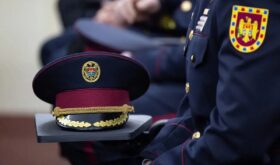
The authorities intend to strengthen the protection of high-ranking officials and establish cooperation with the competent EU authorities.
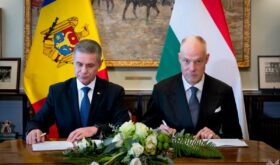
Hungary intends to bring the Moldovan-Hungarian cooperation in the defense sector to a new level. This was stated by Hungarian Defense Minister Kristof Szalay-Bobrovnicki after a meeting with Moldovan Defense Minister Anatolie Nosatii, who paid a visit to Budapest.
Moldova takes another step towards freedom of capital movement. The National Bank of Moldova (NBM) has drafted a law amending the Law on Foreign Exchange Regulation – the so-called draft law on partial liberalization. The draft is currently at the stage of public consultations and will soon be submitted by the Ministry of Finance to the government for consideration.

Starting from March 2, 2026, Moldovan citizens entering the EU will undergo a special identification procedure at five more Moldovan-Romanian border crossing points, Logos Press reports.