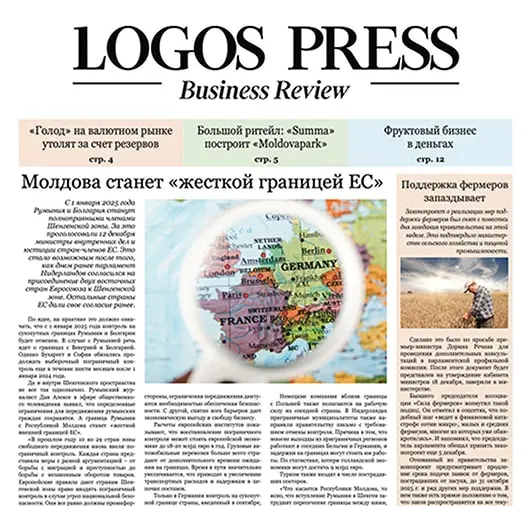
In the April 2026 report “Institutions for Industrial Policy,” International Monetary Fund (IMF) experts discuss the shift away from pure free market principles in economic management. Industrial strategies require active government intervention and coordination, reminiscent of Soviet Gosplan methods to support key sectors of the economy in the new environment, according to the Fund’s working papers.

A new sanitary regulation on cosmetic products in Moldova tightens safety controls, requiring manufacturers and importers to adhere to strict quality standards, labeling and provide evidence of product efficacy.

Finance ministers of five EU countries – Germany, Italy, Spain, Portugal and Austria – called for the introduction of a tax on excess profits of energy companies amid a sharp rise in fuel prices due to the war in Iran. This is reported by Reuters with reference to their letter to the European Commissioner for Climate Vopka Hukstra.

Moldova actively attracted external financing in 2025, with a significant portion of funds coming from the European Union. The EU even allocated additional funds (€18.9 million) in September to complement the aid package under the reform mechanism. One of the key objectives of these agreements is to support the country’s modernization and fulfill its EU accession commitments.

The week passed for the world currencies in the waiting mode. Traders are following the news about the war in Iran and waiting for data on liquidity flows. The dollar remained stable after rising by 0.4% in the previous session, helped by a calmer reaction to US President Donald Trump’s recent comments on Iran.
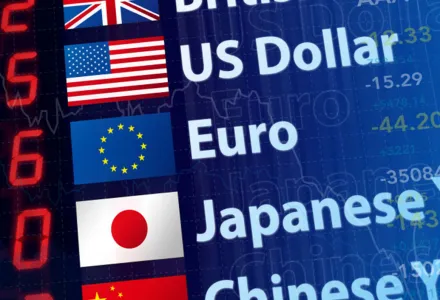
The EU is considering all options, including fuel rationing and releasing more oil from strategic reserves, as it prepares for a prolonged energy crisis caused by war in the Middle East.

In 2025, Moldova continued to have a high level of informal employment. According to various estimates, the informal labour market accounts for around 20% of the working population, including those in formal employment who continue to work without a formal employment contract or receive their wages ‘under the table’.

The employment rate in Moldova fell to 40.2% in the fourth quarter of 2025 from 43.40% in the third quarter. This decline reflects a reduction in the number of employed persons to 774,000, indicating a shrinking labor market.

Strangely enough, there is an answer to this question. It is not in the triumphalist rhetoric about overcoming the foreign trade imbalance and economic growth, but in the stingy language of borrowing figures that are not backed by real domestic production, capital inflows and exports.
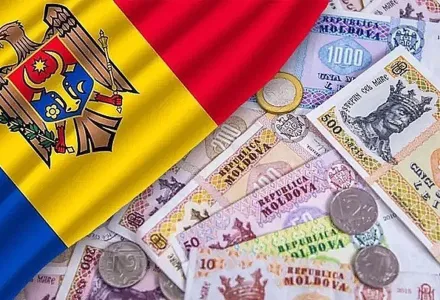
Major currencies are declining against the dollar amid deteriorating risk sentiment after Trump’s speech, showing everyone where the real safe haven lies.

Starting from April 1, 2026, the National Bank of Moldova (NBM) issues in numismatic circulation the commemorative coin “Ion Pelivan – 150 years since his birth”, which completes the series “Personalities”.

News agencies report that Amazon servers were attacked today. Drone strikes hit facilities in Bahrain (Hamala region) and, according to some reports, in the UAE. The attack caused power outages, damage to data centers and disruptions to services, banking and booking systems in the region.

Russian pipeline gas exports to Europe rose 22% year-on-year in March amid the crisis in the Middle East.

Foreign exchange reserves rose by €200 million in March, thanks to a tranche from the European Commission, reaching €5.272 billion. This increase followed a two-month decline, surpassing the previous high of €5.260 billion in 2024 and setting a new historical record.
Societe Generale sees a real risk of Brent oil prices soaring to the $150 per barrel range, as ship traffic through the Strait of Hormuz is not likely to be restored until mid-April at the earliest. At the same time, oil prices may go significantly higher if the Bab-el-Mandeb Strait is closed as well.

The desire of Norway and Iceland to join the EU may slow down the integration process of Ukraine and Moldova. The enlargement policy against the backdrop of Europe’s confrontation with the United States tends to favor more financially secure countries.

Each state agency will revise its planned procurement requirements for 2026 due to the crisis situation by at least 10% of their originally approved cost in order to save money.

The euro is going through a difficult period, approaching its worst performance since 2024. The conflict in the Middle East is increasing Europe’s dependence on energy imports, negatively affecting the region’s economy. The US, as a major oil producer, is benefiting, while the European Central Bank is facing an economic slowdown and inflation.
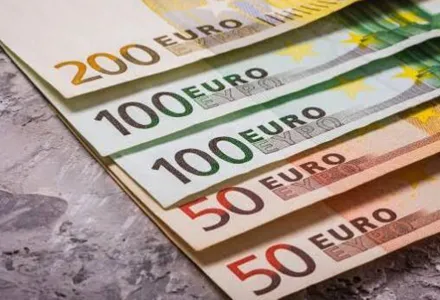
In March, business sentiment among businesses and consumers in the eurozone is sharply downgraded as the conflict in Iran exacerbated already volatile European business sentiment.

Moldova’s public sector is adopting new National Accounting Standards (NAS) developed on the basis of international IPSAS standards. The aim is to increase the transparency of financial reporting, adapt to European norms and improve the management of public resources.