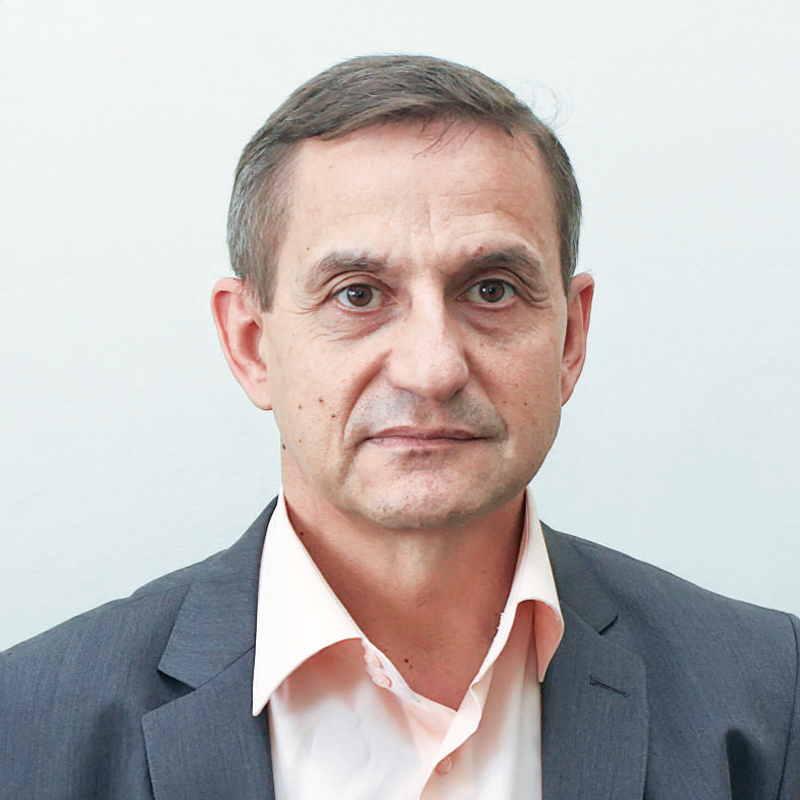

What are the prospects and plans of Moldovagaz after this? This is the subject of an interview for Logos Press with Vadim Ceban, acting chairman of the company’s management board.
LP: – How did “Moldovagaz” finish last year financially and what are the main directions of activity for the company at the moment?
– The financial results for the last year can be considered satisfactory, the company remains stable and sustainable. This is the main thing. Of course, the deprivation of our licenses seriously affected the company’s income, and this fact cannot be ignored.
As for the main directions of work, besides supplying gas to the Transnistrian region (we do it in accordance with the decision of ANRE), we provide services to “Energocom” on invoicing and customer service. In fact, our people work in the same offices as before, but leased to the state supplier. We provide services on the basis of a contract.
But gradually all these functions will be taken over by Energocom. I think that by the end of this year or at most by the middle of 2027, they will have fully completed the formation of their own structures, and there will be no need to extend the contract with us.
LP: – What will Moldovagaz do then, which 5 years ago was practically a monopolist on the gas market of Moldova, but now licenses for activities in different market segments are being taken away step by step?
– We were not a monopolist even then, if we talk about gas supply, but we were a key player, and it is undeniable. Despite all the vicissitudes of recent years, JSC “Moldovagaz” continues to be a serious player in the energy market of Moldova.
Our structural subdivision “Transautogaz” operates on the free gas market. In addition, 12 subsidiary gas distribution enterprises of the company in the regions provide services to suppliers in physical delivery of gas to consumers. I emphasize – not only Energocom, but all companies operating on the natural gas market. Now in Moldova more than 30 companies have licenses for such activities, but about 10 companies are active on the market.
LP: – Does this mean that the natural gas market in Moldova has been fully liberalized and has become more stable?
– I would not connect these two notions. On the one hand, the market is fully liberalized. By the way, as of April 1, another stage of liberalization is coming, when all large consumers are obliged to enter the free market and buy gas, including through exchange mechanisms. And this, by the way, will definitely have an impact on prices.
But it is premature to talk about market stability. Especially in the current geopolitical realities, when the world oil and gas markets are literally “stormy”.
Unfortunately, Moldova has not yet reached the phase when market liberalization and the presence of a large number of players becomes a factor of stability, sustainability and predictability. This applies to both natural gas and electricity. There are many reasons for this. But besides the objective ones, such as the turbulence on the world markets, there are internal factors that we have to see and eliminate.
LP: – What do you mean?
– First of all, the work of the BRM East platform, which should become an indicator of pricing and a guarantor of free access to the wholesale supply market. We have a paradoxical situation: the exchange works, but it does not act as a price benchmark. The indicator is the quotations of regional markets, and lately it has been Energocom’s offer as one of the key players in the procurement and supply of gas and electricity.
There would be nothing objectionable in this if the state-owned company was not in a privileged position (and this is not only my opinion). It enjoyed privileges from the state when importing, which other companies do not have. In addition, Energocom has received in the past, and may receive in the future, loans for the purchase of natural gas under government guarantees.
I repeat and want to be correctly understood: in today’s conditions, these are most likely necessary steps.
But when we talk about the free market, we should clearly understand that this situation distorts the market and puts the players in unequal conditions. Energocom itself should realize this, but most importantly, NRATI should take this into account when making certain decisions.
And by the way, a very important aspect: with the withdrawal of the license from JSC “Moldovagaz”, the exchange lost 90% of transactions, which led to the fact that it is no longer a reference point for the market, but a mechanism for buying and selling gas. But these were not the goals when the BRM East platform was created.
LP: – You mentioned today’s geopolitical realities. How can they affect Moldova in the near future and especially in the coming winter period?
– This is a very topical issue at the moment. During the three weeks of the war in Iran, gas futures in Europe jumped in price from 32 to 55 euros per MW on average. We have an average annual price of 38 euros per MW in our tariff. Therefore, in April we may enter a situation of tariff deviations, which is always extremely undesirable for the market. We will either have to raise tariffs or look for other ways to stabilize the market. But the difference of 180 euros per thousand cubic meters is a very serious deviation.
However, the current situation is at least more or less clear. What will happen in winter and how to prepare for it – there are much more uncertainties. The same futures for fall deliveries today show a negative spread, which discourages operators from any motivation to work for the future.
Usually, summer quotations are lower than winter quotations on the market. Therefore, operators make purchases in summer, pump gas into storage to use it in winter. Now the situation is different. Quotations have skyrocketed. And no one knows in which direction they will swing by the beginning of the fall-winter period.
Under such conditions, it becomes a big problem to buy gas for winter and pump it into storage or to conclude futures contracts with delivery in the fall or winter.
So what to do in such a situation is a big question. But preparation for the upcoming fall-winter period should be taken very seriously and possible solutions should be considered now.
LP: – Can the state of emergency in the energy sector, which has been introduced once again, help in this regard?
– Of course it can. At least in taking urgent and emergency measures to ensure uninterrupted supply of gas and electricity to the country. Including by allocating additional financial resources for this purpose.
But we must move away from constantly managing the energy sector in emergency mode. The current state of emergency has been introduced due to damage to the Isaccea-Vulcanesti power transmission line and the resulting power shortage.
But this is only part of the problem. We must realize that without our own basic generation there can be no sustainable energy in the country. Renewable energy sources have been actively developing recently, and during the summer months they can even for a short time almost completely cover Moldova’s needs. But these generation sources are seasonal and depend on weather factors.
Therefore, we should definitely have our own baseload generation and energy storage systems. It is also necessary to build new interconnectors for imports, but the key factor in ensuring real energy security is the availability of our own base generation capacity.
LP: – By the way, you recently made public your proposals to the government in this regard. What is the main idea?
– The idea is simple. I think it is reasonable to explore the possibility of providing grants to small and medium-sized enterprises (mainly producers or consumers of electricity – such as refrigeration plants, warehouses, other industrial facilities, etc.) that already have installed PV systems (including producer-consumers) and that produce surplus energy and/or consume energy from the grid during peak hours, to install electricity storage systems (in the ratio of 1/5-1/6).
The amount of these grants can be covered by the energy efficiency obligation scheme implementation program (energy efficiency fund).
Funds for this do not need to be found. Each natural gas consumer contributes 0.095 lei per 1 cubic meter of gas consumed through gas distribution companies to the energy efficiency fund. This year, the amount planned to be contributed to this fund by the gas distribution companies belonging to the “Moldovagaz” group is 85 million lei.
My other proposal concerns the basic generation. The current situation shows that it is time for the state to consider organizing auctions to attract investors who will build and operate large-capacity power plants to generate electricity in this region – the base load. Obviously, using natural gas. The technologies could be “gas turbines” or “combined cycle” (low and flexible capacity). And where there is thermal load, the installation of internal combustion engines for cogeneration projects is welcome.
These investors can be attracted on transparent, clear and predictable principles for a period of at least 10-15 years, similar to how auctions are organized and conducted to attract investment in renewable energy capacity. The maximum installed capacity could be approximately 300 MW (combined with balancing – at least this is being discussed). Naturally, these capacities will be installed in areas with high energy consumption (Chisinau, Balti, etc.).
LP: – Why are you sure that investors will be interested in such auctions?
– It is obvious that no investor will come and invest unless there is a clear and predictable model of return on investment.
In this regard, I am convinced that a viable model would be a power purchase agreement (PPA) based on Contract for difference (CfD).
In practice, this mechanism includes the following:
- Execution price: a fixed price at which the producer sells electricity, set through an auction.
- Reference price: the average market price (e.g. the next day’s market price).
The financial flows under this support mechanism are as follows:
- Payment to the producer: if the reference price is lower than the strike price, the government pays the difference to the producer through the central supplier. This provides a minimum guaranteed income for the producer.
- Payment to the state through the central supplier: if the reference price is higher than the strike price, the producer pays the difference to the central supplier. This allows unanticipated revenues to be returned to consumers.
In addition to the benefits of this mechanism for the state and consumers, it can be an incentive to attract investments in solid waste-to-energy (waste-to-energy) projects, which will also have a positive impact on the solid waste management system.
But it is very important that when attracting investments in the main generating capacities through such a support mechanism to ensure a transparent, fair, non-discriminatory selection procedure and to really target investors with experience in implementing such projects.
LP: – Thank you for the interview! We hope that these proposals will also be the subject of discussion for the development of Moldova’s energy market and ensuring the country’s energy security.
Interviewed by Dimitri CALAC