"No to Kings" protests, photo: www.britannica.com
Authoritarian drift fueled by right-wing populism threatens democracies around the world, including even long-standing ones like the United States, where President Donald Trump’s abuse of power seems to know no bounds. Even Trump’s more moderate European allies are constantly trying to undermine the rule of law. Most recently, Italian Prime Minister Giorgia Meloni attempted to limit the independence of the judiciary through a national referendum. Fortunately, Italians took to the streets en masse to defend their Constitution.
The crisis of democracy is exacerbating the climate crisis. Trump pulled the U.S. out of the Paris climate agreement and weakened or canceled many environmental protections. Meloni has reneged on a number of European Union Green Deal commitments and opposes stricter emissions reduction targets. Hungarian Prime Minister Viktor Orban has repeatedly blocked or delayed climate legislation at the EU level.
The unwillingness of politicians to address the crisis has left the fate of the planet in the hands of private investors and their (often limited) willingness to adopt sustainable technologies. At best, governments incentivize such investors, but rarely replace them. This is why, with the exception of China, funding for renewable energy has been inadequate, even as investments in artificial intelligence by “big tech” giants have skyrocketed.
An awakening and a sense of possibility
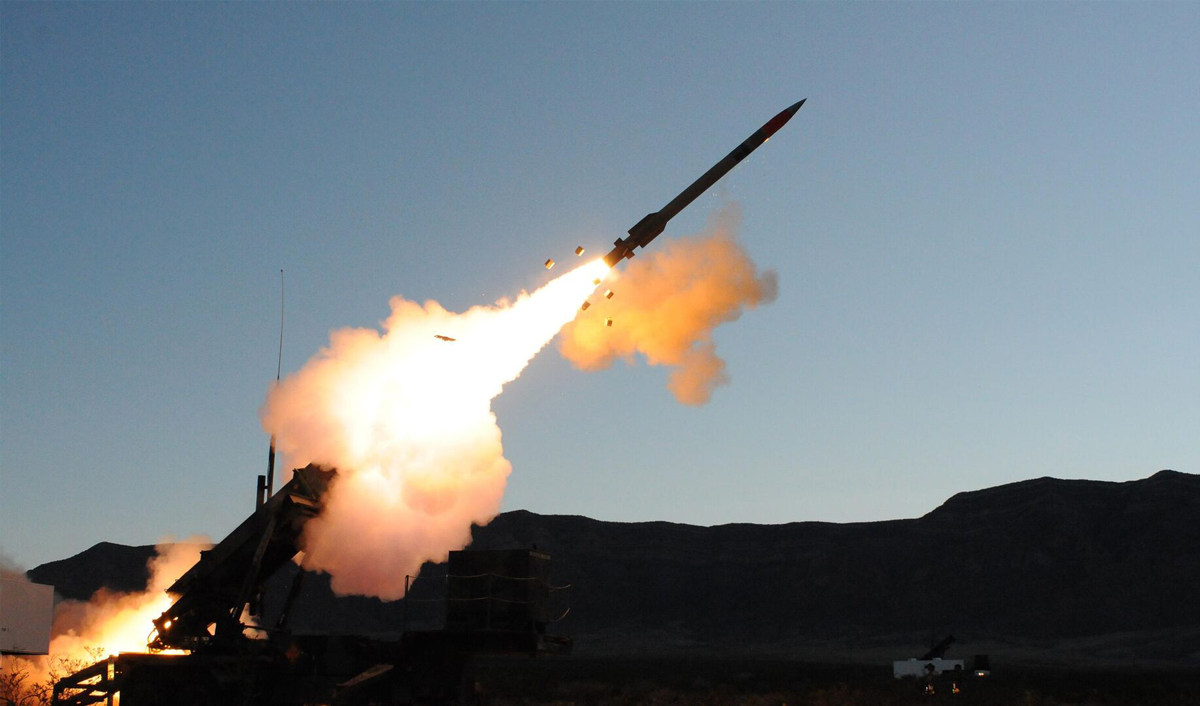
The irrationality and cruelty of Trump’s policies in recent months – from the brutality of the Minneapolis killings and his absurd plan to rebuild Gaza to his imperialist invasion of Venezuela and the staggering stupidity of his war against Iran – have reinforced the tragic nature of our era. Politics seems to be dictated by pure force, while moral ideals, from healthy democracy to environmental sustainability, seem incongruous. The space for principled action seems to have disappeared.
But we’ve been through this before. Albert Camus famously argued that even in a meaningless world we can create a form of hope through rebellion. Hannah Arendt found hope in the human ability to start anew even in the face of genocide. Martin Luther King, Jr. emphasized that suffering can lead to moral progress and collective transformation. My recently departed colleague, the philosopher Jonathan Lear, explained how loss can be a source of “radical hope” for a good future, even if it is impossible to specify or imagine what that good future will look like.
Recent events seem to vindicate such thinkers. Look at the awakening, however embryonic, of civil society: the beating heart of democracy and its most valuable bulwark against authoritarianism. We saw this in the US in the No Kings protests, in which millions of people participated. We also saw it in the exceptionally high turnout in the Italian referendum, especially in the participation of a significant number of young people who in the past would have stayed home.
This awakening cannot be explained solely by the gravity of today’s conditions or the authoritarian nature of today’s right-wing governments; even in the face of egregious actions that emphasize the importance of politics, apathy can persist. Awakening requires something more: a renewed sense of possibility.
From stagnation to hope
In the decades leading up to Trump, a sense of stagnation and powerlessness spread in the U.S. and Europe. Many people began to believe that it didn’t matter who ruled because nothing would change. Right-wing and left-wing governments would end up doing the same thing, following the dictates of neoliberalism. The ability to change course seemed limited by external and internal constraints, from constitutional to fiscal.
Of course, there were moments that offered hope for change. One of them was the election of Barack Obama as president of the United States in 2008. But it ended in disappointment. Under Obama, Wall Street banks received major financial injections in the wake of the global financial crisis, while millions of Americans lost their homes. Drone strikes in Pakistan, Yemen and Somalia were expanded. More immigrants have been deported than under any previous president. Obama, like the center-left governments of Europe, ended up governing within the same framework as his predecessors.
Trump, on the other hand, is living proof that one man with political power can change the fate of the world – and in the blink of an eye. It is therefore worth fighting to ensure that this power ends up in the right hands, or at least not in the hands of dictators or lunatics. The ease and arbitrariness with which an autocrat can transform domestic and foreign policy has given rise to a new democratic activism and its attendant hope.
The same is true of the climate crisis. Who would have thought that the only hope for completing the energy transition could emerge from a senseless war? And yet that is exactly what is happening. While the outcome of the conflict with Iran remains uncertain, green technology and renewable energy could be among its main beneficiaries. After all, Trump’s war has exposed the fragility of economies heavily dependent on fossil fuels, as the virtual closure of the Strait of Hormuz has caused energy prices to spike.
As other commentators have pointed out, China would do well to assemble a coalition of interested countries to kick-start a global breakthrough in green investment that would increase demand for the products of its industry. This would be attractive to European countries, as well as many others (including even Gulf countries). Thus, hope for a cleaner atmosphere and a more sustainable environment emerges from the tragedy of a senseless war.
Paradoxically, it is the tragedy – rather than a belief in linear moral progress by which people learn from past mistakes and avoid repeating them – that has become the source of hope for moral and political progress. The revival of democracy and the salvation of the planet now depend on it.
Chiara Cordelli
Chiara Cordelli, professor of political science at the University of Chicago and senior fellow at the Center for History and Economics at Sciences Po.
© Project Syndicate, 2026.
www.project-syndicate.org