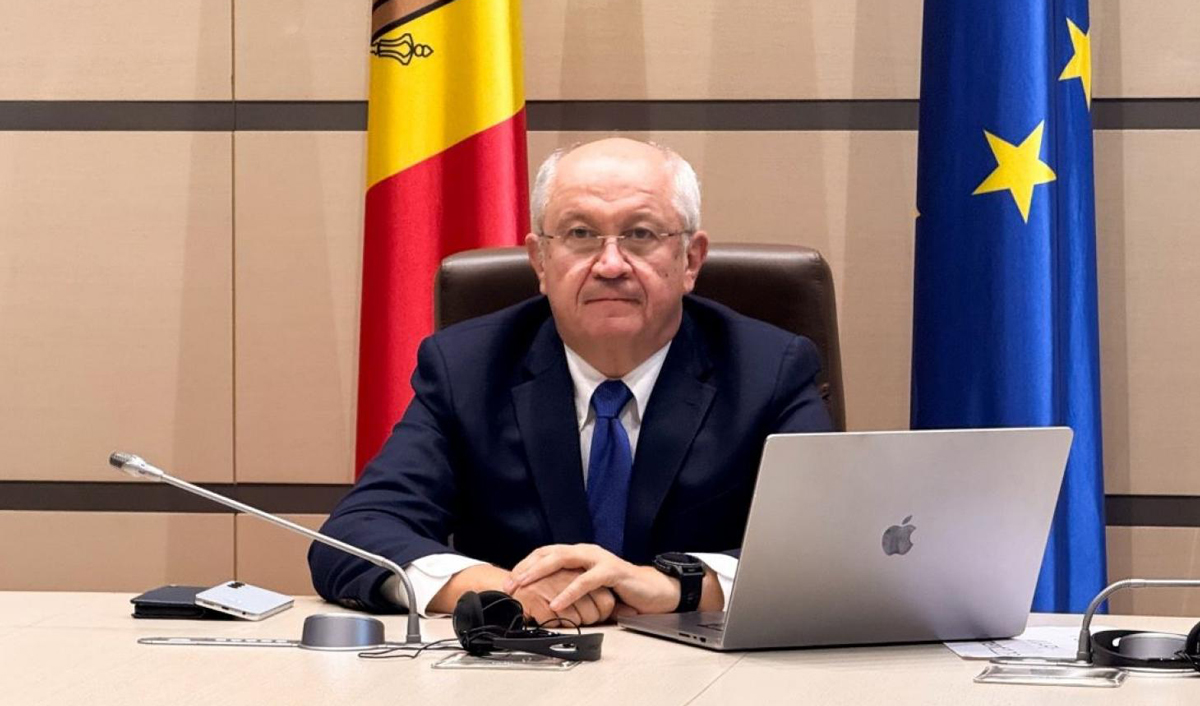

Viorel Furdui
This clarification was made by the government’s secretary-general, Alexei Buzu, during a meeting with the heads of the territorial bureaus of the State Chancellery, at which they discussed the reform of the local public administration. Last week, the same discussions were held with mayors and district chairmen. The consultations on the reform will continue until March.
Alexei Buzu emphasized the goals of the upcoming changes – to improve citizens’ access to services at the local level. For this purpose, mayoralties should become centers for attracting local and regional projects and community development, with all the necessary specialists available.
Regarding the role and competencies of the district councils, he noted that they “need to be rethought in terms of a clearer orientation towards regional development”. They should be “structures with a clearer and stronger mandate,” the government secretary general added.
In this context, the talk was also about the structure of the mayoralties’ teams and increasing their competences in the development of external funds, delimitation of property, digitalization of services. As well as the expansion of the range of services provided by the respective centers.
“In our opinion, the issue of the subjectivity and role of the districts should have been discussed at the first stage of the discussions,” notes Viorel Furdui, executive director of the Congress of Local Authorities (CALM). – But so far the authorities have not indicated their position on this issue, although we are sure that there is one, and the concept of the new administrative-territorial structure is ready. They are just testing the situation and opinions now”.
As a rule, such public consultations are not without discussion of the problems of financing local communities. In this sense, the meeting also focused on strengthening the tax potential of localities.
Representatives of local authorities have long insisted on increasing the share of local taxes for them. The European Charter of Local Autonomy stipulates that the competences of local authorities should be covered financially. In our country, the lack of a fiscal base strengthens the position of the center even more, they state.
Moldova, as a candidate for EU accession, should follow the principles on which the European community is built. One of them implies that decisions concerning certain localities should be taken by local authorities. It is impossible to achieve this without decentralization, especially financial decentralization.
“The reasons for the weak fiscal base are not so much the local authorities, but the weak economy in general and the suboptimal distribution of public funds, which has not changed for years,” says Viorel Furdui. – For many years we have been proposing to transfer 25% of the personal income tax to the cities, not to the districts, as it happens today, in order to strengthen them and give them opportunities to become real points of growth and development. And to add at least a portion of the corporate income tax to local authorities. To this I would add the assessment and revaluation of real estate for taxation purposes, as well as the delineation of land and property, which need to be completed urgently to give local authorities additional financial tools. All of this is money that localities need. Around the world, the fiscal base of local governments is small, except in major cities, so it is worth paying more attention to government funds and their allocation. Including a fund that allocates money to localities most in need of funds, the so-called equalization fund. But instead of new instruments of real financial autonomy, mayoralties are gradually increasing their competences without financial coverage.”
Representatives of the territorial bureaus of the State Chancellery, during discussions with Alexei Buzu, also touched upon aspects related to the voluntary unification of localities, as well as changes that will stimulate this process. The authorities promise that there will be “new short-term and long-term incentives for such unification and simplified procedures”.
“There are also many questions on the voluntary unification of mayoralties,” continues the executive director of the Congress of Local Authorities (CALM). – The process has a weak financial base, which is why it has not become widespread. At the same time, the government intends to finalize it and start the reform before the summer. Because you can’t do it a year before the local elections.
The electoral aspect increases the risks of administrative-territorial reform. “There is little time left for it, but the main thing is that the discussions that are held are theoretical and do not add specifics,” summarizes Furduy. – “We are told general phrases about ‘strong mayoralties’ and ‘decent services’, but we are not told the tools by which they will become so. And without them, strong mayoralties are a myth. Mechanically reducing their number will not produce the expected result. For example, service delivery centers should work in united mayoralties. These are new structures, but they are not discussed in detail, and there may be problems in their creation. Therefore, during the pre-election period, we risk entering a situation of unfinished, chaotically implemented reform”.