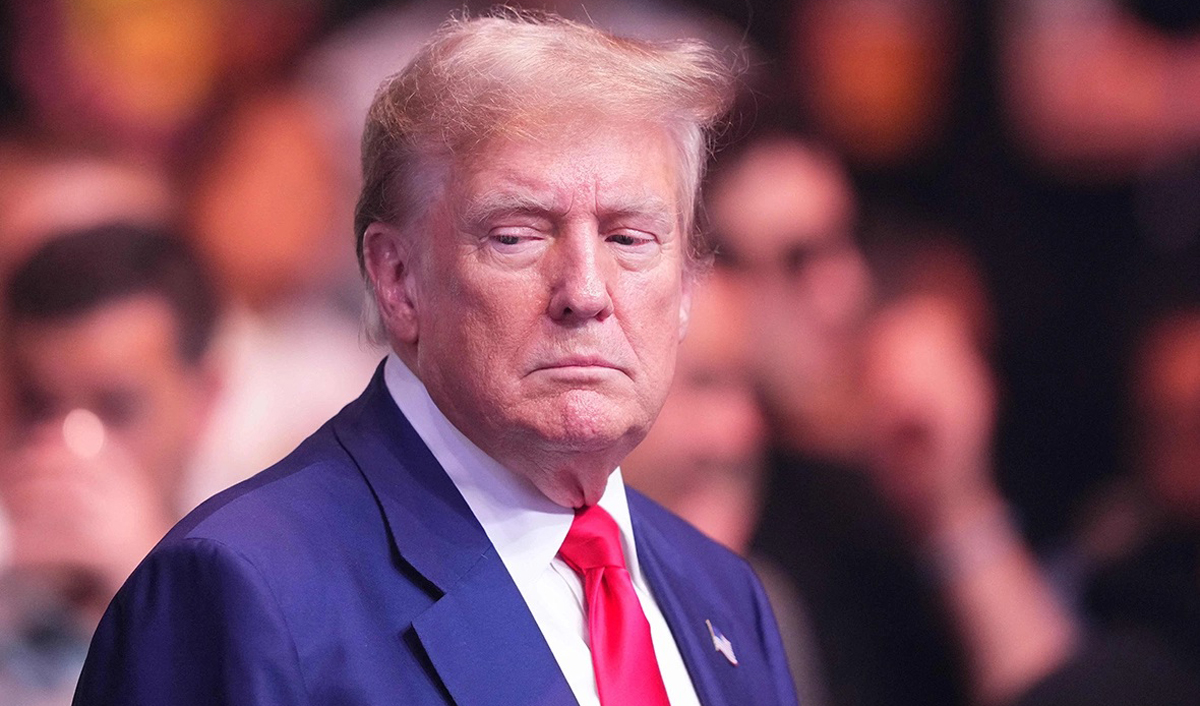

Adrian Havrilice, Minister of Finance
The Logos Press publication “TheMinistry of Finance is preparing a tax revolution” about this event caused a wide resonance in business circles and expert community.
Unfortunately, while the experts had a constructive discussion about how the proposed changes would affect business and what mistakes should be avoided in the course of the “tax revolution”, MP Natallia Davidovich habitually assumed the role of the truth in the last instance, accusing Logos Press of misinformation. This speaks about the level.
Finance Minister Andrian Havrilice also joined the discussion, calmly explaining the situation and urging not to draw premature conclusions.
Indeed, certain ideas of the ministry were voiced at the forum, which have not been polished yet and are not included in the concrete draft of the tax and customs policy for 2027. They are being worked on, and, as emphasized by State Secretary of the Ministry of Finance Corina Alexa, there will be public consultations, where these ideas will be discussed.
That is why experts from the tax sector have so far refrained from substantive comments on the Finance Ministry’s proposals. But they see the fact that such a discussion has started as a positive signal.
Reduce the number of preferential regimes
The initiative of the Ministry of Finance to reduce the number of preferential tax regimes from 15 to 3 was the most resonant. The authors intend to do this by introducing a zero tax rate on reinvested profits. In this case, those who use preferential regimes will be able to decide which one is more favorable for them. This is the logic of the authors of the proposal.
It is also quite understandable that representatives of the IT sector were the first to express concern. In particular, Veaceslav Cunev, a well-known specialist and activist in this important sector for Moldova. There have been talks for a long time that Moldova will have to give up a lot of privileges, including the regime for the IT park, when it joins the European Union.
In fact, at the legislative level there is a state guarantee that the IT-park will work until 2035. And it will be up to the residents of the park to choose in which regime to operate after the introduction of a zero rate on reinvested profits.
Investors are guided by the government’s message
As for the idea of the Ministry of Finance itself, experts generally perceive it positively.
“In general, we believe that this initiative will help to improve the business environment, make it more competitive from a tax point of view and simplify calculations when starting a business. At the same time, there should not be even a hint of changing or simplifying the IT park regime, based on the fact that there is such a state guarantee,” says Andrei Jizdan, director of the auditing company Jizdan & Partners. – Investors are guided by the state’s message when making decisions. The desire to unify the rate, etc. is positive, but even indirect hints that the park may be abolished, and it is not clear when and how, confuse investors”.
At the same time, the expert is sure that the Ministry of Finance should make changes for the economy as a whole, and business will figure out for itself what is beneficial to it and what to choose. The main thing is not to change horses at the crossroads.
– If the regime, which the authors of the changes are talking about, will be so attractive from the point of view of taxation that the residents of the park or free economic zones will automatically choose it, and, let’s say, there will be practically no residents left in the park, this is one situation, and it is not a problem, continues Andrei Zhizdan. – But it is important that investors, who oriented to work in the park, clearly knew and were sure that they have a guarantee until 2035. And if some other regime appears that is more attractive and optimal for them, and they can voluntarily switch to it, it is good.
In the context of tax changes, the proposal on the distribution of insurance payments to the pension fund has also provoked much discussion. Finance Minister Adrian Havrilice had to explain this very point. The tax service will not distribute these payments at its discretion, as many people realized.
“As for the comments regarding insurance payments, we should not thicken the colors,” says Serghei Temrin, director of the auditing company Concept. – The State Tax Service, of course, will not personally decide what amount of deductions to send to social insurance and what to send to medical insurance. Legislation will set the norms of such deductions, in percentages.
Guarantees of tax stability
Sergei Temrin emphasized that tax stability is important in any reforms. This should be the basis of all the changes proposed by the Ministry of Finance.
“When they created the IT park and lured them with a favorable tax regime, they were guaranteed stability for a certain number of years. At the heart of any tax legislative process is the principle of stability. And it implies invariability of key elements of the tax system. The rules should be changed in exceptional cases, when there are substantial and objective reasons for it. And give a transition period for businesses to adapt.”
“Let’s be consistent,” economist Viktor Burunsuz urges participants in the social network discussion. – Since you admit that the IT parks regime is good, the first thing to do is to explain to everyone what the problem is with pension contributions in this regime. The basis for calculating the individual contributions included in the 7% single taxation in the IT parks regime is the average salary in the economy. As far as I understand, you have no objections to this regime, and you probably won’t have any if the same basis is retained in the new regime, which proposes to unify state contributions related to social and health insurance.
The government’s intention to harmonize is to be welcomed. However, it is important to understand the subsequent rules/policies under which payments will be made under the terms of the unified contribution.”