

The report, supported by the World Bank under a Ministry of Education and Research project, indicates that demographic decline, migration and declining birth rates are shaping long-term pressures on the country’s school network.
According to the study, school infrastructure is only partially adapting to these changes: urban areas are consolidating schools, while rural areas continue to have a large number of small schools. This increases the gap in the quality of education between regions.
Projections show that by 2040, the number of pupils could fall by another 30% or so, especially outside Chisinau.
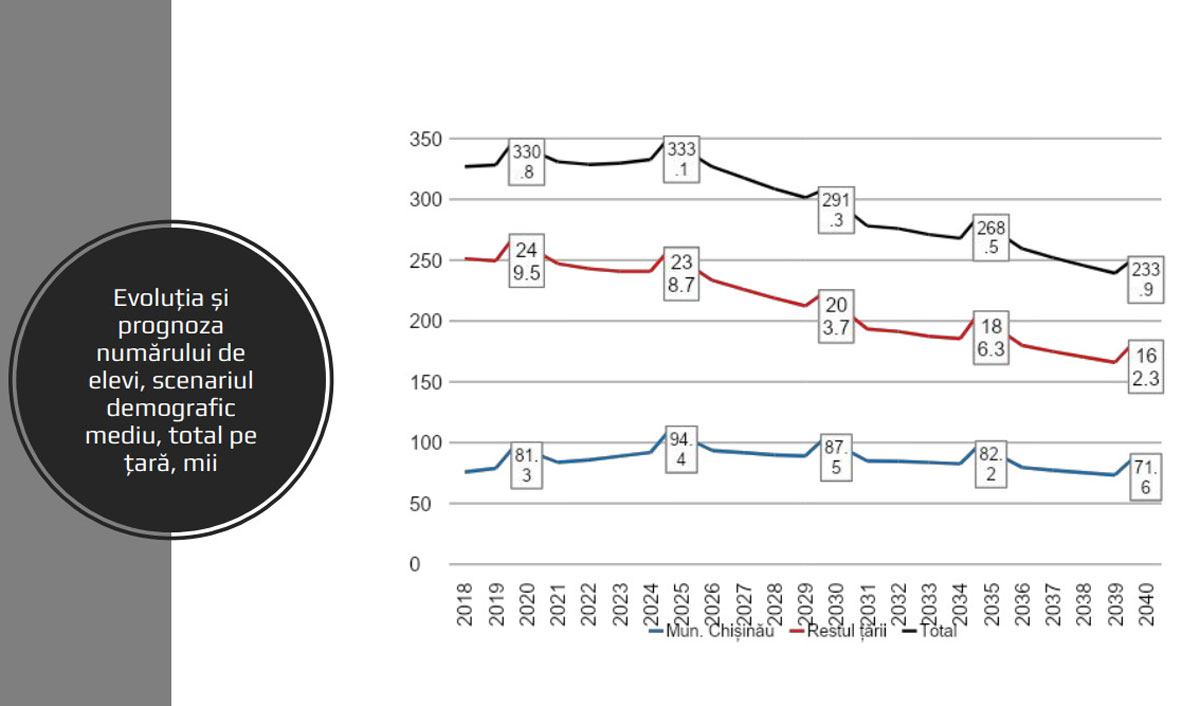
Separately, there is a shortage of teachers, especially in rural areas, where teachers often have to teach several subjects outside their specialization.
“The education system of the Republic of Moldova today operates in completely different conditions than those in which the current school infrastructure was formed. Declining birth rates, migration and a steady decrease in the number of school-age children put an increasingly serious strain on the sustainability of the school network, especially in rural areas,” said Anatol Gremalski, author of the study and director of programs at the Institute for Public Policy (IPP).
The specialized ministry believes that under these conditions, keeping the current structure of the school network unchanged may further reduce the quality of education.
“The findings of the study confirm the need to continue the reforms carried out by the Ministry of Education and research, which are aimed at strengthening the school network, improving the quality of education and ensuring equality among students,” the Ministry of Education said in a statement.
Changes in the Education Code provide for the reorganization of small schools to increase the efficiency of the system and improve learning conditions. The reform will affect about 73 institutions and 1,328 pupils.