
Foto: ChatGPT
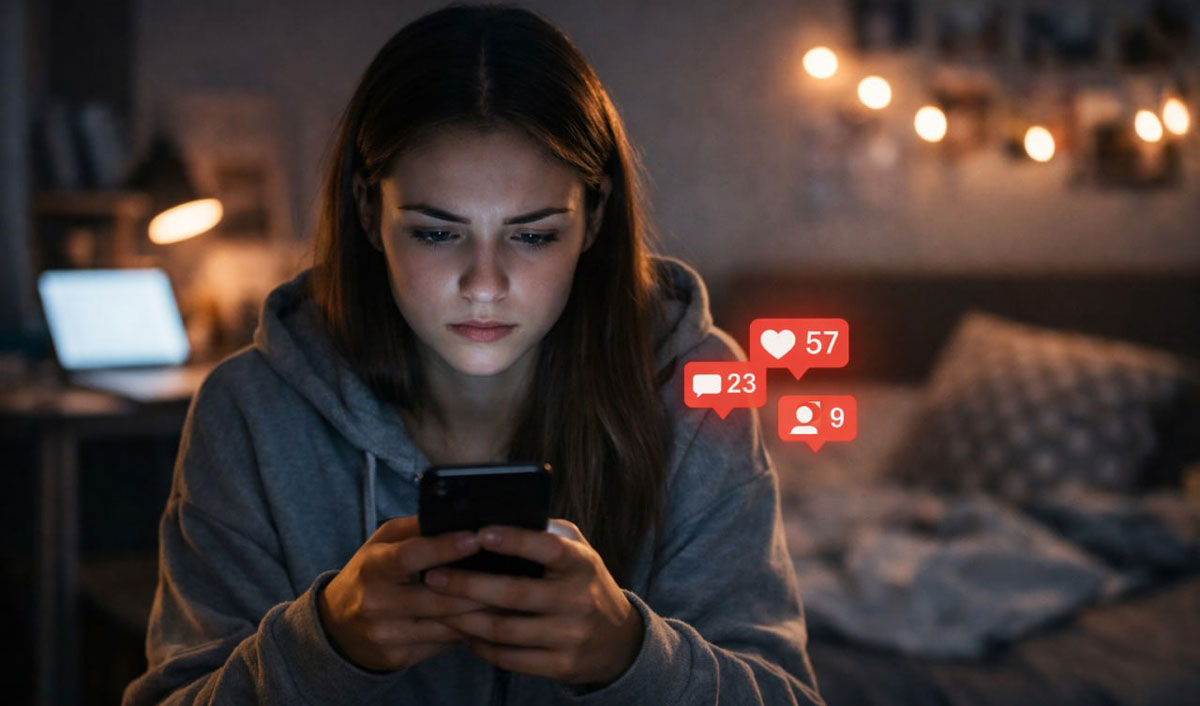
Although social media addiction is not officially recognized as a mental disorder, experts note a consistent pattern of behavior: a person regularly checks their phone, spends more time on the apps than they planned, and has trouble stopping even when it interferes with daily life.
People between the ages of 18 and 25 were particularly vulnerable, writes. This period is associated with the search for self, the formation of self-esteem and high sensitivity to the opinion of others. In the presence of social anxiety, live communication can cause stress, so online space becomes a more comfortable environment: here it is easier to observe others without direct contact.
However, this strategy only temporarily reduces stress. Over time, it reinforces avoidance of real social situations and increases dependence on the digital environment.
A key factor, according to a study published in the journal Addictive Behaviors, is the constant comparison of oneself to others. Users evaluate their own lives through the lens of others’ success, looks and popularity. This can either lower self-esteem or provide a short-term sense of superiority – but in both cases, it keeps attention in the feed.
The study involved 330 people, most of whom were students. After three months, a re-analysis showed: it was social anxiety that set off the chain in which comparison leads to increased social media use.
As a result, a vicious circle is formed: avoiding socializing – going online – comparison – increased addiction. In women, this connection was more pronounced, although scientists emphasize the need for additional research.
Psychologists believe that it is important to take into account not only the level of anxiety, but also digital habits, especially the tendency to constant comparisons, which can increase psychological vulnerability.