Send us a message, and we will definitely consider your suggestions and comments.
Category: Top News
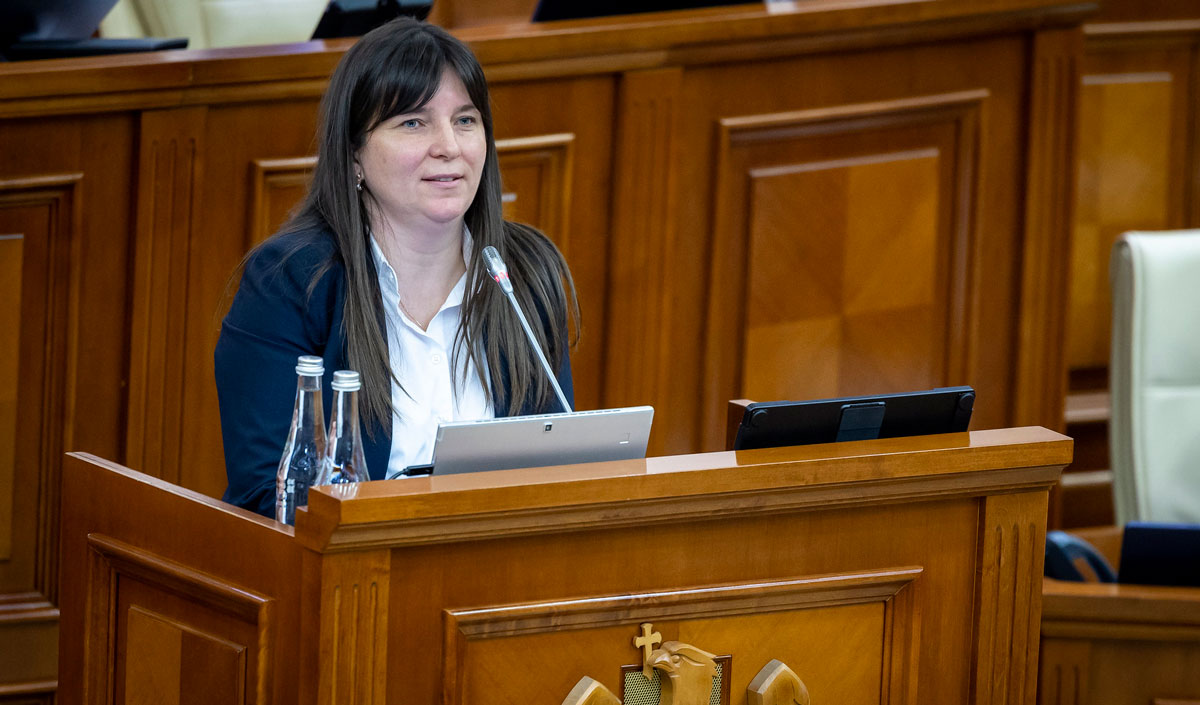
Prime Minister Vasile Tofan took the helm of the government during a challenging period for the country. The new cabinet faces a difficult but achievable task: to implement the necessary reforms while maintaining political, economic, and social stability.

Moldova’s Prime Minister-designate Vasile Tofan presented the government’s action plan, titled “A European Economy, an Effective State”, with which the cabinet he has formed intends to seek a vote of confidence from Parliament on July 21.

The diagnosis of “construction without development” explains the origins of the current housing market crisis. But the diagnosis alone doesn’t change anything, and the Moldovan debate on real estate gets stuck at this very point every time: the problem is identified, reforms are listed, and the participants go their separate ways.

The Council of Europe’s Group of States against Corruption (GRECO) stated that standards of integrity in government agencies must be strengthened and emphasized the responsibility of government leaders to foster a culture of zero tolerance for corruption.

Artificial intelligence is becoming a new arena of global competition, but in this race, small countries are not necessarily doomed to remain mere consumers of technology. Their opportunity lies in developing specialized solutions, data, and expertise for specific industries.

Experts from the Council of Europe acknowledged the need to strengthen the integrity of the judicial system, but called for a clear distinction between the routine evaluation of judges and the vetting process

The European Union is drafting new transparency rules for content created using artificial intelligence.

The situation on the global sugar market has begun to change—signs and indications of a global rise in sugar prices have emerged. The impact of trends in the international sugar market on Moldova’s sugar market is limited—due to a high (approximately 75%) basic customs duty and, consequently, limited imports.

Why do the same news about Moldova’s future evoke such different reactions?

After 18 years since its foundation – at a time of full maturity – iute Moldova prefers to measure its success not by statistics or turnover, but by the fate of the people it has supported. What started as an ambitious team in a single office in Chisinau has today grown into a digital financial ecosystem that has an impact on the entire region. Throughout this formative journey, the company has taken on a responsibility that goes beyond business: to remain a trusted partner that addresses the real day-to-day needs of the community.

The fruit business in Europe with both feet has entered the period of active preparation for the new marketing season: it assesses the condition of orchards after overwintering and spring weather stresses, production needs and market opportunities. The first conclusions are traditionally not very precise, but they are large-scale. They provide some insight into opportunities and a clear picture of expectations.

After two years of significant growth, the situation in the construction market has started to deteriorate noticeably. While the construction market recorded growth of 4.8% in 2024 and 32.2% in 2025, in the first quarter of this year the decline amounted to 12%.

In Moldova, the System of Deposit for Packaging (SDA) is not yet operational, but there is already a conflict between major market operators and state authorities. At issue is the choice of the administrator of the SDA system, a mechanism that should ensure the collection of used containers and increase their recycling rate. The idea itself is not disputed. What is disputed is how the future administrator was selected, how transparent the procedure was and why some of the major market players were left out.

When economists talk about “weak states,” they usually mean central government – its inability to collect taxes, enforce contracts, and produce public goods.

In an interview with our portal, entrepreneur Mircea Baciu spoke about a real opportunity that would allow Moldova to significantly increase its exports – through the use of international online trading platforms.
From Chisinau to Tirana, Sofia to Skopje, the cultures are different, the houses are different, but the challenges associated with a renovation project remain the same: rising material prices, limited access to flexible financing and the need to effectively manage the entire process. iute Group, an international financial group with a presence in Albania, Bulgaria, Northern Macedonia and the Republic of Moldova, is simultaneously launching in all four markets the “Home & Renovation” campaign, a regional campaign based on shared reality and offering a real solution to one of the most important financial issues in a client’s life: home renovation.

For some Moldovan farmers, the sowing campaign-2026 is just beginning. And for Moldovan sugar beet growers, it should have already ended. But the sowing of sugar beet has been delayed. Visions for its harvest and domestic sugar production are vague. The situation with sugar import is close to scandalous. But let’s talk about everything in order.

The Moldovan housing market is more honest than any official report. It does not lie, flatter or sympathize. It simply shows what it is. The problem is that nobody wants to look into this mirror.

Adidas Factory Store opens in Port Mall in Chisinau: this is an event not only for sports retail, but also for the entire retail industry of the country. This is not just the launch of a new outlet, but the introduction of a fundamentally different retail model, which has not been used in Moldova before.

The war in Iran has many facets. The world economy is cracking at the seams due to rising prices for energy, fertilizers, food – and on down the chain.