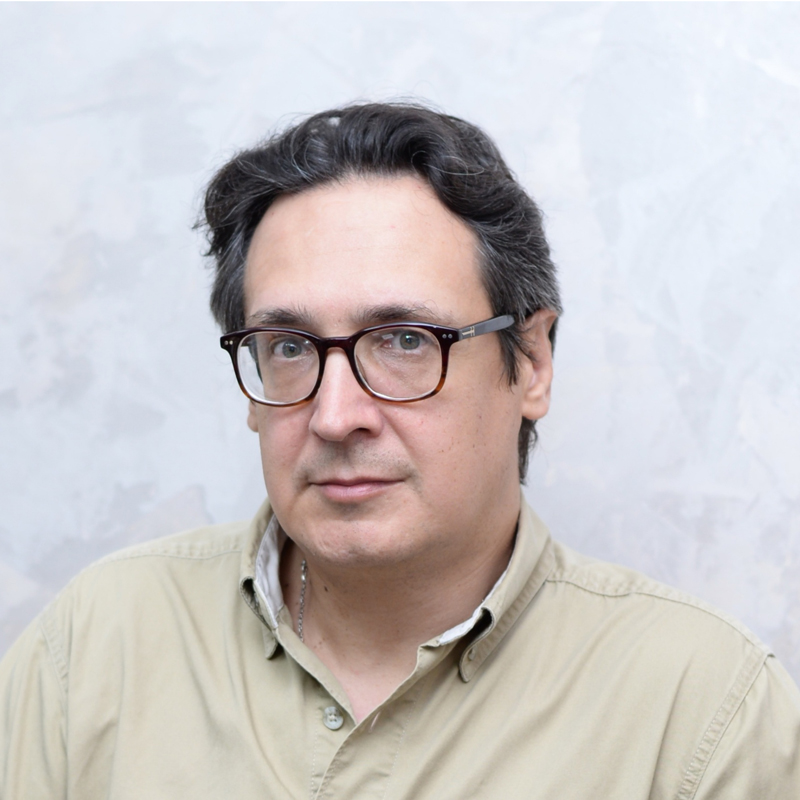
The Council of the Association “Forța Fermierilor” approved Alexandru Slusar as the executive director of the organization.

For Ukraine, as for other Central and Eastern European countries outside the eurozone that are already largely integrated into supply chains and trade with the EU, the additional benefits of euro adoption seem limited, but the risks are substantial.

More than fifty Moldovan producers of still and sparkling wines are taking part in the ProWein 2026 exhibition taking place on March 15-17 in Düsseldorf, Germany.

The Council of the International Maritime Organization (IMO) will hold an emergency meeting on the situation in the Middle East. The Council will focus on the impact of the situation in the Arabian Sea, the Gulf of Oman and the Gulf region on shipping and seafarers, particularly in and around the Strait of Hormuz.

Against the background of the crisis in the sugar beet industry and the prospects of importing agricultural products under the agreement with Mercosur, the European Union has allowed the import of transgenic corn and the production of genetically modified sugar beet.

On Friday, the governing Food Safety Agency (ANSA) issued an order authorizing the resumption of imports of frozen and chilled poultry meat from a poultry farm (Cherkassy, Ukraine) owned by Myronivsky Hliboproduct (MHP).

After the successful completion of the trial deliveries stage, domestic orchardists received official confirmation: Ukrainian products meet India’s high standards. This paves the way for signing long-term contracts, which in the long term can ensure the export of up to 500 containers (about 10,000 tons) of apples annually.

The renewal of the administrative board, as well as the problems of importing bee families and the quality of exported products were the focus of the general meeting of the National Association of Beekeepers of Moldova (ANARM) on March 13.

Participation in this platform provides the country with access to an international network of partners to develop cutting-edge programs to adapt agriculture to climate change, including through ecological production methods.

Polish President Karol Nawrocki has decided to block a law on the country’s participation in the EU’s SAFE program, under which Poland claims about 44 billion euros in rearmament loans.

Food and agricultural products account for more than 60% of Iran’s total supplies to Russia. The Russian market is significantly dependent on imports of Iranian fruit and vegetable products during certain periods of the marketing season.

The Council of Agri-food Associations CAPA “publicly condemns the continuation of the process of creating agricultural chambers, despite the fact that the law on their activity was challenged by a group of opposition deputies in the Constitutional Court.

This was announced by the head of the Ministry of Agriculture and Food Industry (MAIA), Ludmila Catlabuga. According to her, the Agency for Interventions and Payments in Agriculture (AIPA) is currently processing 396 applications for post-investment subsidies worth over 400 million lei, as well as 170 applications for so-called “complimentary” subsidies (in this case, partial compensations of farmers’ insurance premiums).

Global markets of exchange-traded agricultural products have entered a phase of moderate growth. In this situation, hedge funds are gradually increasing their purchases of oilseeds and grains, anticipating a period of high price volatility.

Over the past three years, 177.7 million tons of cargo have already been transported through the Ukrainian sea corridor, of which 106.4 million tons is grain. Exports are carried out to 55 countries of the world.

The MAIA Ministry of Agriculture and Food expects that potential tax preferences will partially compensate for the increase in farmers’ costs due to higher prices for inputs and encourage them not to reduce the scale of the spring sowing campaign. According to the Ministry’s estimates, approximately 1.3-1.4 million hectares are to be sown with spring crops in Moldova this spring.

The Parliament of Kazakhstan ratified an agreement that will allow the country to supply clean energy directly to the European Union. The technical highlight of the project will be the unique laying of a deep-water current cable under the Caspian Sea.

Over the past year, Poland has detained five criminal bosses from the post-Soviet space: four citizens of Georgia and one citizen of Belarus. In such cases, there are problems with deportation: their countries of citizenship are not in a hurry to accept them.

Tax changes and military force-majeure in Iran left grain market of Kazakhstan in stagnation: deals are single, prices are corrected, and market participants are cautiously looking for new benchmarks.

The government approved two stricter regulations: new rules for the official control of residues of pharmacologically active substances in products of animal origin and requirements for the safety of fertilizers.