The Euro showed surprising stability last week, contrary to the broader change in sentiment over the energy crisis and was the target of a sell-off within a basket of G10 currencies.
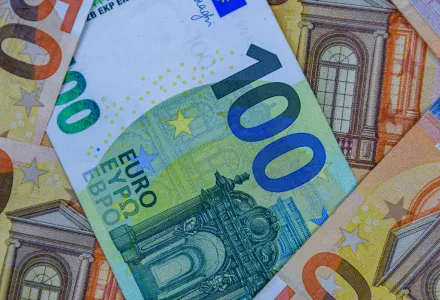
The European Central Bank (ECB) kept rates unchanged, warning that tensions in the Middle East and risks in the oil market could stoke inflation. The baseline forecast is for 2.6% in 2026, but with energy shocks, inflation could rise to 3.5-4.4% depending on the duration of supply disruptions.

European scientists are developing bio-based fertilizers that would reduce Europe’s dependence on Russian imports. One promising solution is algae grown on wastewater.

Against the backdrop of the ban by the head of the European Commission Ursula von der Leyen to buy Russian energy, traders are looking at thermal coal.

The National Bank of Moldova (NBM) is introducing a national Open Banking standard, obliging 15 payment service providers to implement secure API interfaces. This allows users to securely manage accounts with different banks through a single application, which is in line with the European Directive.

In February 2026, a significant cash outflow was recorded in Moldova: the volume of withdrawals exceeded their receipt in banks by 1,028 million lei, which emphasizes the increase in the population’s preference for cash.
The winners of Skytrax World Airport Awards and AirlineRatings.com’s World’s Best Airline Awards by continent, region and category have been announced.

As a result of rising energy prices in the context of the geopolitical situation, inflationary pressures may intensify until the first quarter of 2027, in this regard, the National Bank of Moldova (NBM) partially updated its February forecast and went on high alert .
New standards of consumer protection, on the one hand, and control over the activities of professional participants, on the other hand, are unlikely to cool down demand in the financial market. But, undoubtedly, they will add confidence to both sides of “money relations”.
The Executive Committee of the National Bank of Moldova (NBM) at its March 19 meeting kept the prime rate at 5% per annum, leaving at the current level the norms of mandatory reserve requirements for commercial banks of the Republic of Moldova.

The quota trading system has divided EU countries at today’s summit. The 27 leaders agree that energy prices are a serious problem, but disagree on how to solve it.

EU leaders gathered for a summit today to try to persuade Viktor Orban to lift his veto on a 90 billion euros allocation to Ukraine and to discuss the escalating military conflict in the Middle East and high energy prices.

The National Financial Market Commission (NFMC) has launched an online DAE (effective annual interest rate) calculator to help consumers objectively assess the cost of loans.

Security will be ensured by less bureaucracy but better import controls by government agencies.

Asian countries are seen as major buyers of Russian oil as exports are being redirected and supplies cut through familiar routes. CNBC reports that countries are lining up for resources from Russia.

From April 10, 2026, the automated entry/exit system EES (Entry/Exit System) will be fully operational in the Schengen area, abolishing stamps in passports. Citizens of non-EU countries will now be asked for biometric data: face (photo) and fingerprints when crossing the border.

Moldovan Finance Minister Andrian Gavrilice has confirmed the development of a large-scale tax reform that could lead to the adoption of a new Tax Code next year.

Relations between the EU and the US are once again on the verge of a deep crisis due to disagreements over security in the Strait of Hormuz, Politico reported, citing European diplomats.

IMF Deputy Executive Director Marnix van Reij is on a two-day working visit to Chisinau to hold consultations with the Moldovan leadership on a new cooperation program.

Financial infrastructure and technology hubs in the Middle East have become priority targets for Iranian strikes as the regional conflict escalates. Last week, Iran officially declared banks and economic centers in the U.S. and Israel “legitimate targets.