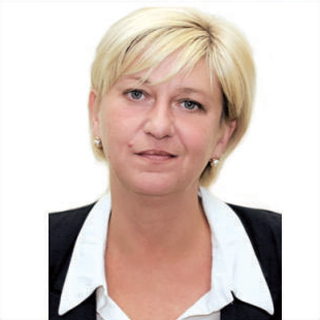

Tatiana Shevchuk
LP: – Ms. Shevchuk, controlling the correctness of public finance management is not an easy task and not always a thankful one. What is the secret of the authority of the supreme audit body?
– I agree that the mission of control over the efficiency of the use of state resources is often difficult and stressful when it comes to painful issues that need to be resolved in the interests of the common good.
As part of our audit activities, we identify risks that may lead to financial losses or inefficient use of resources. At the same time, we formulate recommendations and monitor their implementation, thus contributing to the elimination of errors, strengthening the responsibility of public authorities, their financial and managerial discipline.
It is always difficult to admit mistakes. But when the auditor acts not as a judge, but as a qualified assistant, shows causes and effects, the way to efficiency, he is always listened to. The secret is in this, and also in the apolitical and independent nature of the supreme audit institution, which plays a crucial role in upholding the rule of law and democracy.
LP: – Why is it so important for the external public audit to be independent and apolitical?
– Independence and apolitical character are the basis of the credibility of the Court of Audit. Control is conducted on the basis of law, professional standards and audit evidence, without political influence, external pressure or personal interests.
Independence guarantees objectivity and impartiality of the findings, conclusions and recommendations of the Court of Accounts. Only under such conditions can citizens, Parliament and state authorities be sure that our assessments reflect reality, serve the public interest, and do not favor individuals or groups.
Citizens have a right to know how taxpayers’ money is being used. resources collected through taxes and duties. External audit provides them with this assurance. Publishing reports and presenting facts ensures transparency and creates the prerequisites for accountability in case of irregularities.
Parliament, the media and civil society can use the results of the audit to evaluate public policy and to request remedial action. In this way, external public audit contributes to building confidence in public institutions and the healthy functioning of democracy.
LP: – What types of audits are most effective in protecting the public interest?
– All types of audits are important and complement each other. Financial audits examine the accuracy of financial statements and the legality of transactions. Compliance audits assess compliance with the regulatory framework, applicable rules and procedures.
However, performance audits are particularly valuable in protecting the public interest because they analyze whether resources have been used efficiently, economically, and with concrete results for citizens.
This type of audit answers important questions: whether public policies are achieving their objectives and whether public investments are having the expected effect. Performance audits also provide insight into the real impact of public spending on increasing public welfare and help decision-makers improve policies.
LP: – What is the contribution of the Court of Accounts to Moldova’s EU accession process?
– Supporting the country’s European integration path is one of the strategic priorities of the institution. Our contribution is primarily aimed at harmonizing the national system of external public audit with EU standards, principles and best practices, so that public finance management complies with European requirements.
The Court of Auditors actively participates in the national coordination mechanisms of the accession process, being represented in several working groups within Cluster 1 “Fundamental Values”. We participate in the Working Group on Public Administration Reform relevant to the political criterion, as well as in the Working Group on Chapter 32 “Financial Control” and Chapter 18 “Statistics”. At the same time, we contribute to the agendas of the Working Groups on Chapters 33 “Fiscal Provisions” and 22 “Regional Policy and Coordination of Structural Instruments”, areas closely related to fiscal discipline and the use of public funds.
Overall, the role of the Court of Auditors in the accession process is not limited to technical aspects, but is related to strengthening the culture of accountability and transparency in the public sector. Through audits, recommendations and active institutional engagement we contribute to building a European governance system.
LP: – In the context of EU requirements, what priority adjustments do you consider necessary to strengthen external public audit?
– The priorities are strengthening the financial independence and institutional capacity of the Court of Accounts, modernization of the regulatory framework and digitalization of audit processes. It is also crucial to increase transparency and public access to information on the management of public resources.
Bringing national legislation, including in the field of public procurement and financial management, in line with European standards will contribute to a more efficient use of funds and reduce the risks of fraud or inefficient use of resources.
LP: – Are there any new initiatives to make audit reports more accessible to the public?
– Yes, the Court of Accounts is paying more and more attention to how the results of the audit activity are communicated to the general public, based on the belief that transparency means not only the publication of reports, but also their understanding by citizens.
In this regard, we are gradually developing more user-friendly presentation formats adapted to the different layers of society. Thus, in addition to full reports with more technical content specifically for authorities and professionals, we are striving to develop summary reports, summaries and explanatory materials that highlight key findings in a clear and accessible manner.
These materials are designed to explain not only “what didn’t work” but also why it matters to citizens and what the consequences are. The Chamber of Accounts also strengthens dialog with the public through public presentations of audit reports, continuous interaction with the media and civil society.
Another important task is to utilize digital channels, including the institution’s website and communication networks. As part of this activity, we clarify the role of the institution by clarifying issues of public interest.
LP: – To what extent can external public audit prevent fraud and misuse of public funds?
– Preventing wrongdoing is our goal. External audit sends a clear signal that the management of public funds is objectively assessed, which has an important preventive effect on the behavior of authorities and decision makers of public bodies.
It is important not only to detect a violation that has already occurred, but also to prevent it. This is done by identifying “weaknesses”, systemic and accidental, inadequate procedures and other deficiencies. Our recommendations are usually aimed at addressing root causes and preventing similar violations. The key here is to monitor the recommendations and the extent to which they are implemented.
This approach encourages compliance with the law and accountability of public agency management. Publicizing the audit report also serves this purpose. Publicizing problems creates pressure and discourages unfair practices.
LP: – What are the main tasks of the Audit Chamber in the period 2025-2026?
– Our tasks are driven both by the ongoing changes in the public sector and by new international and European requirements. One of the most important challenges remains access to complete, accurate and timely data provided by audited organizations. The quality and availability of such data is essential for relevant and evidence-based audits, and its absence can affect the depth and speed of audit analysis.
Another important challenge is to modernize the IT infrastructure and digital tools used in the audit process. The digitalization of public administration, growing data volumes and the complexity of IT systems require the adaptation of audit methods as well as the use of modern data analysis solutions. This process requires investments, adequate resources and the development of auditors’ technical skills.
At the same time, the Court of Accounts has to manage increasingly complex risks at both central and local levels, including in sensitive areas such as public procurement, large investments, state-owned enterprises and externally financed programs. The increased use of European funds and other international financial instruments reinforces the need for effective and highly specialized auditing.
Strengthening the professional competencies of auditors is a constant priority. It is necessary to develop skills in performance auditing to meet the increased expectations of the Parliament, development partners and society. Continuous training and exchange of international experience are essential in this respect.
Last but not least, effective communication of audit results is equally important. The Court of Auditors must explain technical findings and complex analyses to citizens in a clear, relevant and understandable way, without losing professional ethics and rigor of facts. Success in this directly contributes to improving the effectiveness of the audit activity and strengthening public confidence in the institution.
LP: – Thank you very much for the interview!
Tatiana Shevchuk: External state audit is one of the most important pillars of responsible and efficient management of the state’s resources. My message is a call for shared responsibility! Every leu spent correctly and every decision based on reliable information contribute to stability, trust and the European future of the Republic of Moldova.

