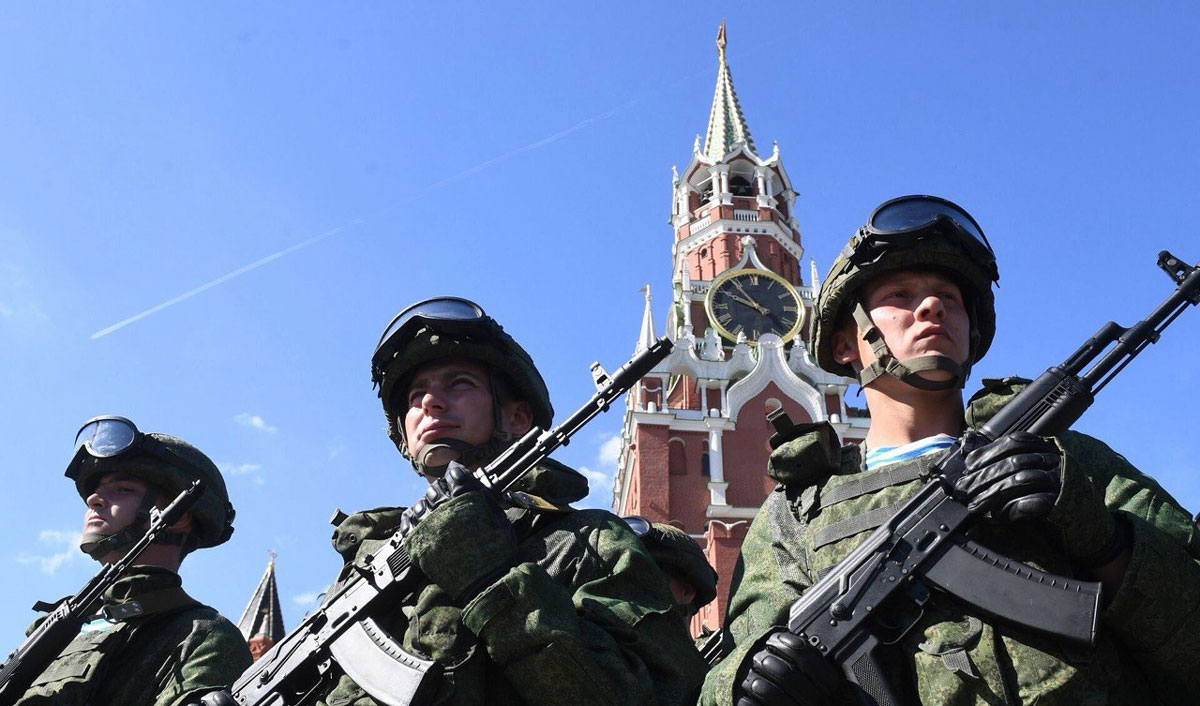

As DW notes with reference to a new report by the Stockholm Peace Research Institute, Russia has spent about Br16 trillion ($178 billion)on the military, which is 7.5% of GDP. Julian Cooper, an expert at the institute, estimates that in 2026, spending will drop to 14.9 trillion rubles ($165 billion), or 6.3% of GDP. This is a reduction adjusted for inflation – in nominal terms, spending remains high.
At the same time, the government’s long-term plans assume that spending will stabilize at around Br15 trillion ($174 billion) per year.
The hidden cost of war
At first glance, it may seem that the growth of military expenditures does not come at the expense of the social sphere. But, as the report notes, this is an illusion.
Formally, spending on education and health care is increasing, but this growth does not cover inflation. In real terms, funding is decreasing.
In addition, some military expenditures are “masked” in civilian budget items. For example, war-related social policy expenditures more than doubled from 242 billion rubles ($2.7 billion) to 594 billion rubles ($6.6 billion) in just one year.
A separate burden falls on the regions. They are the ones who finance payments to contractors and compensation to victims and families of the dead. In 2025, these expenses reached about Br0.5 trillion ($5.6 billion) in each direction. Against the backdrop of declining tax revenues, regional budgets are facing record deficits.
Reduced opportunities for spending growth are forcing the authorities to change their approach. Instead of increasing the budget, they are betting on efficiency.
The Ministry of Defense is introducing elements of “lean management,” reforming financial planning and creating a unified digital system instead of a multitude of disparate platforms.
At the same time, the structure of military procurement is changing. The focus is shifting to cheaper and mass-produced solutions – primarily drones – that partially replace expensive equipment.
Funding for war will not stop
Despite the pressure of sanctions and slowing economic growth, Russia retains the resources to continue the war, SIPRI concludes.
Economic difficulties, according to experts, will not be a factor in its end. If necessary, the state can compensate for missing revenues by increasing the tax burden.
The situation on the commodity markets plays an additional role. The growth of oil prices can temporarily reduce the pressure on the budget. However, in the long term, the structural problems of the economy remain.