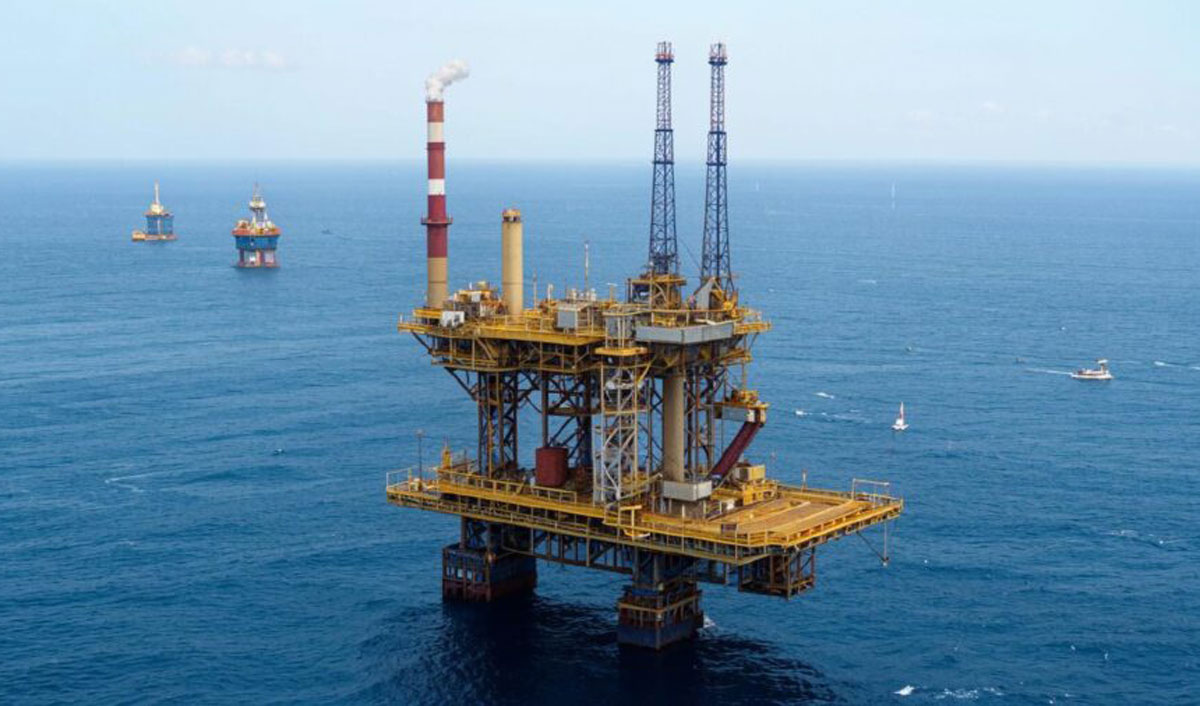

Events in the Middle East have led to the blockage of about 20% of the world’s oil supply and a sharp rise in fuel prices. According to the National Energy Regulatory Agency (ANRE), the last comparable crisis was in 2022, with the outbreak of war in Ukraine. Moldova, as an importing country, was directly affected by these processes.
“Moldova is very much dependent, in fact completely dependent on price fluctuations on international markets, we can only follow this trend,” said ANRE Director General Alexei Taran. Together with his colleagues from other specialized agencies, he described the response measures before and during the state of emergency in the energy sector.
What was done
- After the introduction of the state of emergency, the methodology for calculating fuel prices was changed: instead of a 14-day average value, a 7-day average was used for operational calculation at gas stations.
- A restriction on the sale of diesel fuel in containers (up to 20 liters) was introduced. This helped to return to normal sales limits for the respective period. Today, only 30-40 filling stations have no diesel, but even here there is a positive trend. “There will be diesel!”, – assured the Director General of ANRE.
- The unblocking of the Lukoil-Moldova situation has contributed to the reduction of the number of gas stations experiencing fuel shortages.
- The market operators were obliged to report daily on the stocks of oil products and the availability of fuel at gas stations, which made it possible to monitor imports and stocks in an operative mode.
- A restriction on re-export of oil products from the Giurgiulesti port under emergency conditions was introduced, which provided the domestic market with sufficient volumes of diesel fuel. In particular, this applies to exports to Ukraine, where margins were higher and prices increased by 30-40% in the first days.
- It was allowed to sell premium fuel at the price of standard fuel if there was a margin, which allowed to provide consumers even if there was a shortage of standard diesel.
- An obligation was introduced for importers to submit import plans for April in advance. All licensed companies have submitted data and planned volumes have exceeded sales forecasts for both retail and wholesale.
- The Competition Board has been regularly requesting data from major importers on import and sales volumes, uncovered demand, prices and costs since the beginning of March.
- In March, the growth of budget revenues from VAT amounted to about 118 million lei, from excise duties – about 59 million lei. The return of excise duties to the agricultural sector for the spring campaign is launched (about 110 million lei), the conditions of VAT refund were updated, the program was prolonged until December 2026.
- In the transportation sector, a temporary tariff has been approved: if the cost changes by more than 20%, ANTA will revise it weekly. The railroad has not yet raised prices, counting on the redistribution of cargo traffic. At the same time, prices on air transportation are not regulated.
One of the main conclusions of the authorities is approximately the following: Moldova is “lucky” to have a state of emergency regime. Karolina Novak, State Secretary of the Ministry of Energy: “This is a very important tool: not all countries at the EU level have such intervention mechanisms”.
What can be done
- Measures are needed to prevent chain price increases. “You have amortized the risks of operators who sell fuel, but citizens pay for it on a daily basis,” said MP Petru Burduja.
- Legislative changes are needed in the field of oil products: mandatory formation of reserves by importers, creation of a central state operator for storing strategic fuel reserves, as well as the possibility of selling non-standard diesel fuel at the price of standard fuel.
- Adopt a government resolution on the return of the excise tax at least for the period of the state of emergency. Chairman of the Commission on Agriculture Sergei Ivanov: “Is it not clear that we need to relieve tension in society?”
- In the field of cargo transportation, the increase of expenses has been registered: international transportation 36-40%, internal cargo transportation – up to 60% (from 14-18 to 29 lei per km). This direction is not regulated by the state, nevertheless, the Ministry of Finance has received the carriers’ proposals to amortize the price increase.
- The Ministry of Finance is proposed to consider a temporary adjustment of the VAT rate or the introduction of compensation mechanisms (privileges, refunds) to reduce the tax burden on citizens and the economy.
Of all the proposals, the position of the authorities with regard to changes in legislation and VAT looks the clearest – and it is not about reduction.
“I support the approach of the Ministry of Finance and the government to provide targeted assistance to the most affected industries (for example, agriculture, transportation, road sector). I do not support the proposal to introduce a general reduction in VAT and excise taxes for all consumers – this is a regressive measure that helps those who consume more fuel and have higher incomes the most,” said Commission Chairman Radu Marian.
This position is shared by former Prime Minister Ion Sturza, who believes that the VAT reduction will not significantly reduce the price of fuel.
“In Romania, there was a rather serious intervention in terms of excise duty and VAT, and the prices decreased by about 30 bani – not significant. Thus, our price level is much lower, also compared to Romania, because the components of fuel – excise and VAT – we have significantly lower, almost twice. We have a very limited fiscal space. We could even completely remove excise tax and reduce VAT, but it will not have the expected effect,” Ion Sturza said in a TV program.
Finally, there was another proposal to the authorities – on the verge of pragmatism and trolling, namely, to ask for help from the European Union.
“We participated in all sanctions, we were obedient, and now without the support of Europeans we may collapse economically, morally and spiritually,” said Vasile Costiuc, leader of the Democrația Acasă party.
P.S. At the time when the material was already prepared, information about the first decrease in the price of diesel fuel appeared: starting from Friday, April 10, the price will be 34.49 lei per liter for standard diesel (-49 bani) and 29.83 lei per liter for AI-95 gasoline (+1 bani).