Emmanuel Macron Photo: AP / TASS
“To be free, one must inspire fear.” With this striking saying, Macron outlined a concept he calls “forward deterrence” that will reshape the strategic map of Europe. The French nuclear umbrella, long limited in doctrine to the defense of national interests alone, will now extend to a large part of the European continent.
The reason for this shift is obvious. Europe faces a convergence of threats on its borders, exacerbated by what Macron diplomatically described as “a realignment of American priorities and a strong incentive for Europe to take more direct responsibility for its own security.” At the same time, Macron emphasized that the new doctrine is not directed against the United States; rather, it complements the U.S. strategic pivot toward the Indo-Pacific region.
Macron warned that Europe’s own strategic environment has changed dangerously. “We are seeing both an increased risk of conflicts crossing the nuclear threshold,” he noted, “and at the same time an intensification of conflicts below that threshold. In Macron’s view, this proliferation of non-nuclear confrontations makes nuclear escalation more likely. “Have we not seen in recent months volleys of missiles striking nuclear powers or nuclear-armed states? Europe could one day find itself in a similar situation.”
Security through force
Macron’s new doctrine is based on a key idea: nuclear and conventional forces are deeply interdependent and serve the same purpose – to dissuade any adversary from using force against France’s vital interests. “To be strong in our nuclear deterrence, we must be strong in our conventional capabilities in all their dimensions.” This is what is meant by the “support” (“épaulement”) now expected from European allies so that French deterrence can credibly extend to the continent.
“Forward deterrence” recognizes that nuclear weapons cannot protect every square meter of allied territory. There are spaces – geographically, politically, strategically – where the use of atomic weapons is simply impractical. Under the traditional French “anti-urban” doctrine, the primary threat is retaliation against enemy population centers. But what happens when a hostile actor operates in an area where a nuclear response would be disproportionate or counterproductive?
The Cold War serves as a textbook example. West Berlin, located in East Germany, could not be defended with nuclear weapons without destroying it. The solution was to flood the city with NATO soldiers, making any Soviet attack an automatic trigger for full-scale war. This was President John F. Kennedy’s “buildup of forces” in response to the Berlin Crisis of 1961 (East Germany’s response was the erection of the Berlin Wall).
In 2026, Europe’s vulnerable zones run along the Baltic States and the Suwalki Corridor between Poland and Lithuania, bordering the Russian exclave of Kaliningrad. The defense of these territories requires strong conventional forces capable of deterring aggression in areas where the use of nuclear weapons is unlikely.
Who will fall under France’s nuclear umbrella?
Under the new structure, France will retain full sovereign control over its nuclear arsenal and nuclear missile launch authority, and will be able to station strategic bombers on the territory of European allies. “Our interests, while encompassing both the metropolis and France’s overseas territories, cannot be reduced to the mere outlines of our national borders,” Macron said.
Partner nations include Britain, Germany, Poland, the Netherlands, Belgium, Greece, Sweden and Denmark. Norway’s foreign minister said the very next day that his country was “ready to discuss” joining the structure.
The terms are simple: France extends its nuclear defenses, “providing for the stationing of elements of strategic forces on allied territory under certain circumstances.” In return, its partners “bear” the non-nuclear burden: intelligence, surveillance, detection of nuclear launches, and the conventional means necessary to protect Europe’s most vulnerable flanks.
The strategic benefit of dispersing nuclear-armed forces across the continent is twofold. First, it provides European deterrence with a strategic depth that a country the size of France simply cannot achieve on its own. Second, what Macron likens to an “archipelago of forces” greatly complicates any adversary’s calculations.
Macron also announced an undisclosed increase in the number of warheads, which is expected to rise from the roughly 300 existing ones by another 50-100. That’s enough to equip two new squadrons of Rafale fighter jets assigned to the rebuilt strategic airbase in Luxueuil, which is due to become operational in 2032.
Europe’s new strategic era
Reaction to Macron’s announcement from European capitals was swift and enthusiastic. German Chancellor Friedrich Merz announced that he and Macron had established a “high-level nuclear steering group,” which includes German participation in French nuclear exercises. Polish Prime Minister Donald Tusk declared that “we are arming ourselves together with our friends so that our enemies will never dare to attack us.”
On the domestic front, the reaction has been surprisingly benign. Political leaders usually unequivocally opposed to Macron – from Jean-Luc Melanchon on the far left to Marion Maréchal, the granddaughter of Jean-Marie Le Pen, on the far right – welcomed his speech.
Macron’s speech marks the beginning of a new strategic era for Europe. France offers its nuclear shield. Its allies provide the conventional military forces, intelligence capabilities and territorial depth to make this shield credible across the continent.
Whether “forward deterrence” will prove as credible in practice as it sounds in theory, time will tell. The challenges are formidable: sensitivity to sovereignty, the complexities of command and control, and the constant risk that commitments to advanced deterrence could be tested by adversaries looking for weaknesses.
Nevertheless, this is a watershed moment. For the first time since the Cold War, Europe is building a nuclear strategy that is wholly European-owned. The era of strategic dependence is coming to an end.
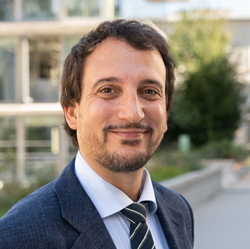
Anthony Dabila
Anthony Dabila is a CEVIPOFresearch fellow at Sciences Po.
© Project Syndicate, 2026.
www.project-syndicate.org