
Igor Botsan
As previously reported by the CEC, as of early this week, only 16 political parties had submitted complete financial reports. At the same time, three parties prepared the documents, but they were signed by only one person, although the law stipulates that both the head and the treasurer of the party must sign them. Both are responsible for the accuracy of the submitted data and information, as well as for their non-submission.
According to the provisions of the Law on Political Parties, the Electoral Code and the Regulation on Financing Political Parties’ Activities, the submission of reports is a mandatory procedure for all 66 political formations registered with the Public Services Agency.
Parties that receive allocations from the state budget are obliged to submit a report to the Court of Accounts as well. At the same time, failure to submit or late submission of the financial management report in the time and format prescribed by law, including submission of incomplete data, is considered a violation of legal provisions and entails liability in accordance with the law.
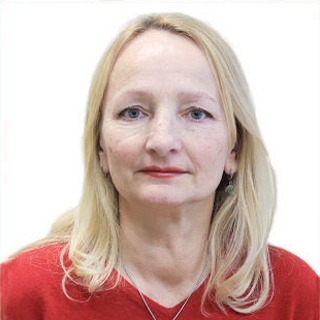
“The law envisages various penalties for failure to fulfill this obligation – from symbolic fines to deprivation of the right to receive subventions from the state budget,” says Igor Botsan, director of the non-governmental organization Adept. – Financing of parties from the budget, or rather taxpayers, was introduced into Moldovan legislation in 2017 with the aim of developing the political system. It is implemented according to the proportional principle, which we consider insufficiently fair”.
The expert notes that the legislative reporting procedure has been established for a long time, and the major parties act in accordance with its prescriptions, because they do not want to lose the opportunity to receive funds from the budget.
According to the latest monitoring report “Financing of Political Parties in Moldova: Retrospective 2024”, prepared by Promo-LEX Association, subventions from the state budget account for 75% of all reported party revenues. However, the data show a slight decrease in the dependence of parties on these allocations compared to 2023, when their share was even higher (84%).
The report also states that during the monitoring period, the income of political formations from donations increased. They amounted to 13.5 million lei. This is three times more than in 2023. PAS (35%), Our Party (27%) and PSRM (18%) received most of them. At the same time, the amounts of membership fees decreased. Only 17 parties collected them, and in 11 of them, even the leaders did not pay contributions.
The monitoring also revealed that the unregistered expenses of 20 parties amounted to at least 20 million lei, which is 28% of the 71 million lei of officially declared expenses. These are mainly expenses for advertising in social networks (37%) and political events (21%).
The monitoring also showed that the number of declared party members continues to decrease. Only the Action and Solidarity Party, the Socialist Party and the Liberal Party declared more than 10,000 members at that time. And 28% of parties have less than 1,000 members, which is the minimum threshold established by law.
Overall, political parties have become more accountable, the experts concluded. In 2024, 95% of them (compared to 75% in 2023) submitted the results of their financial activities to the CEC. But despite the increase in the number of submitted reports, their quality remains questionable.
According to the Law on Party Financing, 0.2% of state budget revenues are allocated to support parties. They are distributed mainly depending on the results obtained by the parties in the elections. This does not mean only the last parliamentary elections, but all elections, including local and presidential ones. So small parties, which are not very well known in the capital, also get support, provided they get local votes. Factors such as the representation of women and young people in the party are also taken into account.
The latest Promo-LEX report shows that in 2024, subventions from the state budget amounted to 51.8 million lei. They were received by 29 political organizations that submitted financial reports to the CEC. Half of the budgetary funds went to the ruling Action and Solidarity party. PAS was followed by the Party of Socialists (17%) and Our Party (10%).
“This distribution puts into question the real chances of small parties on the political scene,” Promo-LEX experts say.
“The CEC’s call to submit reports was addressed to small parties, not all of which submit them, including because of their inability to hire a treasurer,” continues Igor Botsan. – They do not have enough money for that. That is why we have long proposed to introduce the German concept of party financing. In Germany, public funds are not only allocated to parties on the basis of election results, as in Moldova. They also take into account the amounts of contributions and donations, so that new parties could develop. But so far the political class does not support this idea”.