
The first shutdown of this transmission line occurred on January 31 after Russian attacks on Ukraine’s energy infrastructure. This led to a large-scale cascading blackout almost throughout Moldova, as the energy systems of our countries are interconnected.
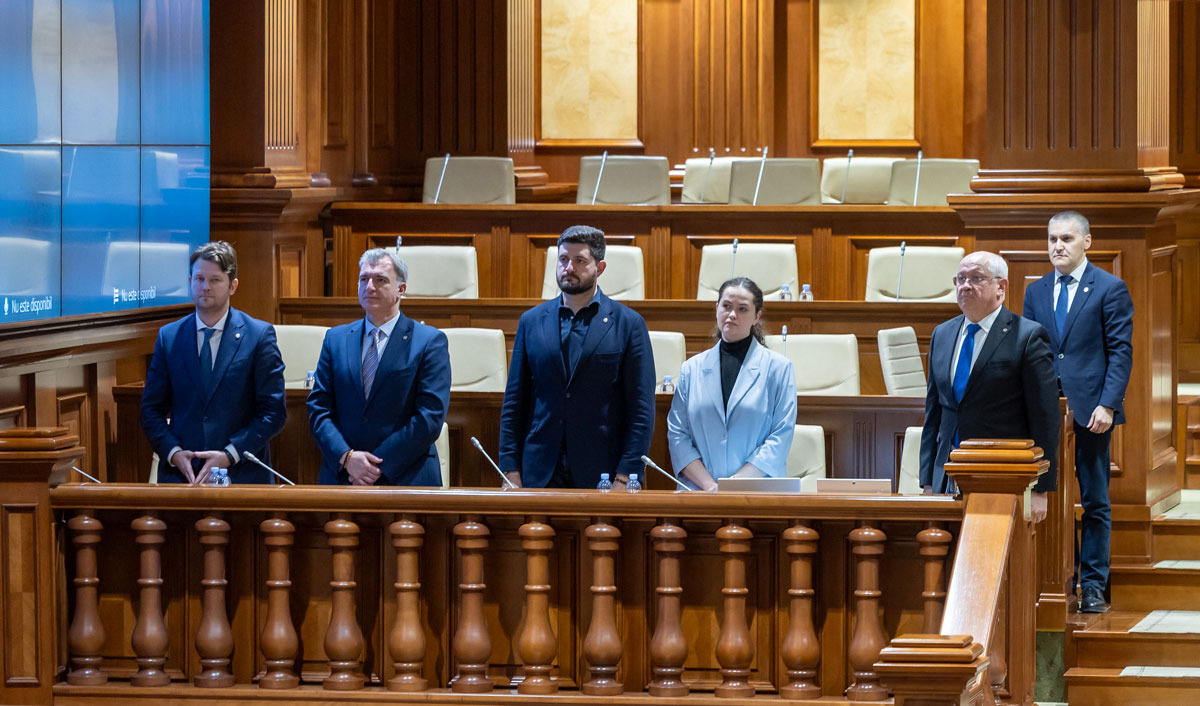
The second strike, directly on the line itself, occurred on March 23. There were no blackouts (yet), but after that the parliament imposed a state of emergency in the energy sector for 60 days.
Unstable balance
Another Russian strike on the Isaccea-Vulcanesti power line raises a number of questions. And first of all, why are we still dependent on a single power line for energy supply?
Energy specialists interviewed by Logos Press asked not to mention them in the context of this situation, “because it may have political overtones”. However, the energy situation was clarified.
Now there have been no blackouts in Moldova, not only because the authorities promptly activated four 110 kV interconnectors between Romania and Moldova, but also because the country’s thermal power plants continue to operate. In addition to heat, they also generate electricity.
We have three of them. In Chisinau, CHPP-2 has 3 units of 120 MW each (total ~360 MW), and CHPP-1 has an installed electric capacity of 66 MW. In Balti, the CHPP owned by CET-Nord SA has an installed electric capacity of 37.4 MW.
So, after the end of the heating season, which will happen soon, Moldova will be deprived of these sources of electricity generation and its balancing by production from renewable sources.
It is necessary to mention balancing separately. In order to use renewable energy sources (RES) in the grid, balancing capacities of conventional generation are needed, which are at least a quarter of the attracted volumes. That is, the existing CHPP generation can theoretically contribute to the attraction of more than 1 GW from RES, with peak consumption volumes in Moldova of 800 to 1000 MW. Naturally, mainly during daylight hours.
With the cessation of heat and electricity generation at CHPPs, this possibility will disappear, so the country will become particularly vulnerable. Since at present, even with CHP plants running, there is a high risk of cascading blackouts due to shortages of up to 400 MW during peak hours, despite the use of alternative lines from Romania.
Ukraine, on the other hand, cannot help us because of constant Russian attacks on its energy infrastructure.
Is this political pressure?
Since the Isaccea-Vulcanesti-MGRES line (and further – Odessa Oblast) is critically important for Moldova and relatively unimportant for Ukraine, one can think that the Russian strikes on it are directed precisely against Moldova in order to exert some kind of pressure on it.
The first persons of the state, in principle, confirm this.
“After the Russian strike on the Ukrainian hydroelectric plant, which polluted the Dniester, left four districts without water and continues to damage the environment, this night a new attack led to the shutdown of the Isaccea-Vulcanesti power line. These are not accidents, but purposeful actions by Russia to weaken Moldova and leave it in the dark,” Moldovan President Maia Sandu wrote on social media.
“After Russia’s overnight attacks on Ukraine’s energy infrastructure, the Isaccea-Vulcanesti power line went down, jeopardizing Moldova’s energy stability once again,” Prime Minister Alexandru Munteanu said.
The most probable cause is the Moldavian TPP
There are two possible purposes for this kind of pressure, political scientist and diplomat Victor Cvircun suggested in a conversation with LP.
“The first is to force the Moldovan authorities to stop their constant anti-Russian rhetoric,” he said. – However, I don’t think this can be done, it was, is and will continue. The second is to force Moldova to purchase electricity from the Moldavian TPP. And this, by the way, is not the worst option, because I have always argued that small states need to look at the world with eyes wide open. Shorts (like horses) are disastrous for them. What is needed is diversification of suppliers. It is necessary to look for where there is a benefit for Moldova, and not to dance to someone else’s tune, most often to their own detriment”.
A source close to the Ministry of Energy confirmed this version: “Now there is a large-scale economic crisis in unrecognized Transnistria. And electricity supplies to Moldova could alleviate this crisis”.
In Parliament, Igor Dodon, head of the Socialist faction, spoke on this topic.
“If you really want to overcome the crisis, return to rational solutions, including purchases from MGRES. Instead, you refuse dialog and seek additional powers that may not be used in the interests of citizens,” Dodon said at a session that discussed the introduction of a state of emergency in the energy sector.