In effect, by closing the Strait of Hormuz to oil from pro-American Gulf states while continuing to ship significant amounts of its own oil to China, Iran has imposed painful sanctions on the United States. If prolonged, these de facto Iranian sanctions will cause severe economic harm to many Americans, including supporters of President Donald Trump, which could have a significant impact on the midterm elections in November.
The U.S. doesn’t typically buy much oil from the Gulf. Most of the region’s production is shipped by tanker to Asia and, since Russia’s full-scale invasion of Ukraine, to Europe.
But the global oil market is so interconnected that changes in the price of Brent crude immediately affect energy prices everywhere, including retail gasoline and diesel prices in all parts of North America. According to the U.S. Energy Information Administration, the price of diesel fuel for automobiles has increased by more than by one dollar per gallon, to more than five dollars, since Feb. 28, when U.S.-Israeli strikes on Iran began.
It’s not just oil that’s rising in price
Rising fuel prices directly affect everyone who drives a car – including many ardent Trump supporters who, according to market research, are most likely to drive a full-size pickup trucks. Rising diesel and fertilizer prices Will hit farmers. Jet fuel prices have also risen sharply in all markets, which has an immediate impact on airfare (and has a further negative impact on transportation costs) . And these higher prices will lead to a lower standard of living overall, as transportation costs strongly affect the price of food and all commodities.
In addition, financial markets will not be spared. With Brent crude oil prices at or above $100 a barrel, how can the Federal Reserve lower interest rates? If the Federal Open Market Committee cannot withstand these strong inflationary pressures, parallels will increasingly be drawn with Arthur Burns – Richard Nixon’s appointee as Fed Chairman in 1970, which led to a rather disastrous consequences in terms of inflation (and stagnation) during that decade.
There are always policy options, and Trump is now making it clear that he would like to de-escalate attacks on energy-related infrastructure. But to maintain its de facto sanctions, Iran need only maintain the credibility of its threat against tankers in the Strait of Hormuz. Trump could, of course, declare victory and stop U.S. missile strikes. But would that stop the conflict between Israel and Iran or make the Persian Gulf safe for shipping again?
In addition to its own production capacity, Iran can count on strong support from Russia. Reports in the press indicate that Russia is encouraging Iran to continue its attacks – including by providing targeting data for strikes on U.S. facilities and providing a variety of support for the use of drones. Russia seeks to undermine the U.S. and its allies, and rising oil prices are an unexpected benefit to the Kremlin. As the conflict with Iran escalated, the U.S. eased sanctions on Russian oil. The Russians probably expect sanctions to be further eased if the conflict continues.
How the U.S. will get out of this situation
Robin J. Brooks of the Brookings Institution suggests the U.S. to impose an embargo on Iranian oil, and this is entirely possible given that the administration is now willing to intercept “shadow fleet” vessels (as demonstrated in Venezuela). This idea deserves serious consideration, especially because it would disrupt the flow of oil to China, giving the Chinese leadership a direct interest in diplomatic engagement. But China has accumulated significant oil reserves (about 100 days of imports). Who can withstand the economic damage longer – the brutally repressive Islamic Republic or the U.S. with its electoral democracy?
Other ideas are in the air, and apparently all are being discussed in the White House. Newt Gingrich, former speaker of the U.S. House of Representatives, wants to dig a a new canal with “a dozen thermonuclear explosions.” Even if such a bizarre method of construction were possible and desirable (it is reminiscent of Nikita Khrushchev’s crazy plan to change the course of the Volga River with “peaceful nuclear explosions”), the canal bypassing the Strait of Hormuz would itself become a target. Iranian missiles could reach at least Saudi Arabian facilities on the Red Sea.
Using Ukrainian anti-drone capabilities to open the strait makes sense, but Russia will keep the best Ukrainian experts in Ukraine. More oil revenue means Russia can (and will) build and launch more drones and missiles against Ukraine.
Expanding U.S. (and NATO) anti-drone capabilities is also attractive, and is an issue that the MIT Priority Technology Group has been working on for several years. Relevant technologies can be developed, including with Ukraine’s participation, and the necessary expansion of production would benefit manufacturing jobs and supply chains in the U.S., Europe, and other friendly countries.
But all meaningful countermeasures take time. And with growing economic problems in the U.S. and midterm elections looming, the leaders of the Islamic Republic probably believe that time is on their side.
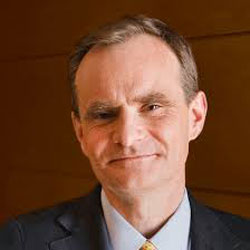
Simon Johnson
Simon Johnson, – Winner of the 2024 Nobel Prize in Economics and former Chief Economist of the International Monetary Fund, is a professor at the MIT Sloan School of Management, co-director of the MIT Stone Center Initiative for Inequality and Shaping the Future of Work, co-chair of the CFA Institute’s Systemic Risk Council, and an ambassador for artificial intelligence in the UK.
© Project Syndicate, 2026.
www.project-syndicate.org