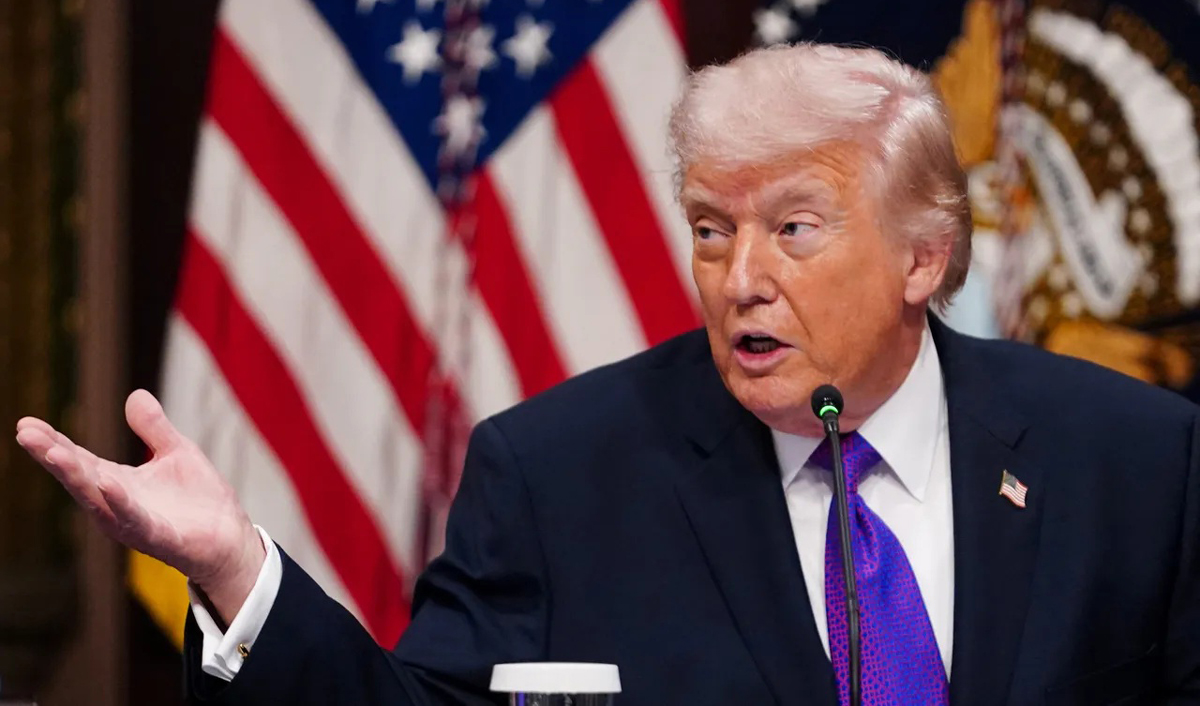
In a rather awkward situation, U.S. Secretary of State Marco Rubio’s polite but completely pro-Trump speech was greeted with raucous applause from some members of the predominantly European audience.
Clearly, Europe is still struggling – both emotionally and politically – to accept the fact that President Donald Trump has already broken the transatlantic alliance. Immersed in a comforting state of denial, Europeans are unable to form their own sense of identity, let alone a strategy to preserve their sovereignty in a dangerous new world.
America’s departure will fundamentally change Europe
Make no mistake: America’s withdrawal – emotionally, politically, and then militarily – will fundamentally change Europe from within.
The United States has been the overwhelming dominant power in Western Europe since the end of World War II, and in Europe as a whole since the early 1990s, after the collapse of the Soviet Union and the eastward expansion of NATO and the European Union. As the world’s leading superpower, the United States has protected the European continent from both external and internal threats. In addition to protecting Europeans from the threat posed by the Soviet Union and the Warsaw Pact, it also protected them from the re-emergence of a nationalist, revanchist Germany.
The latter prospect had long worried many of Germany’s European neighbors. That is why British Prime Minister Margaret Thatcher and French President François Mitterrand fought behind the scenes to slow down the process of German reunification after the fall of the Berlin Wall in 1989. Until recently, America’s prominence and military presence on the continent served as a geopolitical guarantee of German reunification. Only by neutralizing historically rooted fears could the deepening of European integration continue.
Now, however, the US is preparing for a military withdrawal from Europe – perhaps only Trump knows if and when this will happen. But if it happens, the consequences for Europe will be serious.
The nature of the consequences will depend largely on what the EU’s two main founding members, Germany and France, decide to do. Both countries are currently facing serious political and economic challenges. Will they remain true to the spirit of close cooperation and common European commitments that they have carefully maintained since the days of Konrad Adenauer (1949-63) and Charles de Gaulle (1959-69)? Can they continue to maintain close ties and overcome differences without the external stabilizing force that America has always provided?
This is now a fundamental question for Europe, the answer to which will determine the future of the continent. Only if France and Germany remain true to their European commitments can Europe succeed as a political entity; without them, it is doomed. A return to nationalist traditions – the source of so much bloodshed on the continent – would be an act of brazen self-destruction, virtually guaranteeing the end of European self-determination and sovereignty in the twenty-first century.
Germany’s key role
While cooperation is crucial, Germany is the decisive variable. As the victorious European powers after World War II, Britain and France – with their nuclear weapons and permanent seats on the United Nations Security Council – can still cling to the illusion that they are fully sovereign middle powers.
But in an era of resurgent great power imperialism, this is an illusion. While they may play some modest role on the periphery, they cannot realistically hope for more than that as independent powers.
Because of its unique history – not least its catastrophic defeats in two world wars – Germany does not even have that option. If it were to try to catch up with Britain and France geopolitically, it would destabilize Europe and ultimately derail the project of European integration.
In contrast, America’s withdrawal from Europe places even greater demands on Germany’s prudence and leadership in promoting European cooperation. Germany must work even harder to ensure close cooperation with France and others.
This will require a clear analysis of both European and national interests, as well as a firm commitment to reliable and predictable action. Germany must remain historically self-aware, showing sensitivity to the interests of all its partners, large and small. America’s departure will force it, along with France and others, to assume a more leading role in Europe, and it must use responsibly the power that comes with that status.
Time is running out, and Germany must demonstrate that she is ready and able to take up this challenge. The first step is to reject the idea that transatlanticism is still alive.
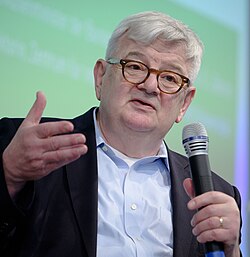
Joschka Fischer (Vizekanzler und Außenminister a.D.) Foto: stephan-roehl.de
Joschka Fischer was German Foreign Minister and Vice Chancellor from 1998 to 2005, and was leader of the German Green Party for almost 20 years.
© Project Syndicate, 2026.
www.project-syndicate.org