Send us a message, and we will definitely consider your suggestions and comments.
Category: Logos Press Exclusive
The energy systems of the ASEAN+3 countries, a group that includes members of the Association of Southeast Asian Nations (ASEAN) plus China, Japan and South Korea, are under increasing strain. Climate shocks are jeopardizing infrastructure and security of supply. Rapid development of artificial intelligence (AI) and digital infrastructure has caused a surge in demand for electricity. Geopolitical tensions are creating new volatility in global energy markets.

WASHINGTON, DC – The purpose of international sanctions is to inflict economic damage on an adversary. If you’re the United States, you do this by seizing assets or banning transactions with certain countries, often targeting specific people or organizations close to the targeted regime. Given the global reach of the dollar system, U.S. sanctions tend to strike fear everywhere. But now the U.S. finds itself in the shoes of the one receiving them.

The chaotic crisis in the Strait of Hormuz has made clear how power works in the twenty-first century. It reminds us that the greatest long-term threat to the United States is not China’s military buildup or Russian aggression, but the gradual fragmentation of the system of alliances that has provided its global leadership since World War II.

U.S. President Donald Trump’s “reciprocal” tariffs, first imposed last April and continually modified since then, have failed to start a global trade war. Instead of retaliating against the US, much of the world effectively capitulated. This response was often seen as political weakness, especially in Europe. However, it was based on sound economic logic.

NEW YORK – The United States and Israel have launched a war that the Gulf states tried to avert by investing heavily in diplomacy. Now their civilian infrastructure is under daily attack.

The U.S.-Israeli war against Iran is a blatant violation of international law. So are almost all other wars launched since the 1945 United Nations Charter, which prohibits the use of force except in self-defense or, as in the case of the Korean War (1950-53) and the First Gulf War (1990-91), with Security Council authorization. The current war with Iran stands out not for its illegality but for its lack of a clear or achievable objective.

French President Emmanuel Macron has just delivered what may be Europe’s most significant security speech since the end of the Cold War. Drawing on lessons from the long cycle of conflict that began four years ago in Ukraine, Macron announced sweeping changes to France’s nuclear doctrine and unveiled a new framework for nuclear cooperation with key European allies.

At this year’s Munich Security Conference, transatlanticism was finally buried, but it remains unclear whether Europeans realized this.

In international relations, clearly illegitimate government actions can sometimes be morally justified. Although there are few historical examples of legitimacy trumping legality, they do exist. Whether the joint U.S.-Israeli war against Iran is one such case requires more attention than it has received so far.

In 2000, Robert Mugabe, the former dictator of Zimbabwe, won the top prize in the country’s national lottery. He won for a simple reason: because he could. Once you have destroyed the institutions that limit your power (during Mugabe’s 37 years in power, he did), you can rule for personal enrichment, personal greatness, or just for personal entertainment. What better way to show unlimited power than by demonstratively turning the existing system of rules into a farce? The damage such actions can do to norms and institutions is part of the intent.

In issuing warnings about the “disappearance of Western civilization,” U.S. President Donald Trump and Vice President J.D. Vance often invoke the United Kingdom, and especially London, to substantiate their views.

In a tense global order, the struggle for control of energy and mineral resources is increasingly seen as a matter of national security. From Venezuela and Greenland to the Democratic Republic of Congo (DRC) and Ukraine, competition for strategic resources shapes global power dynamics, alliances and conflicts.

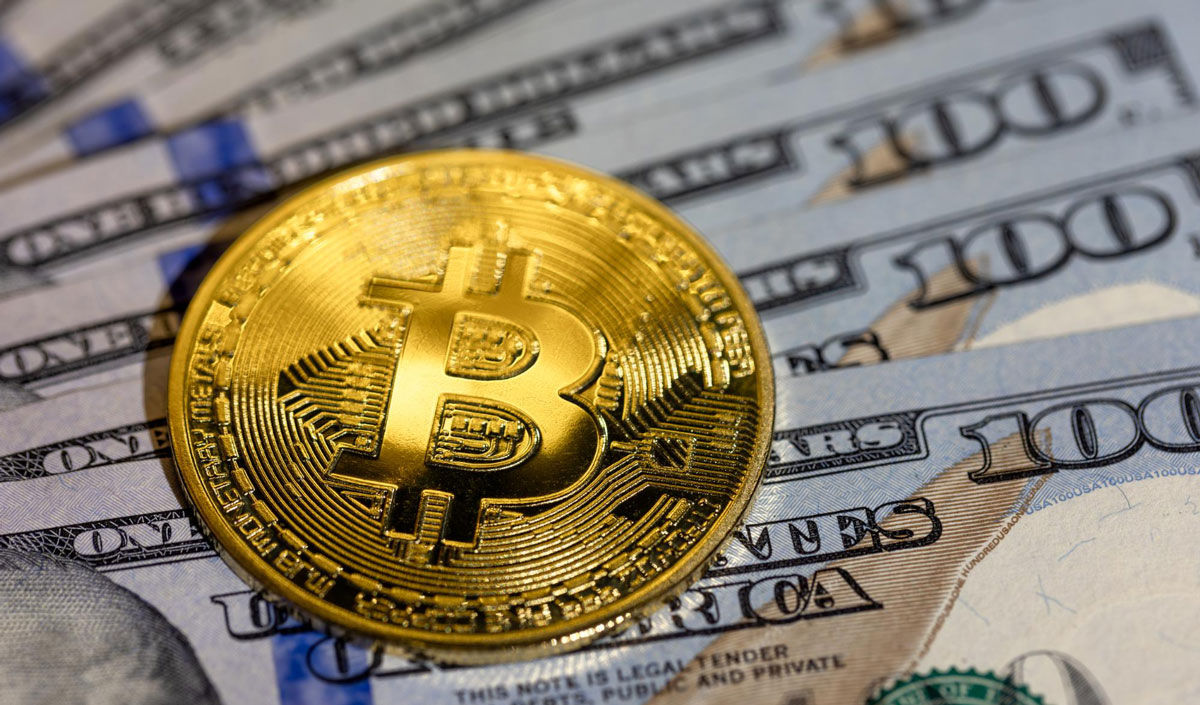
When US President Donald Trump signed an executive order creating a strategic bitcoin reserve in 2025, private companies, investment banks and experts immediately began urging the world’s key central banks to consider a similar move. Kevin Warsh, Trump’s nominee for chairman of the US Federal Reserve, last year supported the idea in an interview, calling bitcoin “the new gold”.

Napoleon derisively called his foreign minister, Prince Talleyrand, “a turd in silk stockings” (“de la merde dans un bas de soie”).

The US has long been the main driver of global economic growth, including now, thanks to the boom in artificial intelligence (AI). This boom shows no signs of cooling, and it is financed by dollars, which remain the central pillar of global finance.

As German Chancellor Friedrich Merz correctly pointed out at the Munich Security Conference, the fate of Europe is now entirely in its hands. And to meet this challenge, it will not be enough for the EU to do business as usual.

Will the BRICS countries (Brazil, Russia, India, China, South Africa) ever introduce a common currency to challenge the dominance of the U.S. dollar in the world economy? Like many traditional international economists, I generally reject the idea, despite my role in creating the acronym BRICS, which led to the creation of the official BRICS club (later expanded to BRICS+ with the addition of five new members).

Media outlets around the world are dying. In addition to the constant lack of funding, they now have to contend with artificial intelligence and chatbots that are drawing away audiences.

The just-concluded talks between representatives of the United States, Russia and Ukraine in the United Arab Emirates aimed at ending Russia’s war in Ukraine ended, not surprisingly, almost exactly where they began.

Continued attempts to frustrate multilateral tax cooperation are at the heart of a global program to replace democratic governance with the coercive rule of the extremely wealthy – or what we call 21st century Caesarism. Any strategy to counter this program must therefore take into account that taxing the extremely wealthy is essential to saving democracy.