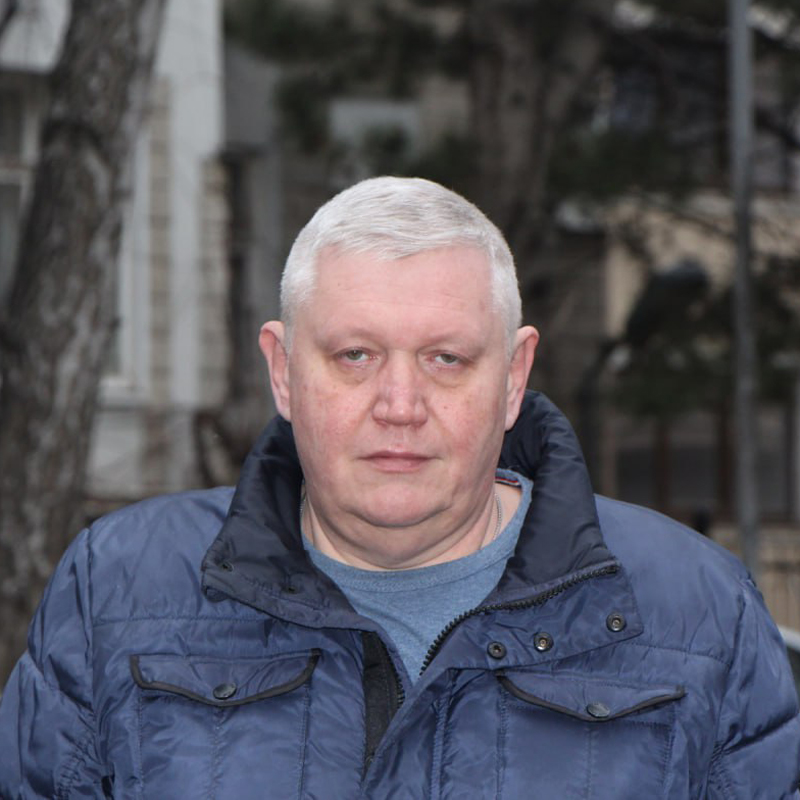

Irina Durlestyan
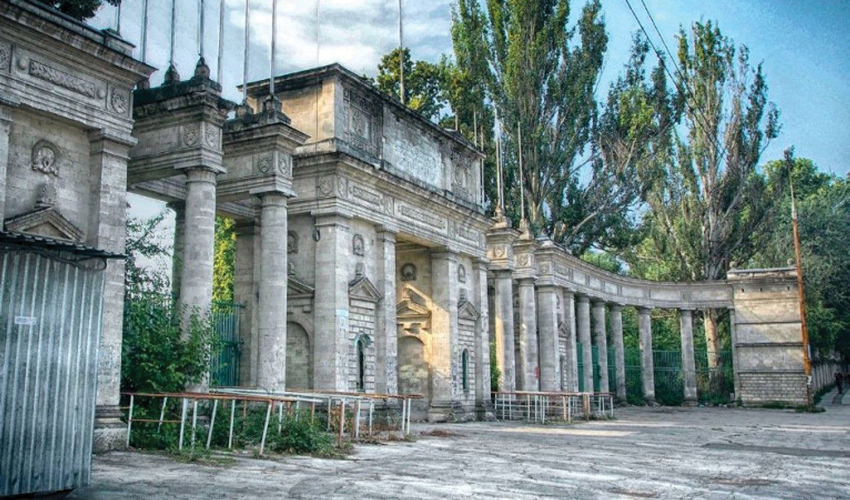
In 2018, the Moldovan cabinet decided to sell the entire territory of the former Republican Stadium for the construction of a new US Embassy complex, despite the fact that there are privately owned properties there.
In 2022, a Memorandum was signed with the Embassy, stating that the state transfers everything to the diplomatic mission, except for the mentioned 13 objects. That is, it was implied that the new owner would resolve all property disputes directly with their owners.
At the same time a representative of the Foreign Real Estate Division of the U.S. Department of State, Mr. Robert W. Doubek, visited our country and met with all the owners and assured them that the Embassy would purchase their property at market price, taking into account possible damage on a one-by-one basis. That is, so that they could rebuild what they already had.
However, on July 11, 2024, an Intergovernmental Agreement was signed and ratified in the Parliament of the Republic of Moldova on July 31, 2024, in which all actions to settle this deal were assigned to the Moldovan side. The US Embassy undertook to transfer 18 million euros for everything owned by the state and 7.5 million euros to compensate private owners. With the remark that the second amount can be revised upwards, provided that all necessary substantiating documents are provided and the fact of paying money to entrepreneurs is confirmed.
The deal with the Republican Stadium is also a test for the Moldovan state for compliance with the European norms of law, as we have not yet had expropriations of this scale in our country. There have been seizures of private property for the construction of power lines or roads, but not for immediate resale.
Therefore, Moldovan officials in turn began to prepare for this deal, but in their own way. Thus, on May 16, 2024, significant amendments were made to Law No. 488-XIV of July 8, 1999 “On expropriation for socially useful purposes”.
Before that, if the owner did not agree with the amount of compensation, expropriation became possible only after a final court decision. Now this provision is “blurred”, and it is considered that the decision of the commission for consideration of counter-offers for expropriation, formed by a government decree, has the force of a writ of execution. The property owner can then appeal to Moldovan courts and then to the ECHR if he does not agree with something. According to the available practice, such procedures take more than one or two years.
The commission was approved and included three civil servants (including, for some reason, the head of the personnel department of the Ministry of Foreign Affairs) and three Chisinau municipal councilors.
Another amendment was that the amount of compensation for expropriation would be determined on the basis of an independent appraisal. Here again, the authorities distinguished themselves, as the appraisal company was approved in a not very clear manner and in violation of the legislation in force.
According to Law No. 131 of July 3, 2015 “On Public Procurement”, such a company must have: experience in the industry; experience in similar activities; financial independence (i.e., the valuation should not be its only income); minimum experience of 5 years; reputation and at least two employees.
Only one company, Eving Grup SRL from Straseni, participated in the tender organized by the Public Property Agency (PPA) and won.
From public sources we can learn that from 2021 (no earlier data are available) to 2024 the company’s income was zero, the number of employees was also zero, and in 2024 it registered a loss of 60 lei.
The sole founder of the company is Paladi Alexandru, who worked for many years in the cadastral division of the State Services Agency, where he dealt with issues rather distant from the valuation of commercial real estate.
The day before the tender, he hired a female employee.
Irina Durleshtyan, the founder of the company Inco Gratie SRL, which owns the squash club Kangaroo, located on the territory of the former Republican Stadium, told Logos Press about the results of the evaluation and other actions of the state officials.
“When we received the evaluation results, we were shocked,” says Irina Durleshtyan. – We assumed that there would be few, but to be so low…”.
The founders of Inco Gratie themselves analyzed the current prices of commercial real estate in the area of the Republican Stadium, both current offers and completed transactions. And determined that their property was valued at about 15% of the actual figure.
And this is not to mention that the business itself, in which 27 years of work have been invested, was not valued at all.
The entrepreneurs tried to appeal to the state expropriation commission with their counter-offer, but they were advised to go to court.
“They tried to reproach us with the fact that we bought the real estate for pennies and want to speculate on it, that the land under the real estate does not belong to us,” continues Irina Durleshtyan. – This is not true. We rented the abandoned premises since 1998, invested about 1.5 million lei in the reconstruction, the guarantee was a long-term lease for 13 years, and in 1999 we opened a modern sports club. But in 2002 the same building was put up for sale by a bailiff for the stadium’s debts to the water company. In order to protect our investments we had to buy the building at an auction.
At that time there was a legal provision that the building was inseparable from the land on which it was located. And the property we bought had its own cadastral number. But, as it turned out later, the state, having sold us the building, kept the land for itself! No matter how many times we appealed, we were never given the title to the land. There was even a court decision (signed by Mrs. Domnica Manole, currently the President of the Constitutional Court of the Republic of Moldova) that the state was obliged to do so. Nothing helped.
Inco Gratie challenged the results of the tender for the selection of an appraiser in court and asked the Association of Professional Appraisers of Moldova (AO SNEP RM) to examine whether the appraisal had been done correctly.
The main conclusion of this expertise is as follows:
“The real estate valuation report No. VI.25-002PA-07, performed by the valuation company Eving Grup SRL (appraiser – Paladi Alexandru), contains violations of the requirements of legislative and normative acts of the Republic of Moldova regarding the valuation activity, which influenced the final result, therefore, the final value of the valued real estate cannot be recognized as reliable”.
Also, this expertise recognizes that Inco Gratie has the right to land, but it has not been valued.
Iryna Durleshtyan suggested why state officials try so hard to save money on compensations to private owners.
“JSC Republican Stadium has been in the process of liquidation since 2013. According to the press release of the Court of Accounts, in 2015 the state repaid about 2 million lei of debts of the Republican Stadium JSC, there were no other debts. At the same time, the Court of Accounts found 4 real estate objects of the Stadium totaling 1.6 million lei, which it obliged to register in the cadastre. Since then, no one has registered anything, the Republican Stadium JSC has not been liquidated, and, judging by the public data, debts have appeared again. For example, the debt to the Social Fund as of 31.12.2024 is about 2.421 million lei, which means about 10 million of accrued wages. To whom? Four liquidators. What did they do? How did APT manage its 100% stake in the Republican Stadium JSC? Why hasn’t it been liquidated in 12 years? As we understand, the debts were artificially built up, so that now these amounts, and maybe even much larger ones, went in the form of fees to officials from the money provided for expropriation.
And in October 2025, the APS will again organize a tender to select an appraiser to appraise 12 (!) real estate objects of the Republican Stadium JSC (in 2015 there were 4). The winner of the tender is the same. What is the purpose of appraisal of the objects envisaged for demolition? Now everything is falling into place – for us, anyway.
“Recently, there has been a lot of talk about attracting investment to our country, and then tell me, what kind of investment can we talk about with such an attitude towards private property?” asks Irina Durleshtyan.
If the situation continues to develop in the current direction, its outcome is not difficult to foresee. Property will be expropriated. Miserable compensations will be paid (this is a condition of the American side). Then the disgruntled entrepreneurs will go through the whole cycle of Moldovan courts, from the first instance to the highest. Then they will appeal to the ECHR, where the Moldovan state will be obliged to pay them full compensation. Moldova can ignore this decision.
This has already happened many times. And, as Surya Evans-Pritchard Jayanti, a senior fellow at the Atlantic Council’s Eurasia Center, noted, “If Moldova does not comply with the decisions of the various ongoing arbitration proceedings related to the treaties to which it is a party, its defaults could affect the country’s credit rating and, in turn, its chances for EU accession.”
We asked the U.S. Embassy in Moldova and the Public Property Agency to comment on the situation.
The Embassy laconically replied: “No comment”. No response was received from the APS at the time of preparing this article for publication.

