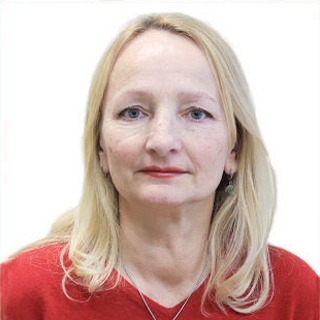

Ulf Kristersson
Swedish Prime Minister Ulf Kristersson has warned that Europe will not succeed if it sticks to protectionist policies promoted by France, ahead of an EU summit to revive the European economy and fight widespread deindustrialization.
French President Emmanuel Macron is pushing for the adoption of a “Buy European” policy that requires some key goods to be produced within the bloc despite higher costs. But Sweden, one of the most ardent supporters of an open economy, free trade and deeper integration of the bloc’s single market, has opposed the proposal.
“The basic idea of protecting European business, if that is the purpose of the Buy European program, is to avoid trading with and cooperating with other countries. I am very skeptical,” Kristersson told the Financial Times. – We should be competitive through quality and innovation, not trying to protect European markets.
The goal is to save the EU economy
EU leaders will gather in Belgium on Thursday, Feb. 12, for a summit to discuss ideas for rescuing the continent’s weakening economy, which is under pressure from cheap Chinese imports, U.S. tariffs and high energy prices.
However, Sweden’s prime minister said protectionist policies would not help: “We don’t want to protect European companies that are inherently uncompetitive.”
Kristersson acknowledged that EU companies face stiff competition from China because of declining consumer spending in Europe and huge subsidies from Beijing. And that the EU has been slow to respond to companies’ concerns.
The rejection of cheap Russian gas has led to a sharp rise in energy prices in 2022. At the same time, the EU’s ambitious climate agenda has cut into company profits, led to the closure of hundreds of factories and limited industry’s ability to invest.
Progress has been slow due to conflicting national interests and limited capacity to address issues unrelated to Russia’s war in Ukraine, as well as U.S. President Donald Trump’s tariffs and his attempt to take over Greenland. Kristersson acknowledged Thursday there would be “competing national traditions and political interests” at the negotiating table, preventing a common path forward.
“Pragmatic federalism” vs. protectionism
“What we lack now is joint action,” Kristersson said, backing former European Central Bank President Mario Draghi’s call for “pragmatic federalism” within the EU. Under this principle, coalitions of countries take decisions blocked by one state or a minority of states for political reasons. As was the case with Hungary.
European Commission President Ursula von der Leyen this week also endorsed the concept, saying that where there is no consensus among the bloc’s 27 members, closer cooperation is needed.
“If we wait for everyone to join, I think the process will just drag on,” the Swedish prime minister said. – “I believe that ‘coalitions of the willing’ is the way of the future. But at the same time, we should not forget that … it may contradict the rules of the internal market.
European companies are increasingly frustrated by the lack of progress on multi-year plans to remove barriers to the single market and improve intra-EU trade and investment.
“There is a perfectly fair and justified lack of patience in European business right now,” said Kristersson. – But that doesn’t mean the rest of the world is perfect and Europe isn’t. We have our advantages too. I think we should build on them more. And the biggest one is the domestic market.


