Send us a message, and we will definitely consider your suggestions and comments.
Category: Politics & Economy
On August 28, Moldova’s Central Election Commission published a list of political parties eligible to participate in the elections for deputies to the People’s Assembly of Gagauzia, scheduled for November 15.
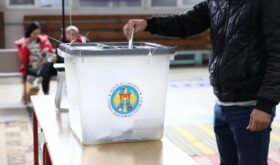
U.S. President Donald Trump called on Canadian companies that do business with the U.S. market to relocate their operations to the United States in order to avoid new tariffs.
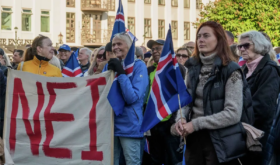
The European Commission reacted with great restraint to the referendum result, in which a majority of Icelanders rejected resuming negotiations on EU membership.
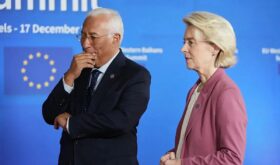
Iceland has refused to resume negotiations on joining the European Union. By a narrow margin of 52.8% to 47.2%, voters rejected the idea.
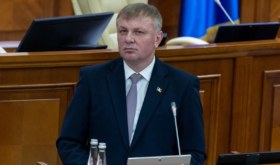
Constantin Cuiumju, a member of the Committee on Economy, Budget, and Finance of the Parliament of the Republic of Moldova, pointed out the significant difference between the economic decisions made in Bucharest and the measures planned by the Moldovan authorities for 2027.
Turkey has stepped up diplomatic contacts with Russia and Ukraine regarding the creation of a new grain corridor in the Black Sea. Turkish authorities are seeking to restore commercial shipping and prevent the global food crisis from worsening further through a new security mechanism.

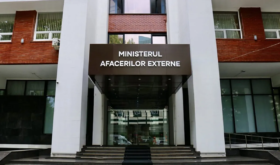
The Ministry of Foreign Affairs considers it unacceptable for Russia to open 16 polling stations in the Transnistria region without Chisinau’s consent.
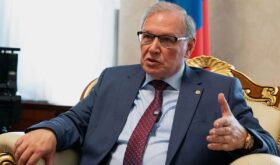
The Russian ambassador stated that Moldova risks losing the benefits of the CIS after its withdrawal
The Moldovan leadership’s hopes that, after leaving the CIS, the republic will be able to retain the benefits of cooperation within that organization are unrealistic.
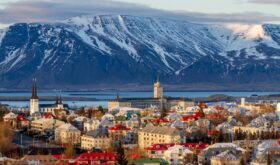
On Saturday, Icelandic citizens will vote in a referendum on whether to renew their application for EU membership or to postpone the prospect of joining the union indefinitely.
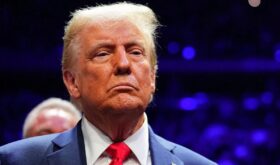
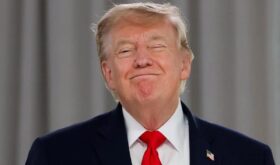
The U.S. president posted a ranking on the social media platform Truth Social in which he placed himself in a separate, top category—“The Greatest.” Below him, in the “Greats” group, were Abraham Lincoln, George Washington, Franklin D. Roosevelt, Woodrow Wilson, Thomas Jefferson, and Andrew Jackson.
Moldova’s accession to the European Union, the adaptation of agriculture to climate change, and the development of the agri-food industry—these three areas of activity have been identified as priorities by the new Minister of Agriculture, Eugeniu Osmochescu.
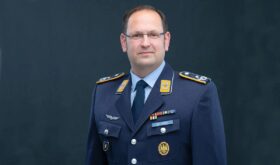
Lieutenant Colonel Julian-André Finke was introduced to the leadership of the Ministry of Defense as Germany’s new military attaché on the eve of the holiday celebrations. Until recently, Lieutenant Colonel Oliver Lotze served as Germany’s military attaché in Moldova, overseeing the modernization of the National Army as part of agreements between the two countries’ defense ministries.
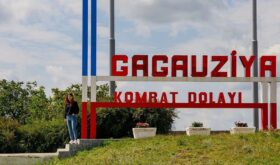
On August 28, the election period began in Moldova ahead of the elections for deputies to the People’s Assembly of Gagauzia, which will take place on November 15, 2026. The election campaign will begin on October 16.
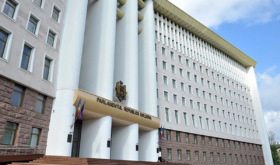
The Parliament of the Republic of Moldova will begin its second regular session of 2026 on September 1. Parliament Speaker Igor Grosu signed the corresponding order.
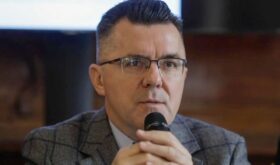
Dan Dungaciu, a Romanian sociologist and first vice president of the AUR, analyzed statements by the Chisinau authorities regarding the possible reunification of the Republic of Moldova with Romania.
U.S. President Donald Trump told reporters on Thursday that Russian President Vladimir Putin will not attack NATO territory.
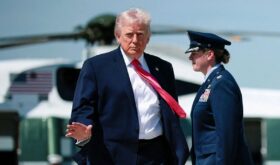
European Commission President Ursula von der Leyen said Thursday that if negotiations to reduce the record trade deficit with China do not lead to a breakthrough, the EU must deploy its full arsenal of trade defense tools.
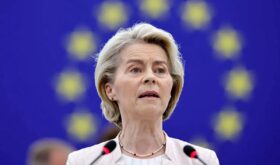
Violations of airspace by Russian drones pose a constant challenge for the authorities in Romania and the Republic of Moldova, which is why cooperation between the two countries in this area will continue to deepen. Romanian President Nicușor Dan made this statement following consultations held Thursday in Chișinău with Moldovan President Maia Sandu.
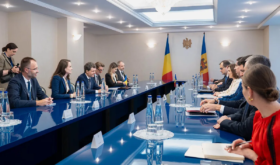
On Wednesday, the Romanian Senate approved an ethics law with an amendment that could lead to the removal from office of Timisoara Mayor and “Alliance for the Salvation of Romania” (USR) leader Dominic Fritz.
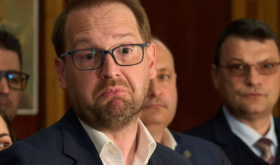
If you’re offered the chance to lead Moldova’s government—accept it. Do whatever you want. Things won’t get any worse—because the actual resilience of Moldovan households depends far less on government decisions than is commonly believed. There’s just one caveat: the margin of safety that hides this fact isn’t eternal.